

Why Delhi is Becoming India’s Dental Tourism Capital
Some patients in the UK, USA and Australia who face high dental bills at home are asking whether dental tourism in Delhi could be an option. The Indian Government actively promotes medical travel to the country through its Heal in India initiative. But is Delhi really becoming India’s dental tourism capital?
The honest answer is that no official figures measure that. Government data tracks medical travel to India as a whole, not dental care city by city, so any claim about a “dental tourism capital” needs to be treated with care. This guide explains what official sources do say about medical travel to India, what that means for dental tourism in Delhi, and what UK, US and Australian government advice recommends you check before you travel.
Figures are as of October 2026, and where possible it relies on government sources rather than marketing claims. It is general information, not personal dental advice or a recommendation to travel for treatment, so speak to your own dentist before making any final decisions.
At a Glance
- Dental tourism means travelling abroad for dental treatment. The US Centers for Disease Control and Prevention (CDC) describes dental care as the most common form of medical tourism among US residents.
- Indian Government figures show 507,244 foreign nationals arrived for medical treatment in 2025. The figures are not split by treatment type or by city.
- Delhi had nine Joint Commission International (JCI) accredited hospitals in 2022, the most of any city listed, but the same source says medical travel providers are mainly in Southern and Western states.
- UK, US and Australian government sources advise researching providers, checking insurance and planning aftercare before travelling for treatment.
- Official data does not show whether Delhi leads India for dental tourism, so treat claims that it does with caution.
What Is Dental Tourism and Why Do Patients Travel for It?
Dental tourism is travelling to another country to receive dental treatment. The CDC describes dental care as the most common form of medical tourism among US residents, and Australia’s Smartraveller website notes that many Australians travel overseas for health care to save money, which is the wider context for dental tourism in India. Cost is not the only reason. The CDC says patients may also want care from a clinician who shares their language or culture. Whatever the motive, travelling for treatment adds practical and clinical questions that treatment at home does not. I added “dental tourism in India” to the second sentence in normal sentence case. I linked it only as context, because the CDC and Smartraveller statements are about medical travel in general and don’t mention India. If you meant “Dental Tourism In India” as a standalone line, such as a sub-heading, tell me and I’ll set it up that way.
Why Are International Patients Considering India for Dental Care?
The Indian Government lists dental care among the treatments international patients seek in India and promotes medical travel through its Heal in India initiative. It has extended e-Medical Visas to nationals of 172 countries and highlights cost and English-language clinical practice as part of India’s appeal. These are government statements, not guarantees of any clinic’s standards.
Ministry of Tourism data, based on Bureau of Immigration figures, show foreign arrivals for medical purposes of 183,000 in 2020, 304,000 in 2021, 475,000 in 2022 and 635,000 in 2023 (provisional). The Government’s May 2026 summary reports 507,244 medical arrivals in 2025, about 5.5% of foreign tourist arrivals. These figures cover all medical treatment and are not split by dental care or city, so if you are looking for a dentist in South Delhi, they will not tell you how any individual practice performs.
The Government also says it is strengthening accreditation by the National Accreditation Board for Hospitals and Healthcare Providers (NABH) for hospitals, wellness centres and dental clinics. Accreditation is a sensible thing to ask any clinic about.
What Does the Evidence Say About Dental Tourism in Delhi?
Official sources do not publish dental tourism figures for Delhi, so government data cannot show that Delhi leads India. It does show that Delhi had nine JCI-accredited hospitals in 2022, more than any other city listed, while also stating that medical travel providers are mainly concentrated in Southern and Western states.
That hospital count is useful context, but it does not describe the standards at any particular dental clinic. Individual clinics make their own claims, and those claims should be checked.
Smile Delhi – The Dental Clinic, in New Friends Colony, South Delhi, states on its website that it has treated patients from 85 countries over the last 25 years and offers consultations for international patients. As with any clinic, ask for evidence in writing, including clinicians’ qualifications and any accreditation. If you are considering dental tourism, compare these details with what other clinics can show you before you decide.
What Are the Risks of Having Dental Treatment Abroad?
Travelling abroad for dental treatment carries risks as well as possible savings. GOV.UK says the standard of facilities, qualifications and treatments abroad can vary widely, and Smartraveller says there are always risks with medical procedures. Complications, insurance gaps and follow-up care are the main practical concerns.
- Standards vary. GOV.UK advises doing your own research, and cautions that private companies arranging treatment abroad have a financial interest in the booking.
- Insurance may not cover you. Smartraveller says Medicare does not cover you overseas and basic travel insurance rarely covers medical tourism. The CDC notes that medical travellers may need supplemental cover.
- Official help is limited. The UK Foreign Office usually cannot help with problems about care or costs abroad, and the Australian Government cannot pay your overseas medical bills.
- Follow-up happens at home. You will need a plan for who will review your treatment after you return.
How Do You Plan Dental Treatment in Delhi Step by Step?
Start by discussing your plans with your own dentist, then research clinics, request a written treatment plan and quote, check visa and insurance requirements, and arrange follow-up care before you leave. Taking these steps in order helps you compare options carefully rather than deciding under time pressure.
- Talk to your own dentist or doctor first. UK government guidance advises discussing plans with your UK doctor before committing to treatment abroad.
- Research the clinic and clinicians. Check qualifications, registration with the relevant Indian dental regulator, accreditation and experience with your type of treatment.
- Get a written, itemised plan and quote. It should state what is included, the materials used and the number of visits.
- Check visa rules for your nationality. The Government of India says e-Medical Visas are available to nationals of 172 countries. Confirm eligibility through official sources such as the Heal in India portal (healinindia.gov.in).
- Arrange insurance. Ask your insurer in writing whether treatment abroad and any complications are covered.
- Plan aftercare and records. Ask for full treatment records and agree how follow-up will work once you are home.
Frequently Asked Questions
What is dental tourism?
Dental tourism is travelling to another country to receive dental treatment. The CDC describes dental care as the most common form of medical tourism among US residents. Patients travel for reasons such as lower prices, access and language, but treatment abroad carries risks that your own dentist can help you weigh up.
Is Delhi the main dental tourism destination in India?
No official figures show that. The Indian Government publishes medical travel arrivals for India as a whole, not by city or treatment. It reports that Delhi had nine JCI-accredited hospitals in 2022, the most of any city listed, but also says providers are mainly concentrated in Southern and Western states.
Do I need a visa for dental treatment in India?
Most international visitors need a visa. The Government of India says e-Medical Visas are available to nationals of 172 countries, but eligibility and requirements depend on your nationality. Check official Government of India sources, such as the Heal in India portal, before you book.
What are the risks of having dental treatment abroad?
Every dental procedure carries risks, and GOV.UK says the standard of facilities, qualifications and treatments abroad can vary widely. Insurance may not cover treatment overseas, and official help is limited if something goes wrong. Your own dentist can help you weigh up the risks for your situation.
What should I ask a Delhi dental clinic before booking?
Ask who will carry out each stage and their qualifications and registration, whether the clinic holds any accreditation, what the quote includes, how many visits are needed, how follow-up works after you go home, and whether you will receive full treatment records. Get the answers in writing before you book travel.
Is Dental Tourism in Delhi Right for You?
Dental tourism in Delhi sits within a wider picture of medical travel to India, which the Indian Government promotes and which official figures show involves hundreds of thousands of foreign patients each year. Those figures do not show whether Delhi leads India for dental care, so judge each clinic on its own evidence rather than on claims about a “capital”. UK, US and Australian government sources all advise careful research, adequate insurance and a clear aftercare plan before you travel.
If you would like to discuss treatment in Delhi, Smile Delhi – The Dental Clinic in South Delhi offers consultations for international patients, where a clinician can assess your needs and provide a written treatment plan and quote. Ask about qualifications, accreditation, what the quote includes and how follow-up care works once you are home. Take your time and always compare written quotes like for like. A consultation is a sensible first step towards understanding your options, and your own dentist can help you weigh them up before you decide.
Sources:
- Government of India, Press Information Bureau: Medical and Wellness Tourism in India (2 May 2026)
- US Centers for Disease Control and Prevention: Medical Tourism, CDC Yellow Book
- Australian Government Smartraveller: Going overseas for a medical procedure (medical tourism)
- GOV.UK (Foreign, Commonwealth & Development Office): Medical emergencies, treatment and hospitalisation abroad

Dr. Suprriya B. Bhatia is a highly experienced dental professional with over 25 years of clinical expertise. A leading dentist in South Delhi, she is the founder of Smile Delhi – The Dental Clinic and specialises in cosmetic dentistry, dental implants, and smile makeovers. Dr. Suprriya B. Bhatia is known for her compassionate, patient-centred approach and commitment to creating healthy, confident smiles for patients from India and abroad.


"Extremely good service and care..."
Tim Gound
Location:- U. K.


"The standard of the clinic is like a first country’s clinic..."
PEDRO MORAES
Location:- Brazil


"Me and my family were very reluctant to undergo my dental treatment in India, but..."
RICHARD SALDANHA
Location:- Peru, South America


"The hygiene is good, the care up to European standards if not better. Strong on explaining..."
THOMAS BAINS
Location:- European Commission
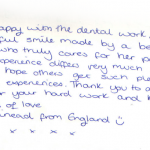
"A new beautiful smile made by a beautiful lady who truly cares for her patients..."
Sinead
Location:- England
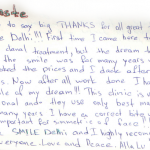

"I have the smile of my dream….This clinic is very professional and they use only best materials..."
Alla Lu
Location:- Russia


"Thank you so much for making my dream come true to have a perfect smile..."
Jacyln Gopinathan
Location:- Mindro Philippines


"I felt very comfortable through my treatment and i had 100% trust in you..."
Arnar Gislason
Location:- Iceland
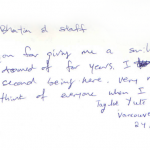

"Thank you for giving me a smile that i’ve dreamed of for years..."
Yuto Harrison
Location:- Canada
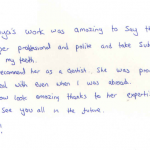

"Dr. Suprriya’s work was amazing…. She is super professional and polite..."
Todd
Location:- Australia
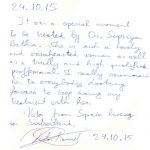

"Dr. Suprriya is such a lovely and warm hearted woman as well as a truly and high qualified professional..."
Victor Vique
Location:- Switzerland


"After travelling all through India and visiting 7 different clinics, this..."
JEFF MC CLEAN
Location:- New Zealand

"From the moment i got here i knew i had made the right decision."


"Thank you so much, Dr. Suprriya! I am so grateful for you and your practice."

"Very attentive and grateful for the results. I will keep in Touch"

"You saved my teeth. Lovely clinic and very professional staff..."


"My teeth are 7-8 shades whiter, thanks to you and your team..."

"Thank you very much dr. suprriya for wonderful treatment for implants and bridge and giving me my smile back."
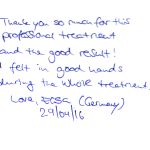

"Felt in good hands during the whole treatment..."

"Visited many dentist around the world and smile delhi definitely gives you a great smile..."
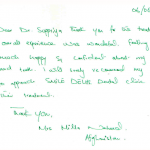

"Over all experience was wonderful…"
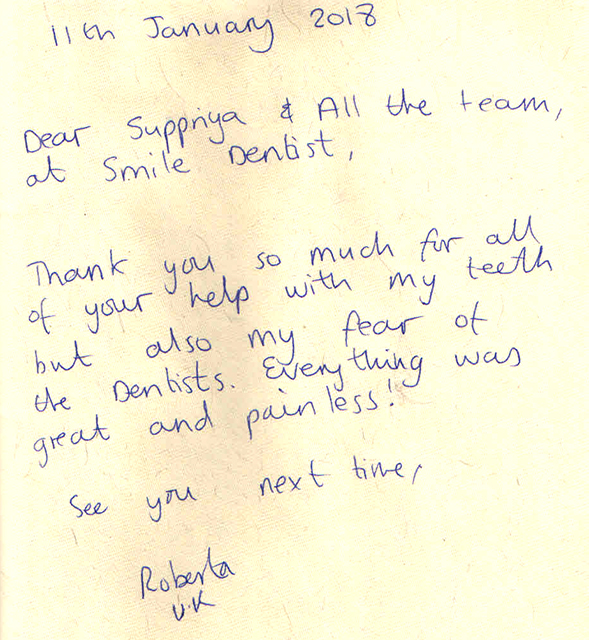
"Every thing was great and pain less !....."
Roberta
Location:- UK

"Dr. Suprriya is such a lovely and warm hearted woman as well as a..."
Victor
Location:- Switzerland


"Didn’t hurt, looked good, felt good, clearly explained and professionally done..."
Jeff
Location:- New zealand

"Dr. Supria is a unic dentice and an exellent person..”, “…honest and direct.."
Yaron Mayer
Location:- Israel Embassy

"Dr. Suprriya is very gentle and excellent human being. A perfect Dentist I...."
Uarely
Location:- Finland


"You treated me gentle as a child!..."
Andreas
Location:- Norway


"You are probably one of the best dentist I have ever been to in the last 50 years..."
Usama
Location:- Saudi Arabia
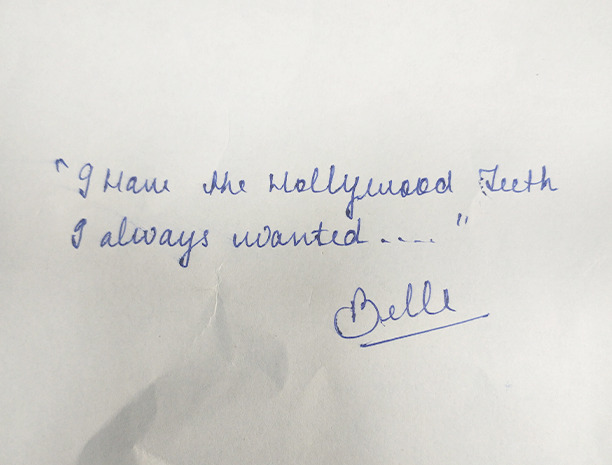

"I have the Hollywood teeth I always wanted…"
Belle
Location:- Canada
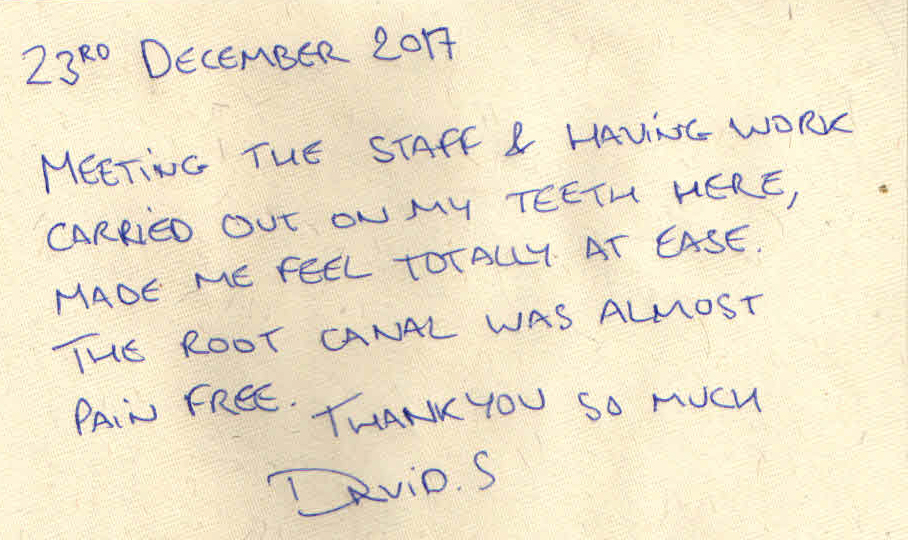
"The root canal was almost pain free....."
David Seeley
Location:- UK
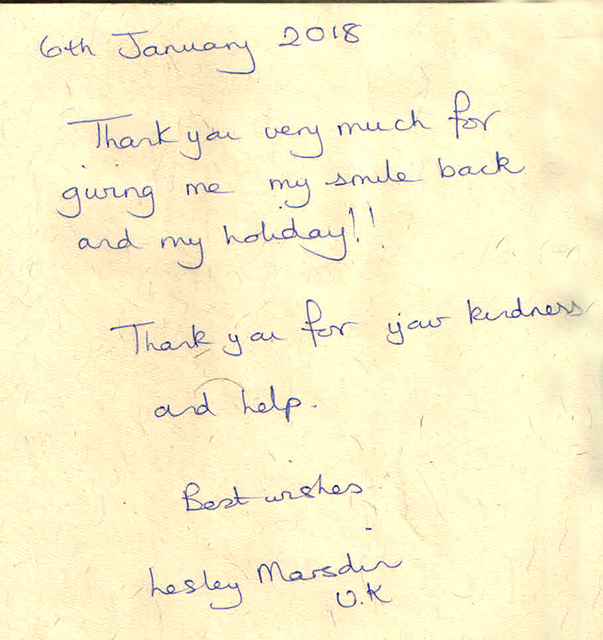
"Thank You very much for giving me my smile back and my holiday!....."
Lesley Marsdin
Location:- UK

"I even laughed when they screwed the posts in ! very professional even enjoyed it a bit"
Laurewce Moon
Location:- UK
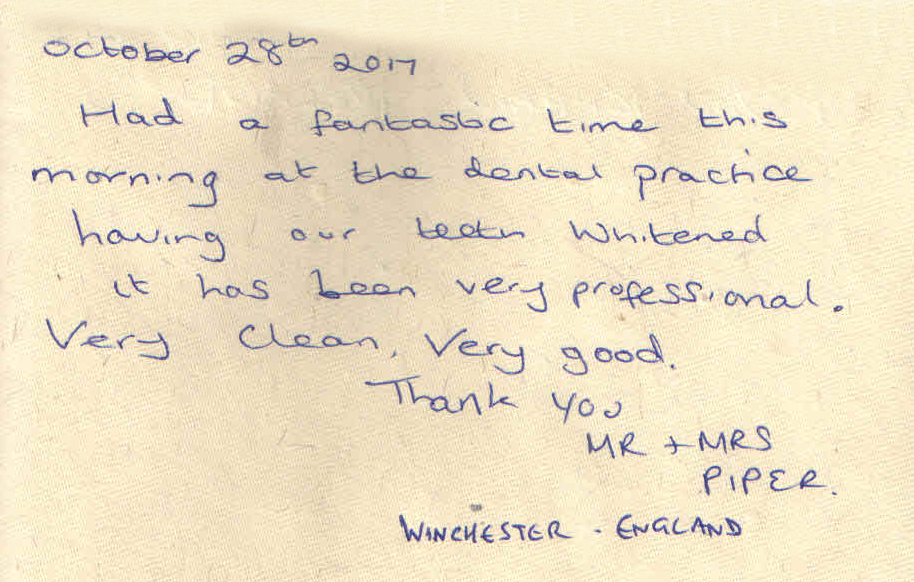
"It has been very professional. Very clean, very good......"
Mr. & Mrs. Piper
Location:-Winchester, England

"My emergency treatment was incredible kind and 1st class....."
Kevin Kahan
Location:- Ireland
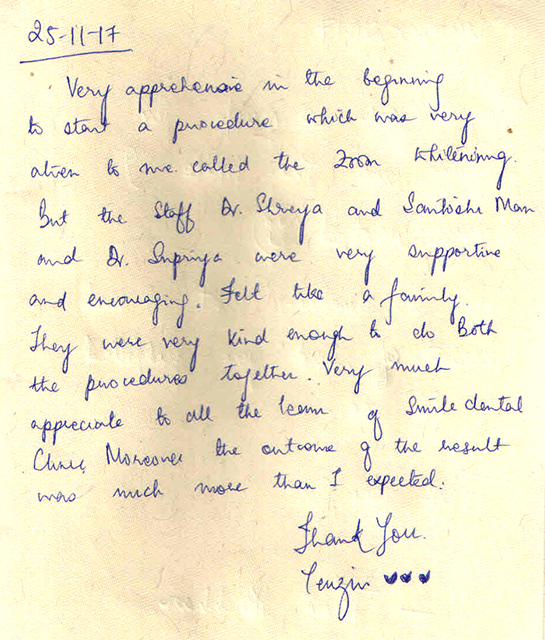

"The result was much more than I expected in zoom whitening....."
Tenzin
Location:- Bhutan
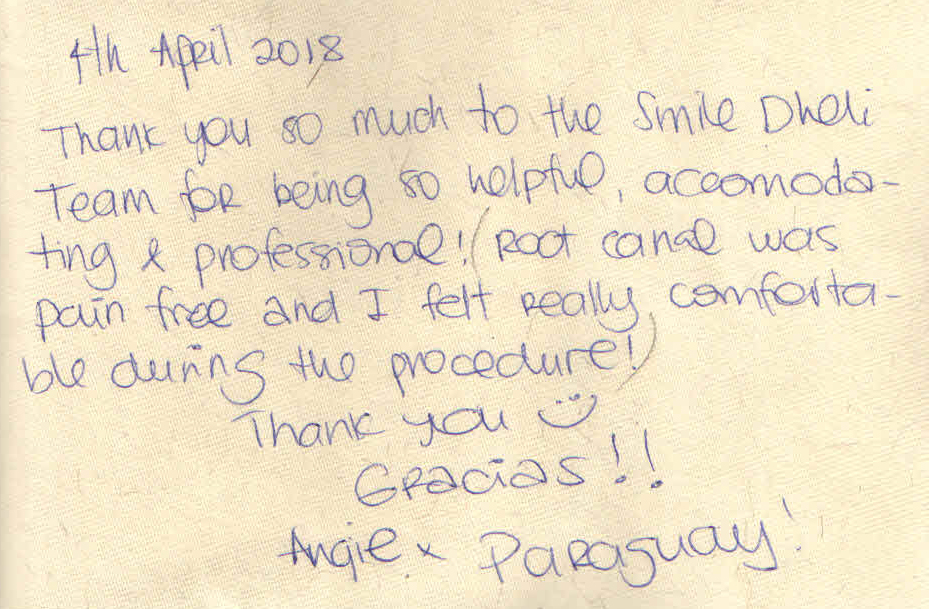

"Root canal was pain free and i felt really comfortable during the procedure....."
Angie
Location:- Paraguay
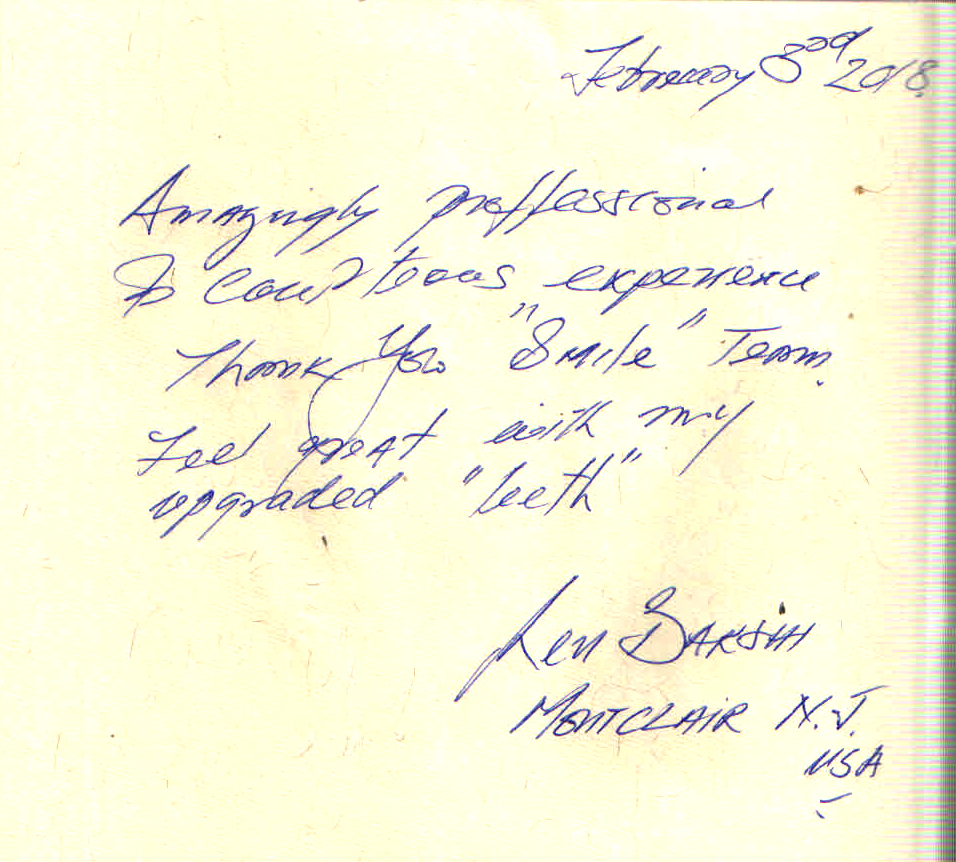
"Amazingly professional and courteous experience......"
Ken Bakshi
Location:- USA

"I had my teeth whitened amazing results!"
Paula Davey
Location:- Australia


"I would like to have sometimes so good dentist in Europe like Dr Suprriya..."
DANNY
Location:- Austria

"I would highly recommend Suprriya to anyone seeking good oral health care..."
ALLISON WEST
Location:- Australia


"Dr Suprriya, I just want to thank you for the very well done..."
MARIO
Location:- Columbia (Diplomat in India)