

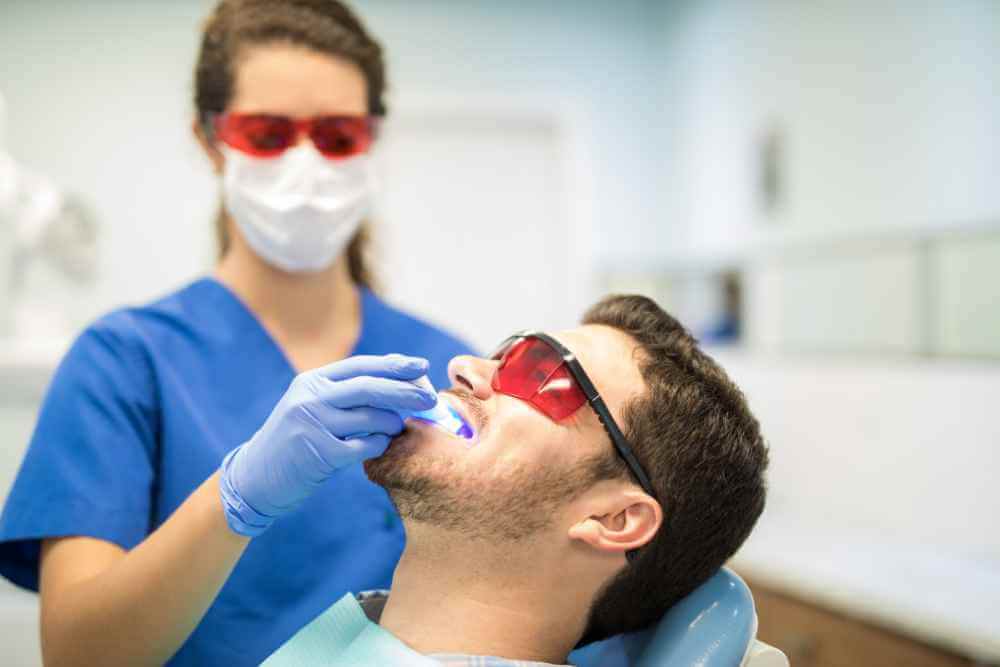
Can Teeth Whitening Damage Enamel?
Teeth whitening is one of the most requested cosmetic dental treatments, but it’s also one of the most misunderstood when it comes to what it actually does to enamel. Whitening doesn’t strip away enamel in bulk the way an abrasive or acid would, but research shows it isn’t entirely inert either , studies have found that bleaching agents can temporarily change the enamel’s surface texture and, in some cases, its roughness, particularly with stronger concentrations or repeated use.
Understanding what’s actually happening at the enamel level helps explain both the sensitivity many people experience and why whitening works best as a carefully paced, professionally guided process rather than something to overdo.
What Actually Happens to Teeth During the Whitening Process?
As the peroxide breaks apart, it releases oxygen molecules that break down these stain compounds, lightening the visible color of the tooth. Teeth whitening in south delhi works by using a peroxide-based bleaching agent, either hydrogen peroxide or carbamide peroxide, which breaks down and penetrates the enamel to reach the stained molecules trapped inside the tooth structure.
This process doesn’t dissolve or remove enamel itself, but it does temporarily increase the porousness of the enamel surface while the treatment is active, which is part of why teeth can feel more sensitive during this window. Once the peroxide has fully broken down and cleared from the tooth, this porousness gradually reduces again as the enamel reabsorbs minerals from saliva.
Does Teeth Whitening Weaken or Erode Enamel?
At professionally recommended concentrations and exposure times, whitening isn’t expected to erode enamel the way an acid would, and it doesn’t remove enamel the way a filing or abrasive polish does. That said, research on whitening and other bleaching methods has shown that whitening agents, particularly carbamide peroxide, can cause measurable changes to the enamel surface , including increased porosity and roughness, and in some studies, small reductions in surface hardness.
These effects tend to be more noticeable with higher peroxide concentrations, longer exposure times, or repeated courses of treatment, which is part of why dosage and timing are carefully controlled in a professional setting rather than left to trial and error.
Why Do Teeth Feel Sensitive After Whitening?
Sensitivity after whitening happens because the peroxide temporarily opens up microscopic channels in the enamel, allowing easier passage of hot, cold, or acidic stimuli down to the nerve inside the tooth. This is usually mild and resolves on its own within a day or two after treatment, though some people are more prone to it than others, particularly those who already have thinner enamel or existing sensitivity. Dentists often recommend desensitizing toothpaste before and after whitening sessions to help reduce this temporary discomfort.
Professional Whitening vs Over-the-Counter Products: What’s the Real Difference?
The biggest risk factor for enamel-related problems isn’t whitening itself, but unsupervised or excessive use of whitening products. A dental clinic in delhi can control the concentration of the whitening agent, the exposure time, and monitor how a patient’s teeth are responding throughout the process.
Over-the-counter products, by contrast, are typically weaker but come with far less oversight, which means people are more likely to overuse them or leave them on for longer than recommended in an attempt to speed up results.

Can Overusing Whitening Products Cause Lasting Damage?
Overuse is where the real risk lies. Repeatedly whitening beyond recommended frequency, leaving whitening trays on for extended periods, or using high-concentration products without professional guidance can lead to prolonged enamel porousness, increased sensitivity, and in some cases irritation to the gums.
While enamel itself is unlikely to be structurally destroyed by whitening alone, chronic overuse combined with other factors, like an already acidic diet or existing enamel erosion, can compound the effect and make teeth more vulnerable over time. This is why dentists tend to emphasize following the recommended schedule closely rather than assuming that whitening more frequently will simply speed up or improve the results.
Are Some Teeth More Vulnerable to Whitening Side Effects Than Others?
Not all teeth respond to whitening the same way. Teeth with thinner enamel, visible cracks, or existing decay are generally more prone to sensitivity and irritation during whitening. Teeth that have been previously affected by acid erosion, from conditions like acid reflux or a highly acidic diet, may also be more reactive, since their enamel is already compromised before whitening even begins.
This is one of the main reasons a dental evaluation before starting a whitening plan matters, since it can catch these risk factors early.
Do Whitening Myths Contribute to Enamel Concerns?
A lot of the worry around whitening and enamel damage comes from a few persistent myths rather than the actual science behind the treatment.
One common misconception is that whitening “burns” or dissolves enamel the way a strong acid would , in reality, the peroxide used in whitening works through an oxidation reaction rather than an acidic one, so it doesn’t dissolve the enamel’s mineral structure the way acid erosion does, even though studies do show it can affect surface texture and roughness.
Another myth is that more concentrated products always work faster and better, which leads some people to use products at higher strengths or for longer than intended, ironically increasing the very risk of surface changes and sensitivity they were trying to avoid.
There’s also a belief that any whitening at all makes teeth permanently fragile, when in fact the surface-level changes involved are generally mild under supervised, recommended use rather than a dramatic structural change.
Clearing up these misunderstandings is often just as important as the treatment itself when it comes to helping patients approach whitening with realistic expectations.
How Does Whitening Affect Existing Dental Work Like Crowns or Fillings?
One detail that often surprises patients is that whitening agents only work on natural tooth enamel, not on restorations like crowns, veneers, or composite fillings. This means these materials won’t lighten along with the rest of the teeth, which can sometimes create a noticeable shade mismatch after whitening. Dentists typically account for this during planning, either timing whitening before new restorations are placed or discussing realistic expectations if visible restorations are already present.
What Can You Do to Minimize Sensitivity During Whitening?
A few simple steps can meaningfully reduce sensitivity during a whitening course. Using a desensitizing toothpaste in the days leading up to treatment, avoiding very hot or cold foods immediately afterward, and following the exact concentration and timing recommended by a dentist all help limit how much the enamel’s temporary porousness translates into discomfort.
Patients with a history of sensitive teeth are often advised to space out sessions more than usual, giving the enamel extra time to settle between applications. Staying hydrated and limiting acidic foods and drinks around the treatment period can also help, since saliva plays a role in naturally buffering and remineralizing enamel between sessions.
How Long Should You Wait Between Whitening Sessions?
Spacing between whitening sessions depends on the method used and how a patient’s teeth respond, but most professional plans build in deliberate gaps rather than back-to-back treatments. This pacing gives the enamel time to remineralize and settle before it’s exposed to peroxide again, which lowers the overall risk of prolonged sensitivity. Trying to compress a whitening plan into a shorter timeframe than recommended is one of the more common ways people unintentionally increase their risk of irritation.
Whitening is generally considered safe when it’s approached as a supervised, well-paced process rather than something to rush through, which is the kind of planning Smile Delhi- The dental clinic in Delhi builds into every whitening consultation before treatment begins. According to background available on tooth whitening , studies have found that carbamide peroxide bleaching gels can increase the roughness and porosity of the enamel surface, and side effects like tooth sensitivity and gum irritation are recognized as common outcomes of the bleaching process, which is why professional monitoring matters throughout treatment.
So, can teeth whitening in south delhi damage enamel? Research shows it can cause temporary changes to the enamel surface, such as increased porosity and roughness, particularly with higher concentrations or overuse , but under professional supervision and recommended use, these effects are generally mild, and the sensitivity most people experience tends to fade within a few days. The real risk comes from unsupervised overuse rather than a single, properly managed treatment.
FAQs
1. Does teeth whitening permanently thin enamel?
Not typically. Whitening can cause temporary changes to the enamel surface, like increased porosity and roughness, especially with overuse, but under professional supervision these effects are usually mild and don’t strip away enamel structurally.
2. Why do my teeth feel sensitive after whitening?
Sensitivity occurs because the whitening agent temporarily opens tiny channels in the enamel, allowing more sensation through to the nerve. It’s usually mild and short-lived.
3. Is professional whitening safer than over-the-counter kits?
Generally, yes, since a dentist can control concentration and exposure time and monitor how your teeth respond, reducing the risk of overuse.
4. Will whitening lighten my crowns or fillings too?
No. Whitening agents only affect natural enamel, so existing restorations won’t change shade along with the rest of your teeth.
5. How often is it safe to whiten your teeth?
It depends on the method and your enamel’s condition, but most professional plans space out sessions to give enamel time to settle between treatments.
Whitening isn’t entirely without effect on enamel, but under professional guidance and reasonable use, the changes it causes tend to be mild and manageable rather than something to be alarmed about. At Smile Delhi- The Dental Clinic, every whitening consultation starts with reviewing a patient’s enamel and sensitivity history so the treatment plan is paced around what their teeth can comfortably handle.
Sources:
- NHS. (n.d.). Teeth Whitening. Available at:
https://www.nhs.uk/tests-and-treatments/teeth-whitening/ - PubMed Central (National Institutes of Health) – “Microhardness and Roughness of Enamel Bleached with 10% Carbamide Peroxide”
https://pmc.ncbi.nlm.nih.gov/articles/PMC4148567 - healthdirect. (n.d.). Teeth Whitening. Available at:https://www.healthdirect.gov.au/teeth-whitening
- American Dental Association (MouthHealthy). (n.d.). Teeth Whitening. Available at:https://www.mouthhealthy.org/all-topics-a-z/teeth-whitening/

Dr. Suprriya B. Bhatia is a highly experienced dental professional with over 25 years of clinical expertise. A leading dentist in South Delhi, she is the founder of Smile Delhi – The Dental Clinic and specialises in cosmetic dentistry, dental implants, and smile makeovers. Dr. Suprriya B. Bhatia is known for her compassionate, patient-centred approach and commitment to creating healthy, confident smiles for patients from India and abroad.


"Extremely good service and care..."
Tim Gound
Location:- U. K.


"The standard of the clinic is like a first country’s clinic..."
PEDRO MORAES
Location:- Brazil


"Me and my family were very reluctant to undergo my dental treatment in India, but..."
RICHARD SALDANHA
Location:- Peru, South America


"The hygiene is good, the care up to European standards if not better. Strong on explaining..."
THOMAS BAINS
Location:- European Commission
"A new beautiful smile made by a beautiful lady who truly cares for her patients..."
Sinead
Location:- England

"I have the smile of my dream….This clinic is very professional and they use only best materials..."
Alla Lu
Location:- Russia


"Thank you so much for making my dream come true to have a perfect smile..."
Jacyln Gopinathan
Location:- Mindro Philippines


"I felt very comfortable through my treatment and i had 100% trust in you..."
Arnar Gislason
Location:- Iceland

"Thank you for giving me a smile that i’ve dreamed of for years..."
Yuto Harrison
Location:- Canada

"Dr. Suprriya’s work was amazing…. She is super professional and polite..."
Todd
Location:- Australia


"Dr. Suprriya is such a lovely and warm hearted woman as well as a truly and high qualified professional..."
Victor Vique
Location:- Switzerland


"After travelling all through India and visiting 7 different clinics, this..."
JEFF MC CLEAN
Location:- New Zealand

"From the moment i got here i knew i had made the right decision."


"Thank you so much, Dr. Suprriya! I am so grateful for you and your practice."

"Very attentive and grateful for the results. I will keep in Touch"

"You saved my teeth. Lovely clinic and very professional staff..."


"My teeth are 7-8 shades whiter, thanks to you and your team..."

"Thank you very much dr. suprriya for wonderful treatment for implants and bridge and giving me my smile back."

"Felt in good hands during the whole treatment..."

"Visited many dentist around the world and smile delhi definitely gives you a great smile..."

"Over all experience was wonderful…"
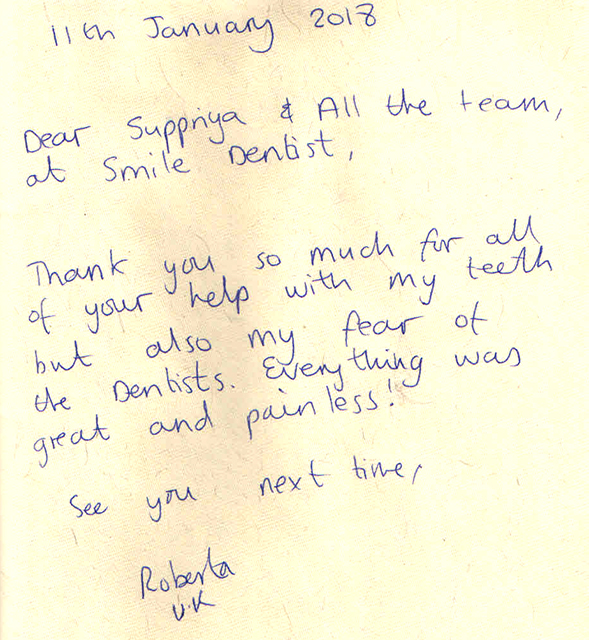
"Every thing was great and pain less !....."
Roberta
Location:- UK

"Dr. Suprriya is such a lovely and warm hearted woman as well as a..."
Victor
Location:- Switzerland
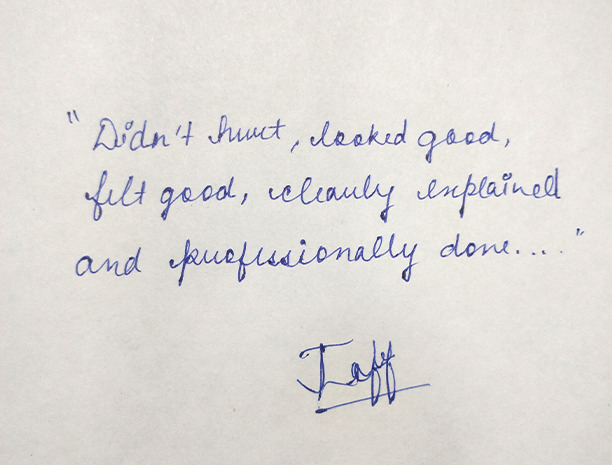

"Didn’t hurt, looked good, felt good, clearly explained and professionally done..."
Jeff
Location:- New zealand

"Dr. Supria is a unic dentice and an exellent person..”, “…honest and direct.."
Yaron Mayer
Location:- Israel Embassy

"Dr. Suprriya is very gentle and excellent human being. A perfect Dentist I...."
Uarely
Location:- Finland


"You treated me gentle as a child!..."
Andreas
Location:- Norway


"You are probably one of the best dentist I have ever been to in the last 50 years..."
Usama
Location:- Saudi Arabia
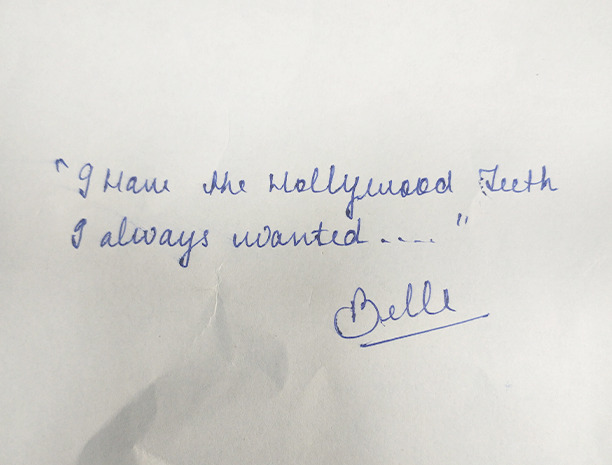

"I have the Hollywood teeth I always wanted…"
Belle
Location:- Canada
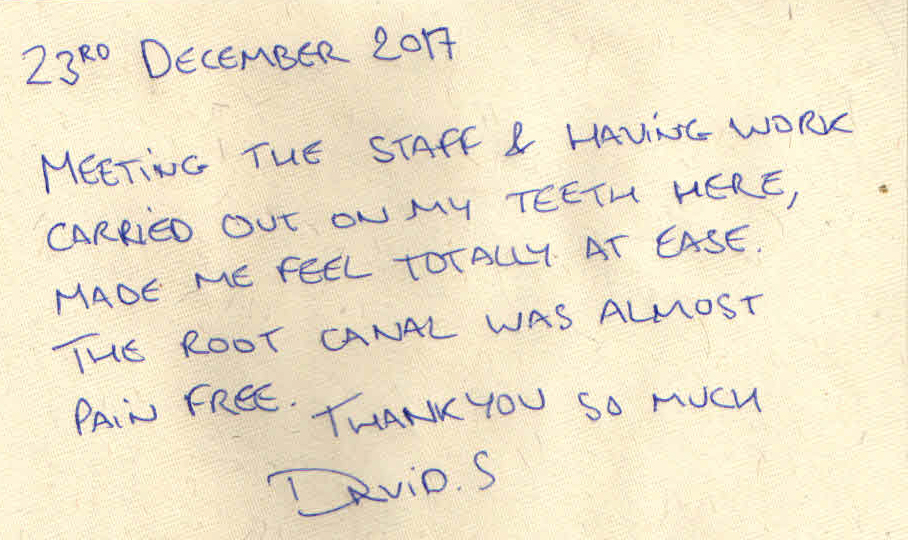
"The root canal was almost pain free....."
David Seeley
Location:- UK
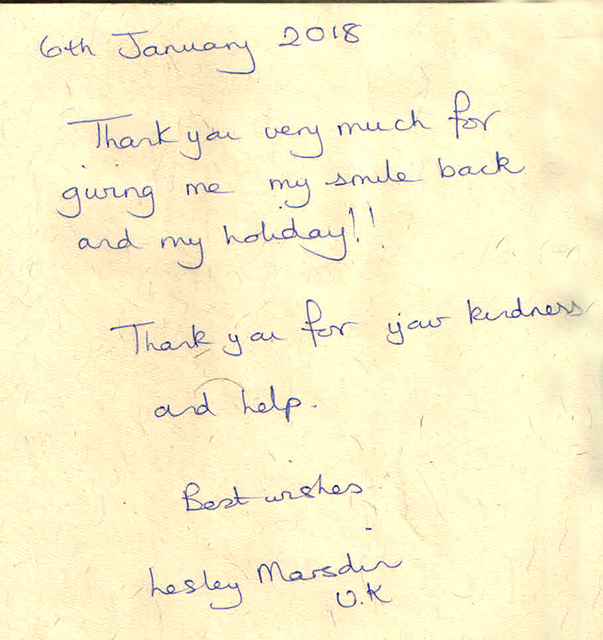
"Thank You very much for giving me my smile back and my holiday!....."
Lesley Marsdin
Location:- UK

"I even laughed when they screwed the posts in ! very professional even enjoyed it a bit"
Laurewce Moon
Location:- UK
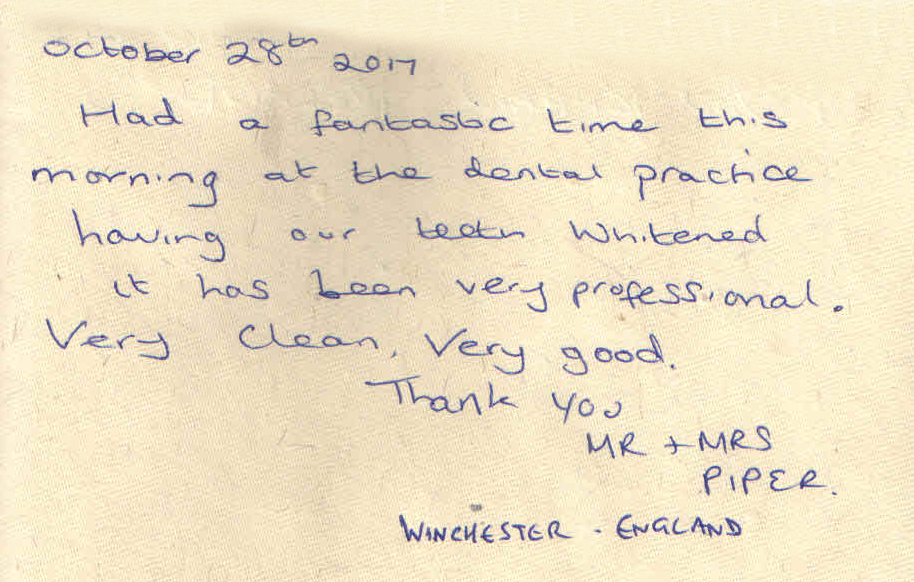
"It has been very professional. Very clean, very good......"
Mr. & Mrs. Piper
Location:-Winchester, England

"My emergency treatment was incredible kind and 1st class....."
Kevin Kahan
Location:- Ireland
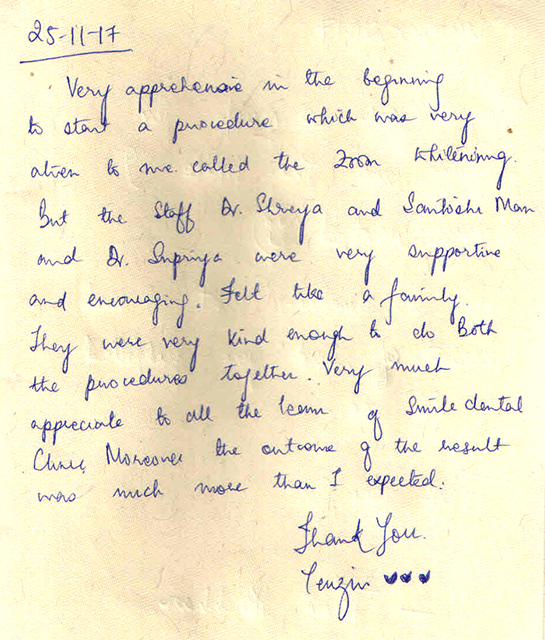

"The result was much more than I expected in zoom whitening....."
Tenzin
Location:- Bhutan
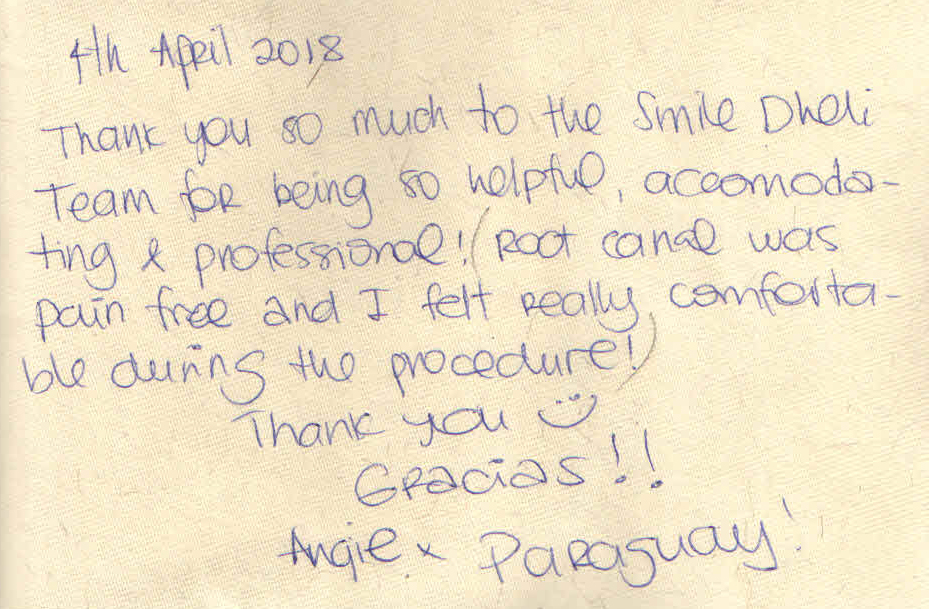

"Root canal was pain free and i felt really comfortable during the procedure....."
Angie
Location:- Paraguay
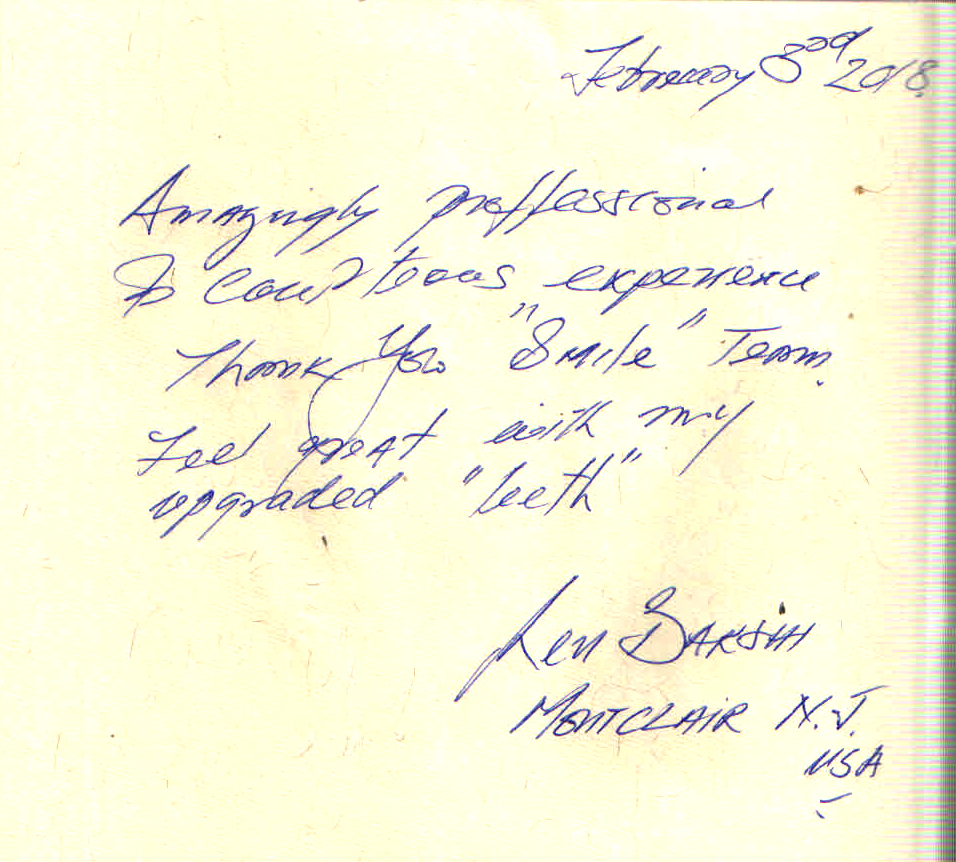
"Amazingly professional and courteous experience......"
Ken Bakshi
Location:- USA


"I had my teeth whitened amazing results!"
Paula Davey
Location:- Australia


"I would like to have sometimes so good dentist in Europe like Dr Suprriya..."
DANNY
Location:- Austria

"I would highly recommend Suprriya to anyone seeking good oral health care..."
ALLISON WEST
Location:- Australia


"Dr Suprriya, I just want to thank you for the very well done..."
MARIO
Location:- Columbia (Diplomat in India)