

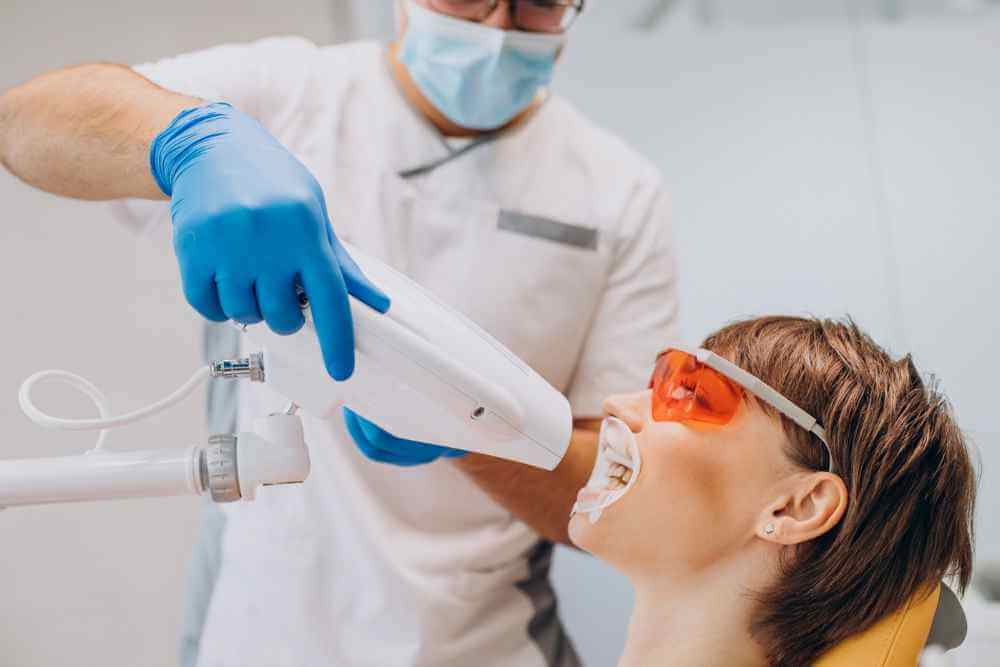
How Often Can You Repeat Professional Teeth Whitening?
A brighter smile tends to fade gradually rather than all at once, which is why many people eventually wonder when it may be appropriate to consider another professional whitening session. The timing can vary from person to person because whitening results are influenced by diet, lifestyle habits, oral hygiene, the type of staining present, and the natural changes that occur in teeth over time.
Drinks such as coffee, tea, and red wine, along with smoking or tobacco use, may contribute to new staining and affect how long the whitening effect remains noticeable.
This guide explores the factors that can influence how often professional teeth whitening may be repeated and why there is no single schedule that suits everyone. It also explains what dental professionals may consider before recommending another treatment, including your current tooth colour, existing sensitivity, gum health, and the condition of your teeth.
Understanding these factors can help you make informed decisions about when to consider another session and when it may be better to wait or discuss other options with your dental professional.
Why Whitening Frequency Is a Common Question
Teeth whitening isn’t a one-and-done procedure for most people. Results are influenced by ongoing exposure to pigmented foods and drinks, oral hygiene habits, and the natural porosity of each person’s enamel. Because of this, it’s common for results to gradually shift back toward a person’s baseline shade over the following months, which naturally leads to questions about touch-ups.
That said, “how often” isn’t a fixed number that applies to everyone. It depends on the type of whitening used, how your enamel responds, and lifestyle factors that can contribute to staining over time. If you are considering teeth whitening in south delhi, your dentist can assess your oral health, discuss your goals, and recommend an appropriate treatment schedule based on your individual needs rather than relying on a one-size-fits-all approach.
Factors That Influence How Often You Can Repeat Whitening
1. The Type of Whitening Treatment
In-office professional whitening and at-home tray-based systems work differently and are typically approached with different timelines in mind. In-office treatments tend to use higher-concentration agents under professional supervision, while take-home kits often use lower concentrations over a longer period. The method used in your original treatment plays a role in how soon a repeat session might reasonably be considered.
2. Diet and Lifestyle Habits
Frequent consumption of coffee, tea, red wine, or other heavily pigmented foods and drinks can cause results to fade more quickly. Smoking and tobacco use are also commonly associated with faster staining. People with these habits may notice their results shift sooner than those with lighter exposure to staining substances.
3. Natural Enamel Characteristics
Enamel thickness and porosity vary from person to person, and these differences affect how teeth absorb and release pigments over time. Some people naturally experience more gradual shade regression than others, simply due to how their enamel is structured.
4. Oral Hygiene Routine
Consistent brushing, flossing, and visiting your dentist can help remove surface stains before they become embedded. Regular check-ups at a dental clinic in Delhi may also help extend the time between whitening sessions.
5. Age and Tooth Structure
As dentin (the layer beneath enamel) can become more prominent with age, some people may notice a different rate of shade change over time compared to when they were younger.
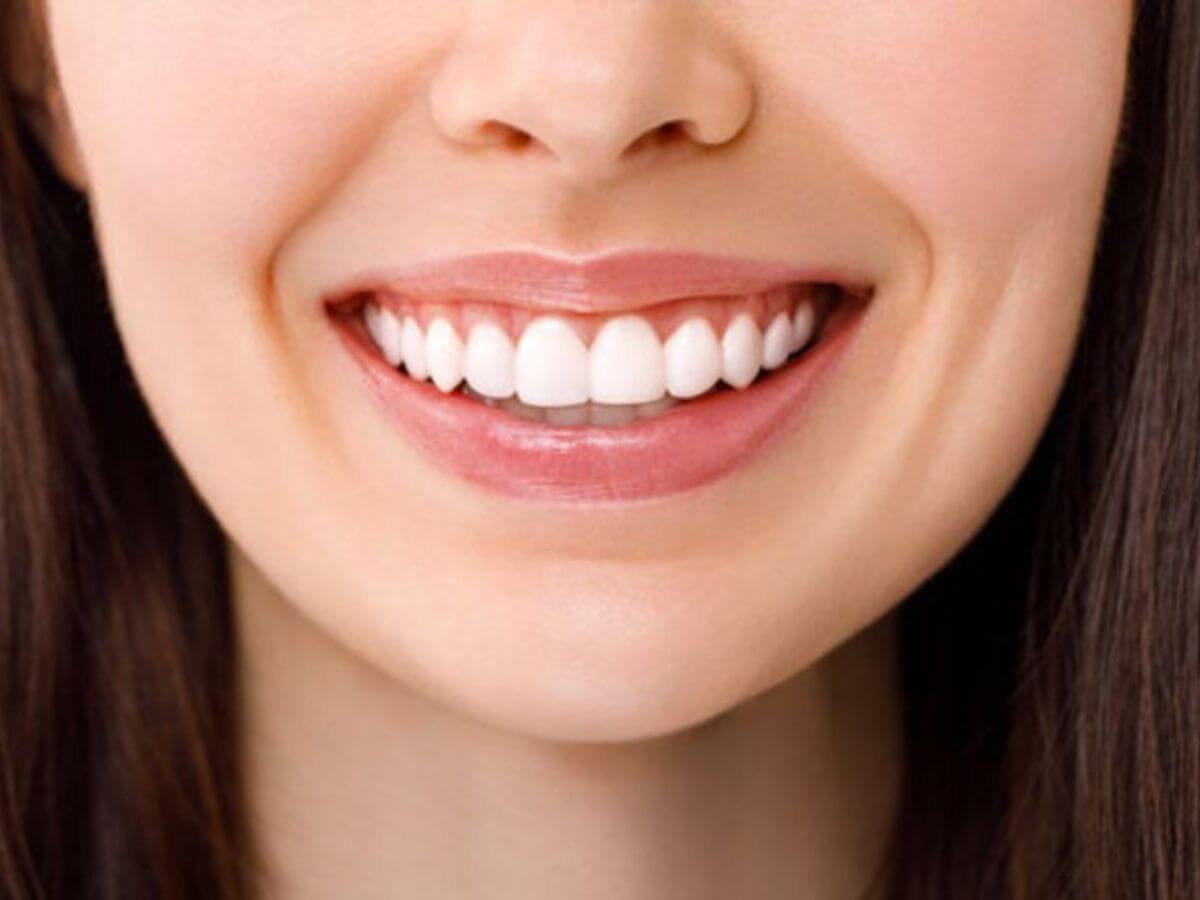
The Role of Enamel Recovery Time
Enamel doesn’t just need time for pigments to settle back in gradually, it also benefits from a recovery period after exposure to tooth whitening. During and immediately after a whitening session, the outer layer of the tooth can be temporarily more porous, as covered in guidance around post-whitening care. Repeating treatments before this layer has had adequate time to stabilize is one of the more commonly cited reasons for increased sensitivity.
This is part of why professional guidance tends to favor spacing sessions out rather than teeth whitening as frequently as possible to maintain a certain shade. Giving enamel time to recover between treatments is generally considered part of a sustainable, long-term approach to maintaining a brighter smile.
While every case is different, here are some general reference points that are commonly used as informal guidance for patients. These are not guarantees or fixed rules, and your own timeline may vary based on the factors covered above:
- In-office professional treatments are sometimes spaced several months to about a year apart, depending on individual results and enamel response.
- At-home maintenance kits or touch-up trays, when used as directed, may be used more frequently in smaller increments, though this still depends on the product and professional guidance.
- Whitening toothpaste and over-the-counter maintenance products are generally considered lower-intensity and are sometimes used as part of an ongoing routine between professional sessions, rather than as a substitute for them.
Because these ranges vary so widely from person to person, they’re best used as a starting point for a conversation with a dental professional rather than a strict timeline to follow independently.
How to Extend the Time Between Whitening Sessions
Making a few adjustments to daily habits can help results last longer, which may reduce how often repeat treatments feel necessary.
- Limit staining foods and drinks, or rinse with water shortly after consuming them.
- Use a straw for beverages like coffee, tea, or dark sodas to reduce direct contact with front teeth.
- Maintain a consistent oral hygiene routine, including brushing twice daily and flossing regularly.
- Avoid tobacco products, which are commonly associated with faster staining and other oral health concerns.
- Schedule regular dental cleanings, which can help remove surface stains before they become more difficult to address.
- Consider a maintenance routine discussed with your dental professional, which may include occasional touch-ups rather than full treatments.
When to Avoid Repeating Whitening Right Away
There are situations where it may be worth waiting longer than usual before another session:
- If you experienced noticeable sensitivity or discomfort after your last treatment
- If you have untreated cavities, gum disease, or other oral health concerns that haven’t been addressed
- If you’ve recently had other dental work, such as fillings or crowns, since whitening agents don’t affect restorative materials the same way they affect natural teeth
- If you’re pregnant or nursing, as many professionals recommend postponing elective cosmetic treatments during this time
A dental professional can help assess whether any of these factors apply to your situation before recommending next steps.
Common Questions About Whitening Frequency
Is it safe to whiten teeth every month?
For most people, whitening every month would generally be considered too frequent, as it doesn’t allow enamel adequate time to recover. Spacing recommendations vary by individual, which is why professional guidance is useful here.
Does at-home whitening need to be spaced out the same way as in-office treatments?
At-home products often use lower concentrations, but they can still affect enamel and gum tissue with overuse. Following product instructions and professional advice remains important regardless of the method.
Will repeating whitening too often damage my teeth?
Overuse has been associated with increased sensitivity and, in some cases, gum irritation. This is why spacing sessions appropriately and following professional guidance is generally recommended.
How do I know if my results have faded enough to consider another session?
Comparing your current shade to photos or shade guides from your original treatment, along with a conversation with your dentist, can help you gauge whether a touch-up may be worth considering.
Final Thoughts
There’s no single number that tells every patient exactly how often they can repeat professional teeth whitening. The right interval depends on the type of treatment used, individual enamel characteristics, lifestyle habits, and how your teeth responded to previous sessions.
Paying attention to signs like sensitivity or diminishing results can help guide the decision, alongside professional advice tailored to your situation.
If you’re thinking about Teeth Whitening in Delhi and want guidance on the right timeline for your specific case, a conversation with a dental professional is the most reliable way to move forward. Smile Delhi – The Dental Clinic can help assess your enamel condition and previous treatment history to discuss an appropriate approach for your next steps.
Sources:
- American Dental Association. (n.d.). Risks of frequent teeth whitening. Available at: https://adanews.ada.org/huddles/risks-of-frequent-teeth-whitening/
- Leeds Teaching Hospitals NHS Trust. (n.d.). Tooth Whitening – Information for Adult Patients. Available at: https://www.leedsth.nhs.uk/patients/resources/tooth-whitening-information-for-adult-patients/
- nidirect (Northern Ireland government). (n.d.). Tooth Whitening. Available at: https://www.nidirect.gov.uk/node/12968
- Belfast City Council. (n.d.). Tooth Whitening. Available at: https://www.belfastcity.gov.uk/toothwhitening

Dr. Suprriya B. Bhatia is a highly experienced dental professional with over 25 years of clinical expertise. A leading dentist in South Delhi, she is the founder of Smile Delhi – The Dental Clinic and specialises in cosmetic dentistry, dental implants, and smile makeovers. Dr. Suprriya B. Bhatia is known for her compassionate, patient-centred approach and commitment to creating healthy, confident smiles for patients from India and abroad.


"Extremely good service and care..."
Tim Gound
Location:- U. K.


"The standard of the clinic is like a first country’s clinic..."
PEDRO MORAES
Location:- Brazil


"Me and my family were very reluctant to undergo my dental treatment in India, but..."
RICHARD SALDANHA
Location:- Peru, South America


"The hygiene is good, the care up to European standards if not better. Strong on explaining..."
THOMAS BAINS
Location:- European Commission
"A new beautiful smile made by a beautiful lady who truly cares for her patients..."
Sinead
Location:- England

"I have the smile of my dream….This clinic is very professional and they use only best materials..."
Alla Lu
Location:- Russia


"Thank you so much for making my dream come true to have a perfect smile..."
Jacyln Gopinathan
Location:- Mindro Philippines


"I felt very comfortable through my treatment and i had 100% trust in you..."
Arnar Gislason
Location:- Iceland

"Thank you for giving me a smile that i’ve dreamed of for years..."
Yuto Harrison
Location:- Canada

"Dr. Suprriya’s work was amazing…. She is super professional and polite..."
Todd
Location:- Australia


"Dr. Suprriya is such a lovely and warm hearted woman as well as a truly and high qualified professional..."
Victor Vique
Location:- Switzerland


"After travelling all through India and visiting 7 different clinics, this..."
JEFF MC CLEAN
Location:- New Zealand

"From the moment i got here i knew i had made the right decision."


"Thank you so much, Dr. Suprriya! I am so grateful for you and your practice."

"Very attentive and grateful for the results. I will keep in Touch"

"You saved my teeth. Lovely clinic and very professional staff..."


"My teeth are 7-8 shades whiter, thanks to you and your team..."

"Thank you very much dr. suprriya for wonderful treatment for implants and bridge and giving me my smile back."

"Felt in good hands during the whole treatment..."

"Visited many dentist around the world and smile delhi definitely gives you a great smile..."


"Over all experience was wonderful…"
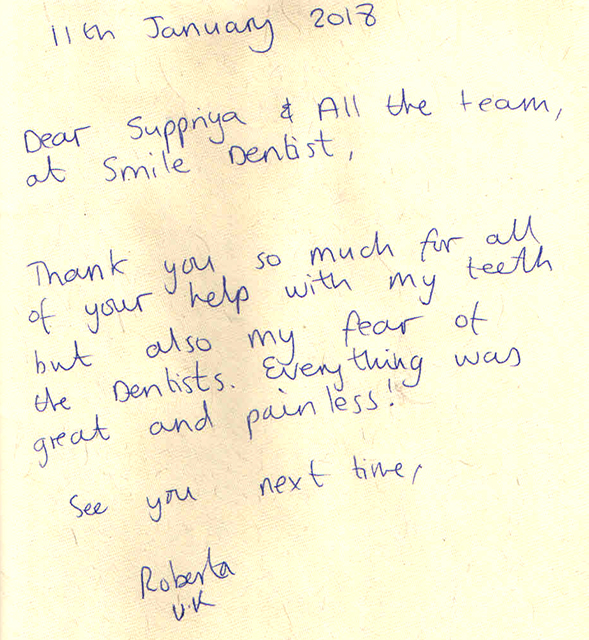
"Every thing was great and pain less !....."
Roberta
Location:- UK

"Dr. Suprriya is such a lovely and warm hearted woman as well as a..."
Victor
Location:- Switzerland
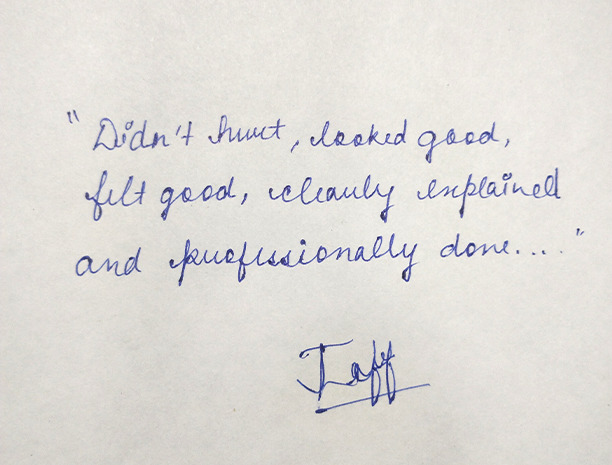

"Didn’t hurt, looked good, felt good, clearly explained and professionally done..."
Jeff
Location:- New zealand

"Dr. Supria is a unic dentice and an exellent person..”, “…honest and direct.."
Yaron Mayer
Location:- Israel Embassy

"Dr. Suprriya is very gentle and excellent human being. A perfect Dentist I...."
Uarely
Location:- Finland


"You treated me gentle as a child!..."
Andreas
Location:- Norway


"You are probably one of the best dentist I have ever been to in the last 50 years..."
Usama
Location:- Saudi Arabia
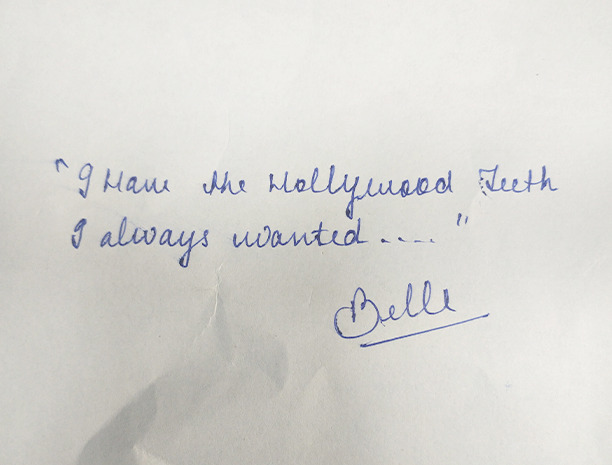

"I have the Hollywood teeth I always wanted…"
Belle
Location:- Canada
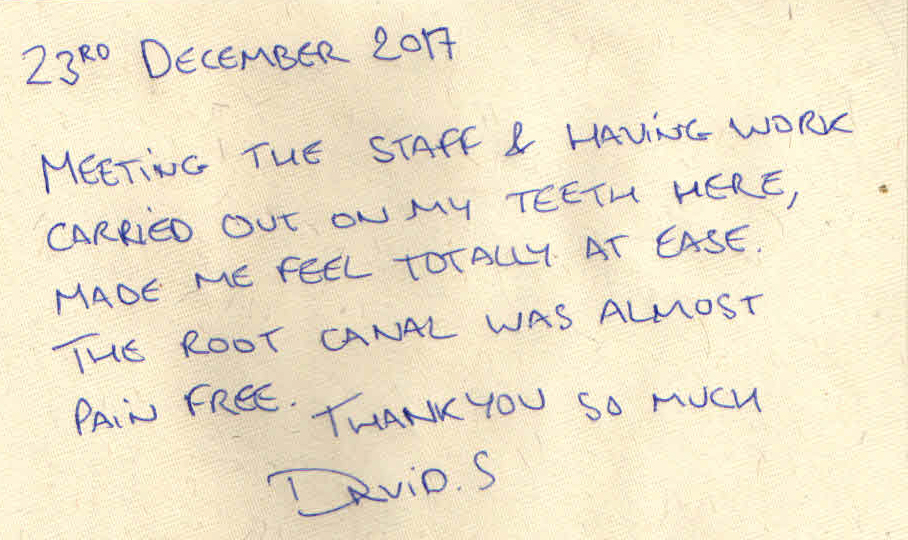
"The root canal was almost pain free....."
David Seeley
Location:- UK
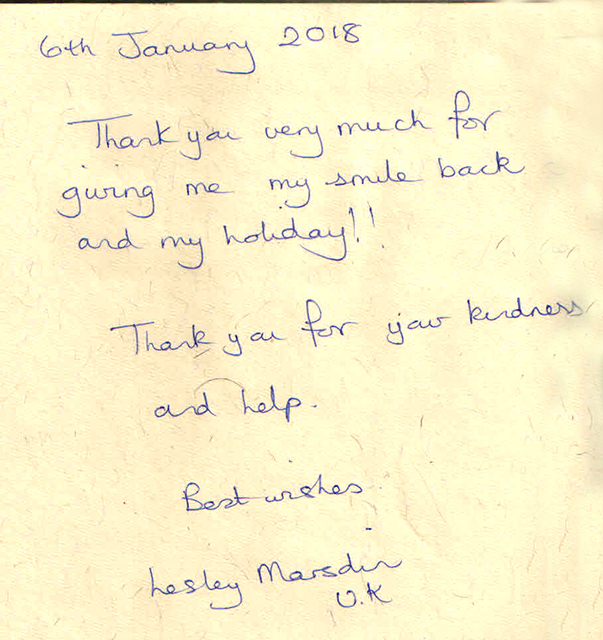
"Thank You very much for giving me my smile back and my holiday!....."
Lesley Marsdin
Location:- UK

"I even laughed when they screwed the posts in ! very professional even enjoyed it a bit"
Laurewce Moon
Location:- UK
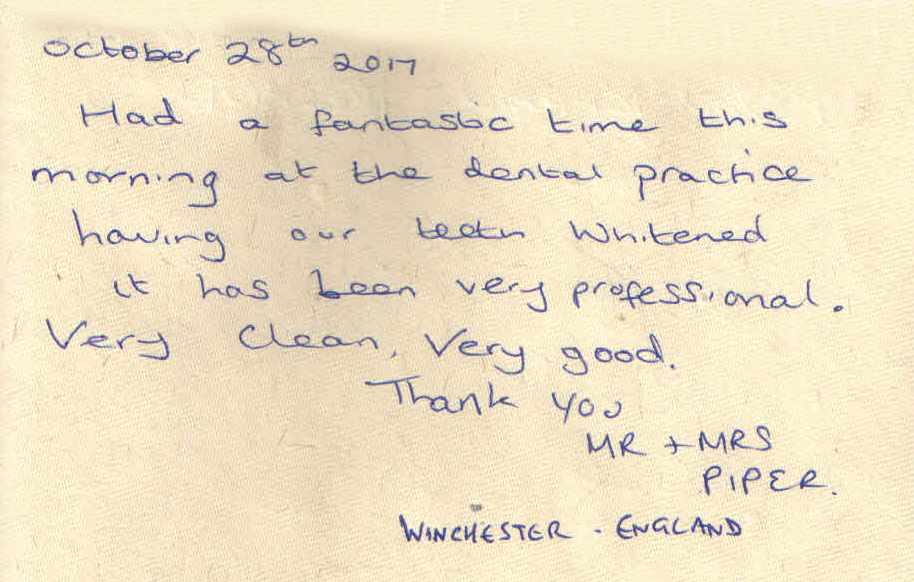
"It has been very professional. Very clean, very good......"
Mr. & Mrs. Piper
Location:-Winchester, England

"My emergency treatment was incredible kind and 1st class....."
Kevin Kahan
Location:- Ireland
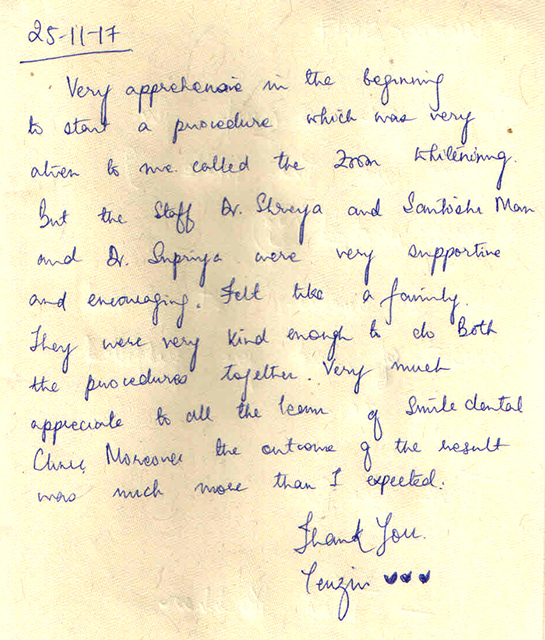

"The result was much more than I expected in zoom whitening....."
Tenzin
Location:- Bhutan
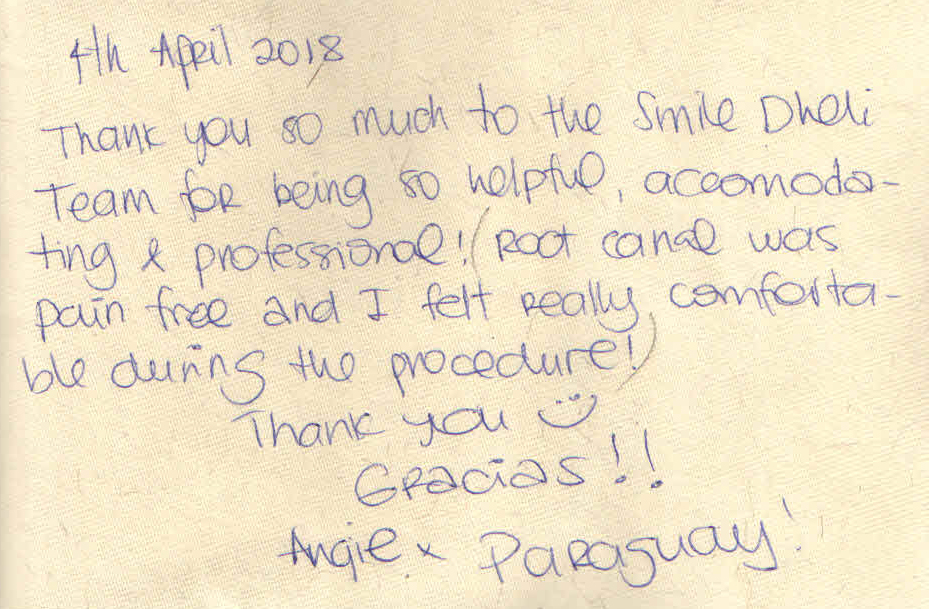

"Root canal was pain free and i felt really comfortable during the procedure....."
Angie
Location:- Paraguay
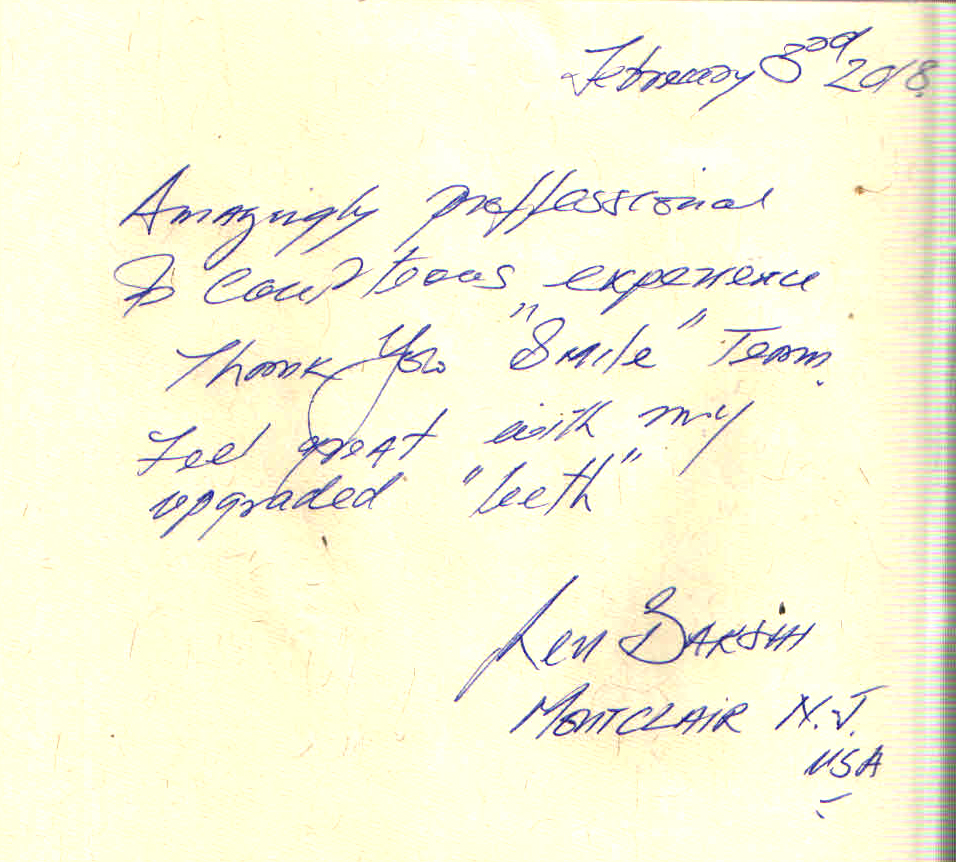
"Amazingly professional and courteous experience......"
Ken Bakshi
Location:- USA


"I had my teeth whitened amazing results!"
Paula Davey
Location:- Australia


"I would like to have sometimes so good dentist in Europe like Dr Suprriya..."
DANNY
Location:- Austria

"I would highly recommend Suprriya to anyone seeking good oral health care..."
ALLISON WEST
Location:- Australia


"Dr Suprriya, I just want to thank you for the very well done..."
MARIO
Location:- Columbia (Diplomat in India)