


The Hidden Disease Around Your Teeth: Why Gum Disease Can Progress Without Pain
Have you ever wondered why some people can have serious dental problems without experiencing a toothache?
When most people think about a dental problem, they imagine pain—a throbbing tooth, sensitivity to hot or cold, swelling, or difficulty chewing. But one of the most common threats to adult oral health can develop quietly, sometimes for years, without causing obvious pain.
That condition is gum disease, also known as periodontal disease.
Gum disease affects the tissues surrounding and supporting your teeth. It can begin with something as ordinary as plaque buildup and, if left untreated, gradually progress to inflammation, gum recession, bone loss, loose teeth, and eventually tooth loss.
The worrying part is that pain is not always an early warning sign.
This is why a person may feel that their teeth are perfectly healthy while disease is developing beneath the gumline.
According to the National Institute of Dental and Craniofacial Research (NIDCR), gum disease can cause inflammation in the tissues that support the teeth and, when it progresses, can damage the bone supporting them. The Centers for Disease Control and Prevention (CDC) also notes that periodontitis is a serious form of gum disease involving bone loss around the teeth and is a leading cause of tooth loss.
So, how can gum disease progress without pain? And what should you look for before it becomes a serious problem?
Let’s take a closer look.
What Exactly Is Gum Disease?
Gum disease is an infection and inflammation affecting the gums and the structures supporting your teeth.
It generally begins with dental plaque—a sticky bacterial film that continuously forms on your teeth.
When plaque isn’t adequately removed through brushing and cleaning between the teeth, it can harden into tartar or calculus. Unlike plaque, hardened calculus cannot simply be brushed away at home and may require professional cleaning at a dental clinic in Delhi.
Gum disease generally exists on a spectrum.
Gingivitis: The Early Stage
The earliest stage is called gingivitis.
Typical signs include:
- Red or swollen gums
- Gums that bleed while brushing or flossing
- Gum tenderness
- Bad breath
- Increased plaque buildup around the gumline
The good news is that gingivitis can often be prevented and reversed with improved oral hygiene and professional dental care.
Periodontitis: When Gum Disease Goes Deeper
If gum inflammation is allowed to continue, it can progress to periodontitis.
At this stage, the infection and inflammation affect the supporting tissues around the teeth. Gums can pull away from the teeth, creating deeper spaces or periodontal pockets. Over time, the bone supporting the teeth can be destroyed.
This is where gum disease becomes a serious threat to your natural teeth.
And importantly, the amount of damage does not always correspond to the amount of pain you feel.
Why Doesn’t Gum Disease Always Hurt?
This is one of the biggest misconceptions about oral health.
Many people assume:
“If something was seriously wrong with my gums, I would feel pain.”
Unfortunately, that isn’t necessarily true.
Gum disease can develop gradually rather than producing a sudden, dramatic dental emergency. The inflammation and destruction can progress around the teeth while the person experiences little or no discomfort.
The CDC specifically warns that some oral diseases may not cause pain or easily noticeable signs until they have reached a more serious stage. This is one reason routine dental examinations are important.
Think about it this way:
A lack of pain does not always mean a lack of disease.
Your gums may be bleeding, receding, or losing their supporting bone without giving you the kind of intense warning signal associated with a cavity or dental abscess.
That is why relying exclusively on pain to decide when to visit a dentist can allow gum disease to go unnoticed.
The Silent Progression of Gum Disease
Gum disease doesn’t necessarily appear overnight.
It can develop through a gradual process.
Stage 1: Plaque Begins to Accumulate
Every day, bacteria form plaque on your teeth.
If plaque isn’t removed effectively, especially around and between the teeth, it can irritate the gum tissue.
Stage 2: Gums Become Inflamed
The gums may become red, swollen, or more likely to bleed.
At this stage, many people dismiss bleeding as something minor.
Some even think:
“My gums bleed because I brushed too hard.”
Occasional irritation can happen, but repeated gum bleeding should not simply be considered normal.
Stage 3: Tartar Builds Up
If plaque remains, it can harden into calculus.
Once calculus develops, regular brushing cannot remove it completely. Professional dental cleaning may be required.
Stage 4: Periodontal Pockets Develop
As periodontal disease progresses, the gums can pull away from the teeth, creating deeper spaces called periodontal pockets.
A dentist can measure these spaces using a periodontal probe.
Healthy periodontal pockets are generally shallow; deeper pockets can indicate periodontal disease.
Stage 5: Supporting Bone Can Be Lost
This is where the condition becomes particularly concerning.
Periodontitis can damage the bone and other tissues supporting the teeth.
Because this process may occur gradually, a person may not notice anything until their teeth begin to feel different. If symptoms develop, periodontics gum disease treatment in South Delhi can help address the underlying gum concerns.
Stage 6: Teeth Can Become Loose
Advanced gum disease can result in:
- Tooth mobility
- Gum recession
- Changes in the position of teeth
- Difficulty chewing
- Persistent bad breath
- Tooth loss
By this point, treatment may be considerably more complex than it would have been during the early stages.
7 Warning Signs of Gum Disease You Shouldn’t Ignore
Pain isn’t the only warning signal.
In fact, some of the earliest signs of gum disease are surprisingly easy to overlook.
1. Your Gums Bleed When You Brush
Healthy gums generally shouldn’t bleed regularly during normal brushing or flossing.
If you consistently notice blood around your gums, don’t simply stop flossing because you think flossing caused the bleeding.
Bleeding can be a sign of gum inflammation.
2. Your Gums Look Red or Swollen
Healthy gums typically have a firm appearance.
Red, puffy, swollen, or tender gums may indicate inflammation.
Even if they don’t hurt, persistent changes deserve attention.
3. Your Teeth Look Longer
Have you noticed that some of your teeth appear longer than they used to?
This can happen when the gums recede.
Gum recession can expose more of the tooth surface and, in some cases, make teeth more sensitive.
4. You Have Persistent Bad Breath
Bad breath that keeps returning despite brushing and using mouthwash shouldn’t always be dismissed as a dietary issue.
Persistent bad breath can be associated with gum disease and bacterial buildup.
A mouthwash may temporarily mask the smell, but it doesn’t necessarily address the underlying cause.
5. Food Frequently Gets Stuck Between Your Teeth
New or increasing spaces between teeth, changes in the way food gets trapped, or changes in your bite may sometimes accompany periodontal changes.
These changes should be evaluated rather than ignored.
6. Your Teeth Feel Loose
A loose adult tooth is never something to simply “watch and wait.”
Advanced periodontal disease can damage the structures supporting the tooth, potentially causing mobility.
Early professional evaluation may help determine what is happening and what treatment is appropriate.
7. Your Gums Are Receding
Gum recession may expose part of the tooth root and make the teeth appear longer.
It can have several possible causes, including periodontal disease and mechanical factors, so an examination is important for determining the reason.
Who Is More Likely to Develop Gum Disease?
Gum disease can affect anyone, but certain factors can increase the risk.
Smoking and Tobacco
Smoking is one of the most significant risk factors associated with gum disease. It can also interfere with healing and make periodontal treatment less successful.
Diabetes
People with diabetes have a higher risk of periodontal disease. Poor blood glucose control can make oral problems more difficult to manage, while periodontal disease can also make blood sugar control more challenging.
Poor Oral Hygiene
Inadequate brushing and cleaning between teeth allows plaque to remain on tooth surfaces and around the gumline.
Age
The risk of periodontal disease increases with age, although gum disease is not an inevitable part of getting older.
Genetics
Some people may be more susceptible to gum disease because of genetic factors.
Stress and Certain Medical Conditions
Various medical conditions, medications, and lifestyle factors may influence gum health.
This is why your dentist should know about relevant medical conditions and medications during a dental examination.
The Connection Between Gum Health and Overall Health
Your mouth isn’t isolated from the rest of your body.
There is increasing scientific interest in the relationship between periodontal disease and systemic health.
Periodontal disease and conditions such as diabetes share important risk factors, and research has identified associations between periodontal disease and several systemic conditions. However, it is important not to overstate these relationships: an association does not automatically prove that gum disease directly causes a particular medical condition.
The connection with diabetes is particularly important.
People with diabetes are more likely to develop periodontal disease, and diabetes can also interfere with healing. Maintaining good oral hygiene and regular dental care is therefore particularly important for people living with diabetes.
This is another reason why gum health should be considered part of your overall health—not simply a cosmetic concern.
Can You Have Gum Disease Without Knowing It?
Yes.
This is exactly why gum disease is sometimes described as a “silent” or hidden dental problem.
You may look in the mirror and see relatively normal-looking teeth while disease is developing below the gumline.
A dentist can identify signs that aren’t easily visible at home, including:
- Gum pocket depth
- Bleeding during periodontal probing
- Gum recession
- Tooth mobility
- Changes in the supporting bone
- Plaque and calculus accumulation
- Radiographic evidence of bone loss
Dental X-rays can be particularly useful when evaluating bone levels and other structures that cannot be seen simply by looking in the mirror.
This is why a routine dental check-up at the best dental clinic in Delhi is not simply about looking for cavities.
Your dentist is also evaluating the health of the gums and supporting structures around your teeth.
How Is Gum Disease Diagnosed?
A professional gum disease evaluation may include several steps.
Gum Examination
Your dentist examines the gums for redness, swelling, bleeding, recession, and other changes.
Periodontal Pocket Measurement
A periodontal probe is used to measure the spaces around your teeth.
Deeper pockets can indicate periodontal disease.
Checking Tooth Mobility
Your dentist may evaluate whether any teeth have unusual movement.
Dental X-Rays
X-rays can help identify bone loss associated with periodontal disease.
Medical and Lifestyle History
Your dentist may ask about smoking, diabetes, medications, medical conditions, oral hygiene habits, and other risk factors.
A complete assessment provides a much clearer picture than pain alone ever could.
Can Gum Disease Be Treated?
Yes—but the treatment depends on the stage and severity.
For early gum inflammation, improving daily oral hygiene and receiving professional dental cleaning may be enough to restore healthier gums.
When periodontitis is present, treatment may involve professional periodontal therapy, including scaling and root planing or deep cleaning, along with improved home care and regular periodontal maintenance.
More advanced cases may require referral to a periodontist and, in some circumstances, surgical treatment.
The objective is to control the infection and inflammation, reduce disease progression, preserve the supporting tissues, and maintain the natural teeth whenever possible.
Can You Prevent Gum Disease?
In many cases, yes.
Prevention starts with simple habits practiced consistently.
Brush Twice a Day
Brush your teeth twice daily using fluoride toothpaste.
Pay attention to the gumline rather than brushing only the visible surfaces of your teeth.
Clean Between Your Teeth
Brushing cannot effectively clean every surface between teeth.
Use dental floss, interdental brushes, or another cleaning method recommended by your dentist.
Don’t Ignore Bleeding Gums
If your gums repeatedly bleed, arrange a dental evaluation instead of assuming it is normal.
Have Regular Dental Check-Ups
Routine dental visits allow problems to be detected before they become more advanced.
The appropriate frequency depends on your individual oral health and risk factors.
Get Professional Dental Cleaning When Recommended
Once calculus forms, it cannot simply be brushed away.
Professional dental cleaning can remove deposits that cannot be removed effectively through normal home brushing and flossing.
Stop Smoking
Quitting tobacco is one of the most important steps you can take to protect your periodontal health.
Manage Medical Conditions
If you have diabetes or another condition that affects your oral health, maintaining appropriate medical care and informing your dentist can be important parts of preventing complications.
The Biggest Mistake? Waiting for Pain
Perhaps the most important message by the best dentist about gum disease is this:
Don’t wait for your gums to hurt before taking them seriously.
Pain can be an important warning sign, but it is not a reliable screening tool for periodontal disease.
You can have:
- Gum inflammation without pain
- Gum bleeding without pain
- Gum recession without pain
- Periodontal pockets without pain
- Bone loss without obvious pain
By the time significant discomfort develops, the disease may already have progressed.
This is why prevention and early detection are so important.
When Should You See a Dentist for Gum Disease?
Consider scheduling a dental check-up at the best dental clinic in south Delhi if you notice:
- Frequent bleeding while brushing or flossing
- Persistent bad breath
- Red or swollen gums
- Receding gums
- Sensitive or loose teeth
- Changes in your bite
- Food repeatedly getting trapped between teeth
- A history of gum disease
- Heavy tartar buildup
- Smoking or tobacco use
- Diabetes
- A long gap since your last dental check-up
You don’t need to wait until something hurts.
In fact, the best time to investigate a potential dental problem is often before it becomes painful.
Protect Your Teeth by Protecting Your Gums
Your teeth don’t stand alone.
Every natural tooth depends on a healthy supporting system of gums, bone, and periodontal tissues.
Gum disease can begin quietly, progress gradually, and remain relatively painless while the supporting structures around your teeth are being damaged.
That is why bleeding gums, persistent bad breath, gum recession, or changes in tooth stability should never be dismissed simply because they don’t hurt.
Regular brushing, cleaning between your teeth, professional dental cleaning, healthy lifestyle choices, and routine dental check-ups can all play an important role in maintaining healthy gums.
If you haven’t had a dental examination recently, don’t use the absence of pain as proof that everything is fine.
Sometimes, your gums can be telling you something long before your teeth start to hurt.
Looking for a Dentist in Delhi?
If you are experiencing bleeding gums, gum recession, persistent bad breath, tartar buildup, loose teeth, or other signs of gum disease, a professional dental examination at the best dental clinic near you can help identify the cause and determine whether you need periodontal treatment or professional dental cleaning.
At Smile Delhi – The Dental Clinic, New Friends Colony, South Delhi, our dental team provides comprehensive dental examinations, professional cleaning, preventive dental care, and treatment planning based on each patient’s individual oral health needs.
Because healthy teeth begin with healthy gums—and early detection can make a significant difference in protecting your natural smile.
Sources & References
- National Institute of Dental and Craniofacial Research (NIDCR) – Gum Disease
- Centers for Disease Control and Prevention (CDC) – Gum Disease Facts
- American Dental Association (ADA) – Periodontitis
- NIDCR – Oral Hygiene & Gum Disease
- CDC – Oral Health & Tooth Loss
Posted by Dr.Twesha

Dr. Suprriya B. Bhatia is a highly experienced dental professional with over 25 years of clinical expertise. A leading dentist in South Delhi, she is the founder of Smile Delhi – The Dental Clinic and specialises in cosmetic dentistry, dental implants, and smile makeovers. Dr. Suprriya B. Bhatia is known for her compassionate, patient-centred approach and commitment to creating healthy, confident smiles for patients from India and abroad.


"Extremely good service and care..."
Tim Gound
Location:- U. K.


"The standard of the clinic is like a first country’s clinic..."
PEDRO MORAES
Location:- Brazil


"Me and my family were very reluctant to undergo my dental treatment in India, but..."
RICHARD SALDANHA
Location:- Peru, South America


"The hygiene is good, the care up to European standards if not better. Strong on explaining..."
THOMAS BAINS
Location:- European Commission
"A new beautiful smile made by a beautiful lady who truly cares for her patients..."
Sinead
Location:- England

"I have the smile of my dream….This clinic is very professional and they use only best materials..."
Alla Lu
Location:- Russia


"Thank you so much for making my dream come true to have a perfect smile..."
Jacyln Gopinathan
Location:- Mindro Philippines


"I felt very comfortable through my treatment and i had 100% trust in you..."
Arnar Gislason
Location:- Iceland


"Thank you for giving me a smile that i’ve dreamed of for years..."
Yuto Harrison
Location:- Canada

"Dr. Suprriya’s work was amazing…. She is super professional and polite..."
Todd
Location:- Australia


"Dr. Suprriya is such a lovely and warm hearted woman as well as a truly and high qualified professional..."
Victor Vique
Location:- Switzerland


"After travelling all through India and visiting 7 different clinics, this..."
JEFF MC CLEAN
Location:- New Zealand

"From the moment i got here i knew i had made the right decision."


"Thank you so much, Dr. Suprriya! I am so grateful for you and your practice."

"Very attentive and grateful for the results. I will keep in Touch"

"You saved my teeth. Lovely clinic and very professional staff..."


"My teeth are 7-8 shades whiter, thanks to you and your team..."

"Thank you very much dr. suprriya for wonderful treatment for implants and bridge and giving me my smile back."


"Felt in good hands during the whole treatment..."

"Visited many dentist around the world and smile delhi definitely gives you a great smile..."


"Over all experience was wonderful…"
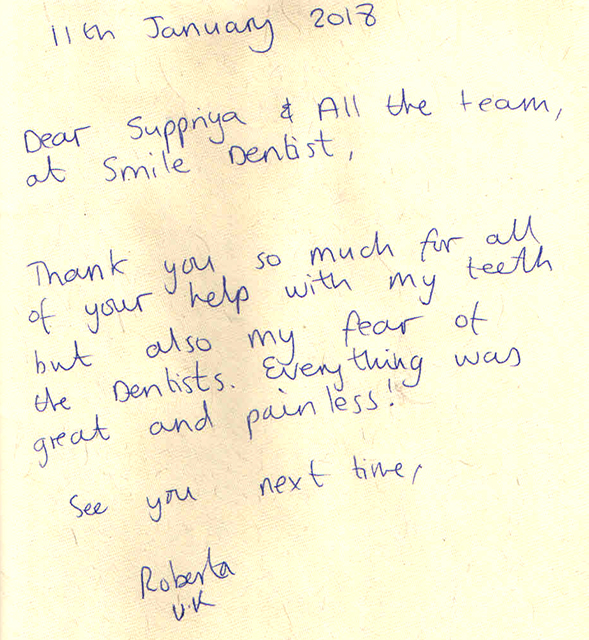
"Every thing was great and pain less !....."
Roberta
Location:- UK

"Dr. Suprriya is such a lovely and warm hearted woman as well as a..."
Victor
Location:- Switzerland


"Didn’t hurt, looked good, felt good, clearly explained and professionally done..."
Jeff
Location:- New zealand

"Dr. Supria is a unic dentice and an exellent person..”, “…honest and direct.."
Yaron Mayer
Location:- Israel Embassy

"Dr. Suprriya is very gentle and excellent human being. A perfect Dentist I...."
Uarely
Location:- Finland


"You treated me gentle as a child!..."
Andreas
Location:- Norway


"You are probably one of the best dentist I have ever been to in the last 50 years..."
Usama
Location:- Saudi Arabia


"I have the Hollywood teeth I always wanted…"
Belle
Location:- Canada
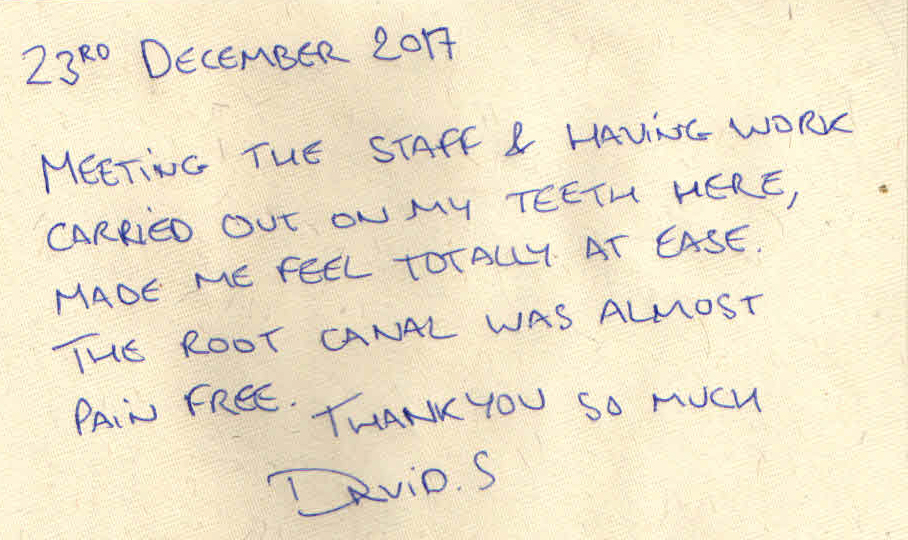
"The root canal was almost pain free....."
David Seeley
Location:- UK
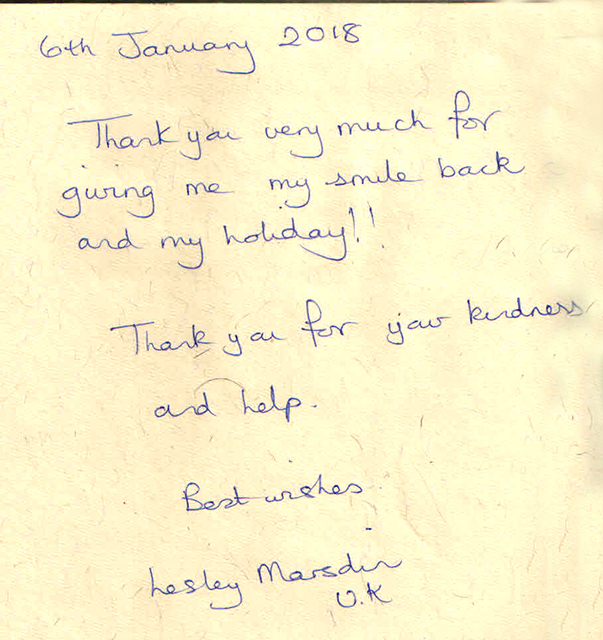
"Thank You very much for giving me my smile back and my holiday!....."
Lesley Marsdin
Location:- UK

"I even laughed when they screwed the posts in ! very professional even enjoyed it a bit"
Laurewce Moon
Location:- UK
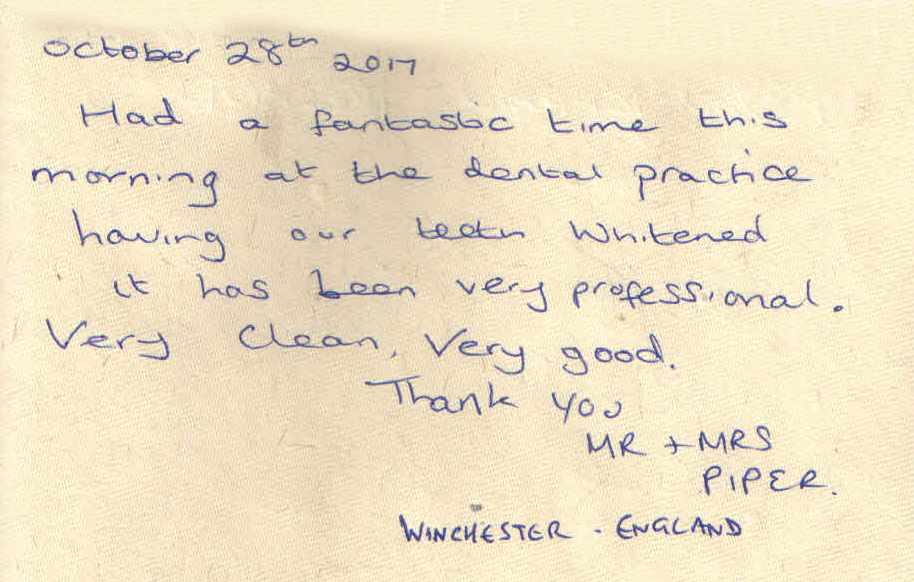
"It has been very professional. Very clean, very good......"
Mr. & Mrs. Piper
Location:-Winchester, England

"My emergency treatment was incredible kind and 1st class....."
Kevin Kahan
Location:- Ireland
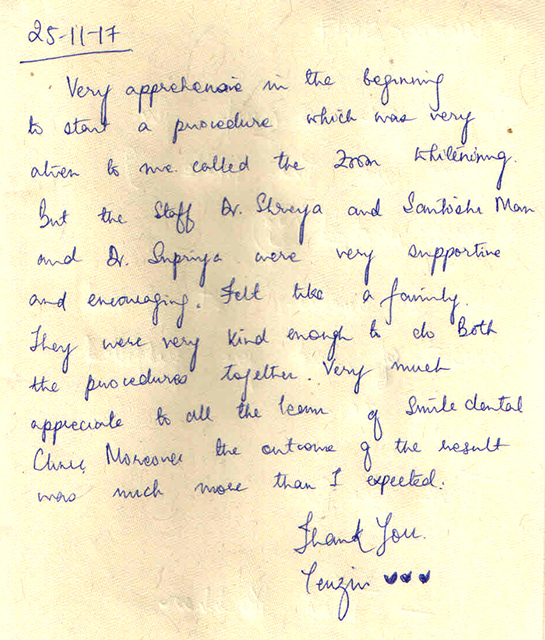

"The result was much more than I expected in zoom whitening....."
Tenzin
Location:- Bhutan
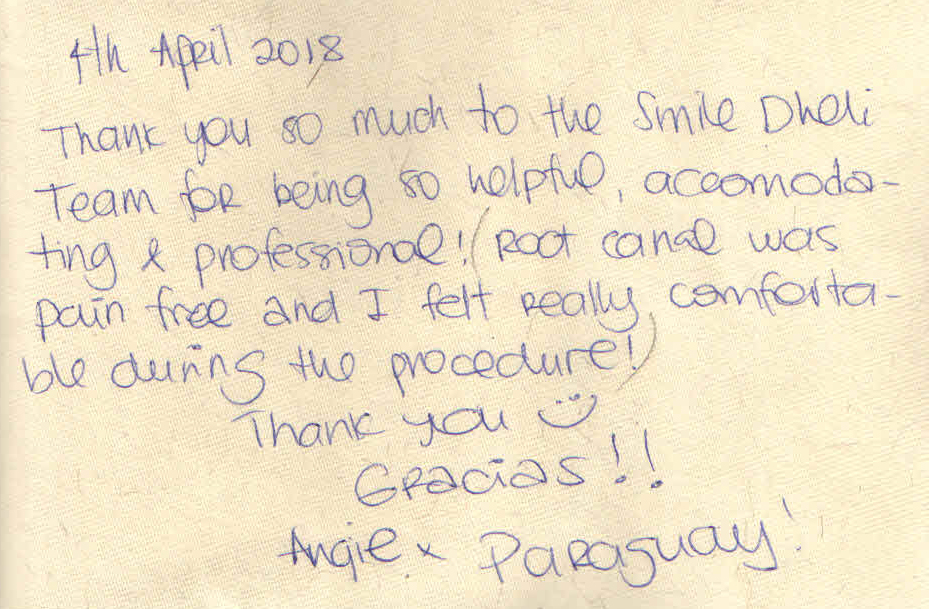

"Root canal was pain free and i felt really comfortable during the procedure....."
Angie
Location:- Paraguay

"Amazingly professional and courteous experience......"
Ken Bakshi
Location:- USA


"I had my teeth whitened amazing results!"
Paula Davey
Location:- Australia


"I would like to have sometimes so good dentist in Europe like Dr Suprriya..."
DANNY
Location:- Austria

"I would highly recommend Suprriya to anyone seeking good oral health care..."
ALLISON WEST
Location:- Australia


"Dr Suprriya, I just want to thank you for the very well done..."
MARIO
Location:- Columbia (Diplomat in India)