

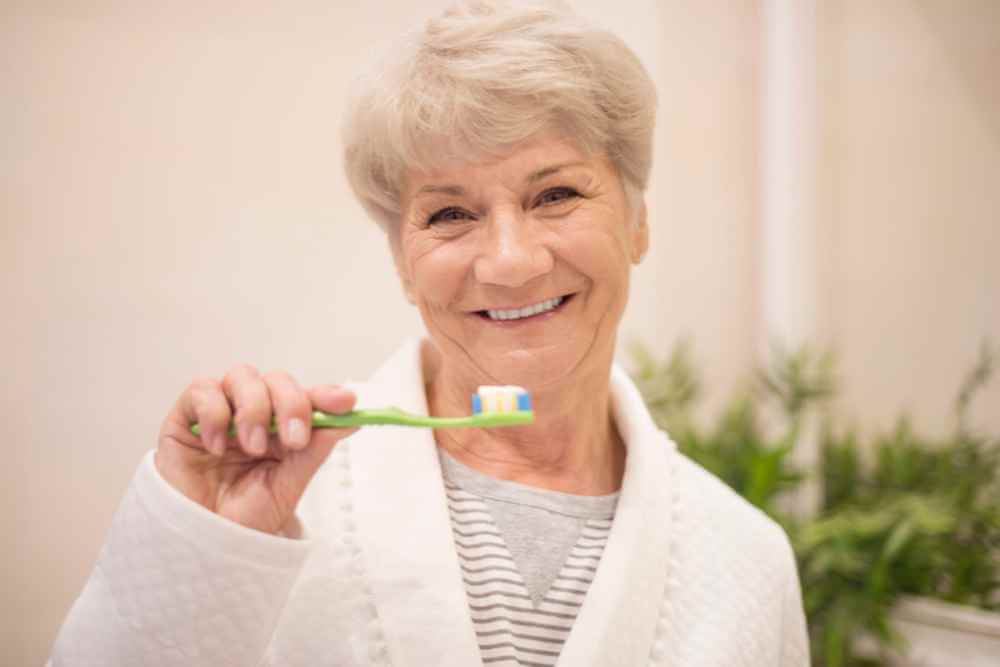
How to Care for a Dental Implant vs. a Natural Tooth
A dental implant looks like a tooth, functions like a tooth, and blends in so well that most people forget it isn’t a natural one.
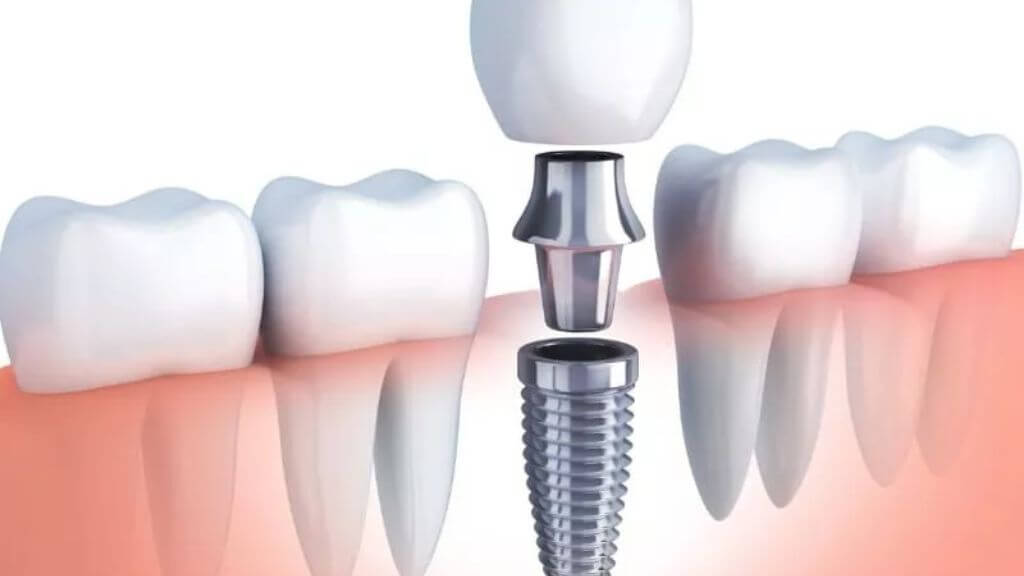
But underneath that convincing exterior, an implant is a titanium post fused into your jawbone, topped with a crown , and that structural difference means the way you care for it isn’t identical to caring for a natural tooth.
If you’ve recently had an implant placed, or you’re considering one, understanding these differences can help you protect your investment for decades to come.
What Makes a Dental Implant Different From a Natural Tooth?
A natural tooth is anchored by a periodontal ligament, a network of fibers that cushions the tooth, allows for slight movement, and supplies nutrients and immune defenses directly to the root. An implant has no such ligament. It’s held in place purely through osseointegration, the direct fusion of bone to titanium.
This means implants don’t get cavities, since there’s no natural enamel or dentin to decay , but the surrounding gum and bone tissue can still be affected by bacteria, plaque, and inflammation, just like the tissue around a natural tooth. This is one of the first things patients exploring dental implants in south delhi learn during a consultation, since understanding this structural difference shapes how the entire care routine is planned.
Daily Cleaning: How Implant Care Differs From Brushing Natural Teeth
Brushing twice a day is non-negotiable for both implants and natural teeth, but the technique benefits from a few adjustments once an implant is in the picture. A soft-bristled or electric toothbrush is generally recommended to avoid scratching the implant crown’s surface, and non-abrasive toothpaste helps preserve the polished finish that resists plaque buildup.
Many patients are surprised to learn that the crown itself is remarkably low-maintenance; it’s the gumline around the implant that needs the most attention, since that’s where bacteria tend to accumulate first.
Flossing and Interdental Cleaning Around Implants
Standard floss works fine for natural teeth, but many dentist in delhi recommend implant-specific floss, water flossers, or interdental brushes for implants. These tools are designed to clean around the abutment (the connector between the implant post and the crown) without shredding or leaving residue trapped at the gumline. Skipping this step is one of the most common reasons implants develop inflammation, since food particles and plaque can settle in areas a regular toothbrush simply can’t reach.
Why Gum Health Matters Even More With Implants
Because implants lack a periodontal ligament, they also lack some of the early warning signals a natural tooth gives you, like sensitivity to pressure or temperature. This makes gum health around an implant even more important to monitor. Healthy, pink, firm gum tissue is a good sign; puffiness, bleeding, or a change in color around the implant site can indicate the early stages of peri-implant mucositis, a reversible condition if caught early, but one that can progress to something more serious if ignored.
The Role of Regular Dental Checkups in Implant Longevity
Natural teeth need routine checkups to catch cavities and gum disease early. Implants need routine checkups for a slightly different reason: monitoring bone levels, checking the stability of the crown and abutment, and professionally cleaning areas that home care can miss. X-rays taken periodically help your dentist track the bone around the implant over time, since bone loss is often silent and painless until it becomes advanced.
This is one of the areas where the care routines genuinely diverge , a natural tooth might survive years of inconsistent checkups, but an implant’s long-term success depends heavily on that professional monitoring. An experienced dentist in delhi can pick up on these subtle shifts early, which is why skipping these visits is one of the riskiest habits for any implant patient.
Foods and Habits That Can Affect Both Implants and Natural Teeth
Some habits are universally damaging, regardless of what’s in your mouth. Chewing ice, using your teeth to open packaging, or grinding your teeth at night puts stress on both natural enamel and implant crowns. That said, implants are generally more resistant to staining from coffee, tea, or red wine than natural enamel, since the ceramic or porcelain crown material doesn’t absorb pigment the same way.
On the other hand, implants are more vulnerable to certain types of mechanical stress at the crown-abutment junction, so patients with a history of teeth grinding are often advised to wear a night guard to protect their implant investment.
Recognizing Early Signs of Trouble Around an Implant
With a natural tooth, pain is usually your first indicator that something is wrong. With an implant, the signs can be subtler: slight movement in the crown, a change in how your bite feels, persistent bad breath localized to one area, or gum recession exposing part of the implant post.
None of these should be ignored, and none of them are “normal” long-term outcomes of a well-placed, well-maintained implant. Catching these signs early usually means the difference between a simple adjustment and a more invasive correction.
How Lifestyle Habits Influence Both Implants and Natural Teeth
Certain everyday habits quietly shape the long-term outcome of both implants and natural teeth, even though people rarely connect the dots. Smoking, for instance, restricts blood flow to the gums, which slows healing after implant placement and makes both implants and natural teeth more vulnerable to infection over time.
Uncontrolled blood sugar levels can have a similar effect, since poorly managed diabetes interferes with the body’s ability to fight off the bacteria that cause gum inflammation.
Even something as simple as chronic dehydration can reduce saliva flow, and saliva plays a quiet but important role in washing away food particles and buffering acids around both natural teeth and implant margins.
None of these factors are implant-specific; they influence oral health broadly, but their impact tends to be more noticeable around an implant, since the tissue there has less biological redundancy to fall back on if something goes wrong.
Patients who manage these broader health habits well often find that their implant care routine requires far less troubleshooting down the line.
Why Professional Guidance Makes a Difference
Home care habits matter enormously, but they work best alongside professional oversight. An experienced dentist in delhi can identify subtle changes around an implant long before they become noticeable to the patient, and can tailor a cleaning routine based on the implant’s location, the patient’s bite pattern, and any existing dental history.
This kind of individualized guidance is something no generic home-care checklist can replace, which is why routine professional visits remain a core part of implant maintenance, not an optional extra.
Comparing Long-Term Durability: Implants vs Natural Teeth
Natural teeth, when cared for well, can last a lifetime, but they remain susceptible to decay, root canal complications, and wear that eventually requires intervention. Implants, once properly integrated with the jawbone, have shown high long-term success rates and don’t decay , but they aren’t entirely maintenance-free. According to background on the subject available on dental implants , the biological process of osseointegration is what gives implants their stability, and disruptions to that bone-implant connection.
Whether from infection, smoking, or uncontrolled diabetes, remain the leading causes of implant failure. This underscores why consistent oral hygiene and professional care aren’t just recommendations, but essential factors in how long an implant actually lasts.
Choosing between conscientious daily habits and professional support isn’t really a choice at all , both are necessary, and at Smile Delhi- The Dental Clinic, patients are guided through a care routine tailored specifically to their implant type, placement, and bite.
Ultimately, caring for a dental implants in south delhi isn’t dramatically harder than caring for a natural tooth, but it does ask for a bit more intentionality in a few specific areas: the tools you use, the attention you pay to your gums, and the consistency of your professional checkups. Get those right, and an implant can serve you reliably for many years, much like a well-maintained natural tooth.
FAQs
1. Can a dental implant get a cavity like a natural tooth?
No. Implants are made of titanium and a ceramic or porcelain crown, neither of which can decay. However, the gum and bone tissue around the implant can still be affected by plaque and bacteria.
2. Do I need to floss around a dental implant differently?
Yes, it’s often recommended to use implant-specific floss, water flossers, or interdental brushes to clean around the abutment more effectively than standard floss alone.
3. How often should I get an implant checked by a dentist?
Most dentists recommend checkups every six months, similar to natural teeth, though your dentist may suggest more frequent visits initially to monitor healing and bone integration.
4. Can gum disease affect a dental implant?
Yes. A condition called peri-implantitis, similar to gum disease around natural teeth, can develop around implants if plaque and bacteria aren’t properly managed.
5. Is a night guard necessary for implant patients who grind their teeth?
Often, yes. Grinding puts mechanical stress on the implant crown and its connection point, and a night guard helps distribute that pressure to protect the restoration.
Caring for a dental implant doesn’t have to feel complicated once you understand where it truly differs from a natural tooth. A little extra attention at the gumline and a bit more consistency with professional checkups go a long way toward protecting your investment. At Smile Delhi- The Dental Clinic, we help every implant patient build a care routine that’s realistic, personalized, and built to keep their smile strong for the long haul.
Sources:
- Renvert, S., Hirooka, H., Polyzois, I., Kelekis-Cholakis, A., & Wang, H.-L. (2020). Diagnosis and non-surgical treatment of peri-implant diseases and maintenance care of patients with dental implants – Consensus report of working group 3. International Dental Journal. Available at:
https://pmc.ncbi.nlm.nih.gov/articles/PMC9379037/ - Cambridge University Hospitals NHS Foundation Trust. (2025). Dental Implants in Restorative Dentistry. Available at:
https://www.cuh.nhs.uk/patient-information/dental-implants-in-restorative-dentistry/ - ITI (International Team for Implantology). (n.d.). Implant Survival and Complications. Available at:
https://network.iti.org/academy/consensus-database/consensus-statement/-/consensus/implant-survival-and-complications/1321 - European Federation of Periodontology. (2023). Guideline on treatment of peri-implant diseases. Available at:
https://www.efp.org/education/continuing-education/clinical-guidelines/guideline-on-treatment-of-peri-implant-diseases/

Dr. Suprriya B. Bhatia is a highly experienced dental professional with over 25 years of clinical expertise. A leading dentist in South Delhi, she is the founder of Smile Delhi – The Dental Clinic and specialises in cosmetic dentistry, dental implants, and smile makeovers. Dr. Suprriya B. Bhatia is known for her compassionate, patient-centred approach and commitment to creating healthy, confident smiles for patients from India and abroad.


"Extremely good service and care..."
Tim Gound
Location:- U. K.


"The standard of the clinic is like a first country’s clinic..."
PEDRO MORAES
Location:- Brazil


"Me and my family were very reluctant to undergo my dental treatment in India, but..."
RICHARD SALDANHA
Location:- Peru, South America


"The hygiene is good, the care up to European standards if not better. Strong on explaining..."
THOMAS BAINS
Location:- European Commission
"A new beautiful smile made by a beautiful lady who truly cares for her patients..."
Sinead
Location:- England

"I have the smile of my dream….This clinic is very professional and they use only best materials..."
Alla Lu
Location:- Russia


"Thank you so much for making my dream come true to have a perfect smile..."
Jacyln Gopinathan
Location:- Mindro Philippines
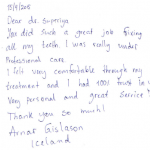

"I felt very comfortable through my treatment and i had 100% trust in you..."
Arnar Gislason
Location:- Iceland
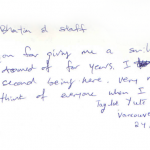

"Thank you for giving me a smile that i’ve dreamed of for years..."
Yuto Harrison
Location:- Canada
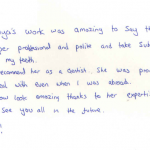

"Dr. Suprriya’s work was amazing…. She is super professional and polite..."
Todd
Location:- Australia
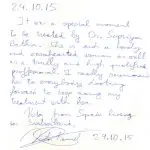

"Dr. Suprriya is such a lovely and warm hearted woman as well as a truly and high qualified professional..."
Victor Vique
Location:- Switzerland


"After travelling all through India and visiting 7 different clinics, this..."
JEFF MC CLEAN
Location:- New Zealand

"From the moment i got here i knew i had made the right decision."


"Thank you so much, Dr. Suprriya! I am so grateful for you and your practice."
"Very attentive and grateful for the results. I will keep in Touch"

"You saved my teeth. Lovely clinic and very professional staff..."


"My teeth are 7-8 shades whiter, thanks to you and your team..."

"Thank you very much dr. suprriya for wonderful treatment for implants and bridge and giving me my smile back."

"Felt in good hands during the whole treatment..."

"Visited many dentist around the world and smile delhi definitely gives you a great smile..."

"Over all experience was wonderful…"
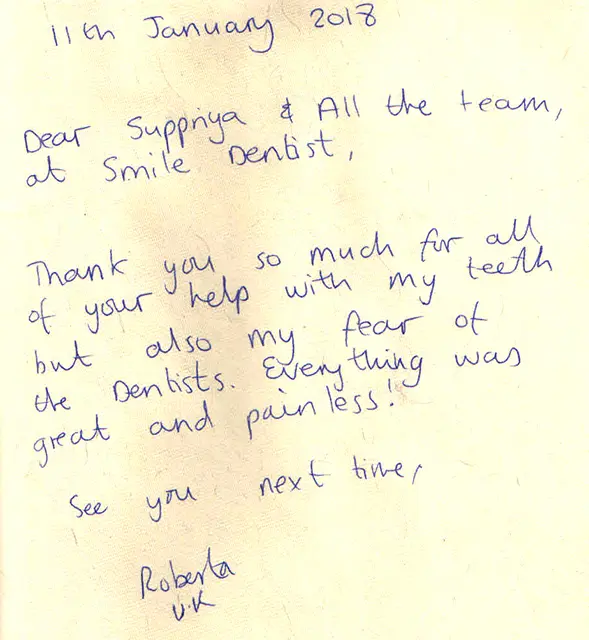
"Every thing was great and pain less !....."
Roberta
Location:- UK

"Dr. Suprriya is such a lovely and warm hearted woman as well as a..."
Victor
Location:- Switzerland
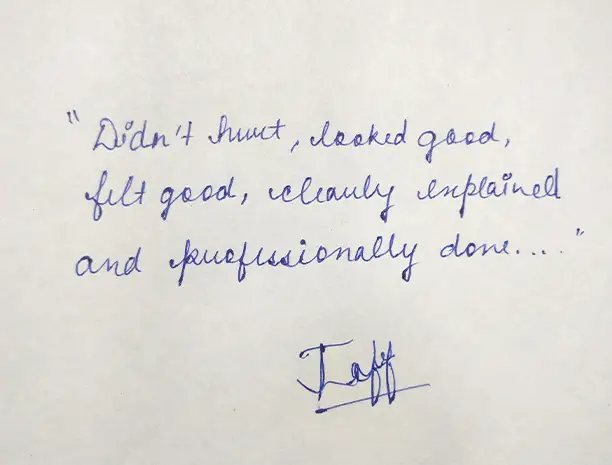

"Didn’t hurt, looked good, felt good, clearly explained and professionally done..."
Jeff
Location:- New zealand

"Dr. Supria is a unic dentice and an exellent person..”, “…honest and direct.."
Yaron Mayer
Location:- Israel Embassy

"Dr. Suprriya is very gentle and excellent human being. A perfect Dentist I...."
Uarely
Location:- Finland


"You treated me gentle as a child!..."
Andreas
Location:- Norway


"You are probably one of the best dentist I have ever been to in the last 50 years..."
Usama
Location:- Saudi Arabia


"I have the Hollywood teeth I always wanted…"
Belle
Location:- Canada
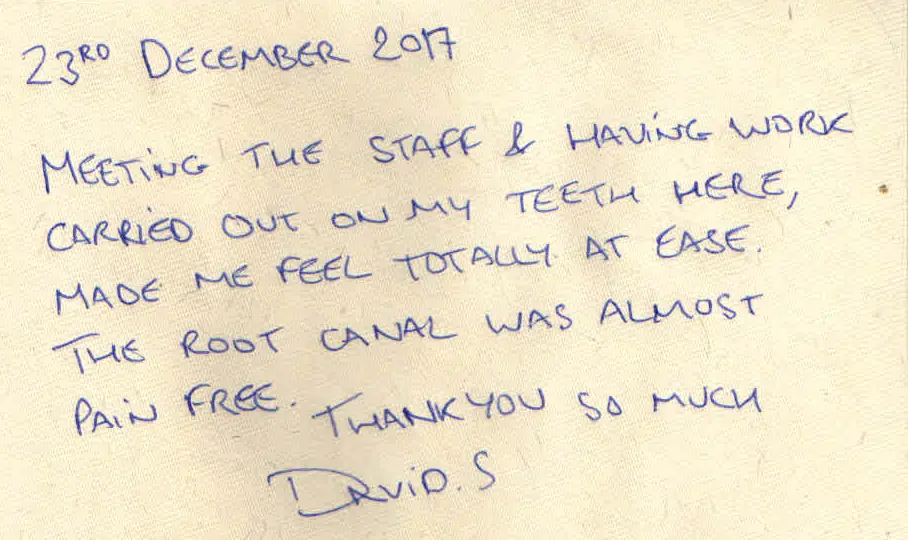
"The root canal was almost pain free....."
David Seeley
Location:- UK
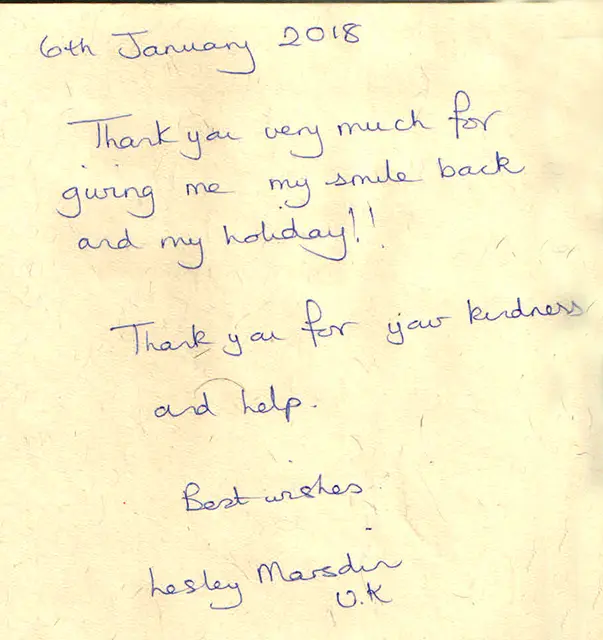
"Thank You very much for giving me my smile back and my holiday!....."
Lesley Marsdin
Location:- UK
"I even laughed when they screwed the posts in ! very professional even enjoyed it a bit"
Laurewce Moon
Location:- UK
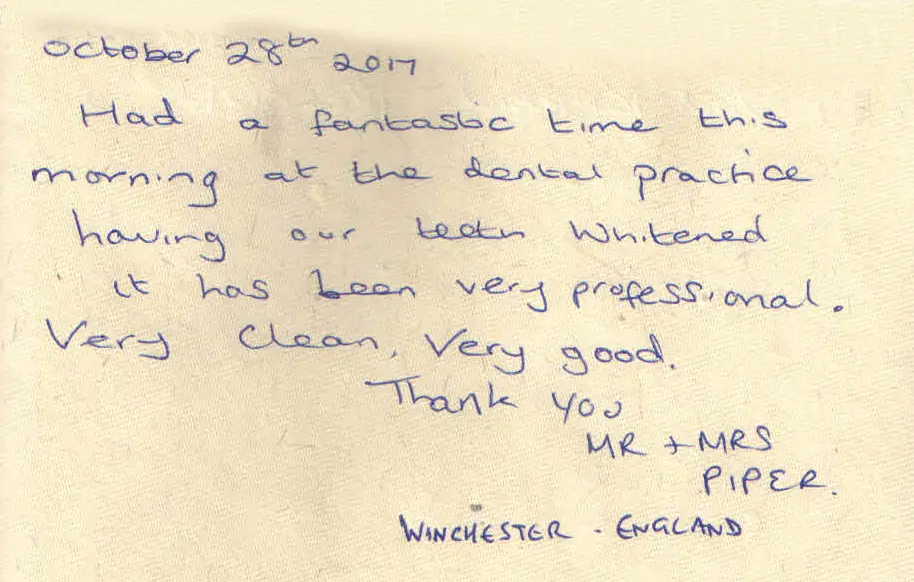
"It has been very professional. Very clean, very good......"
Mr. & Mrs. Piper
Location:-Winchester, England
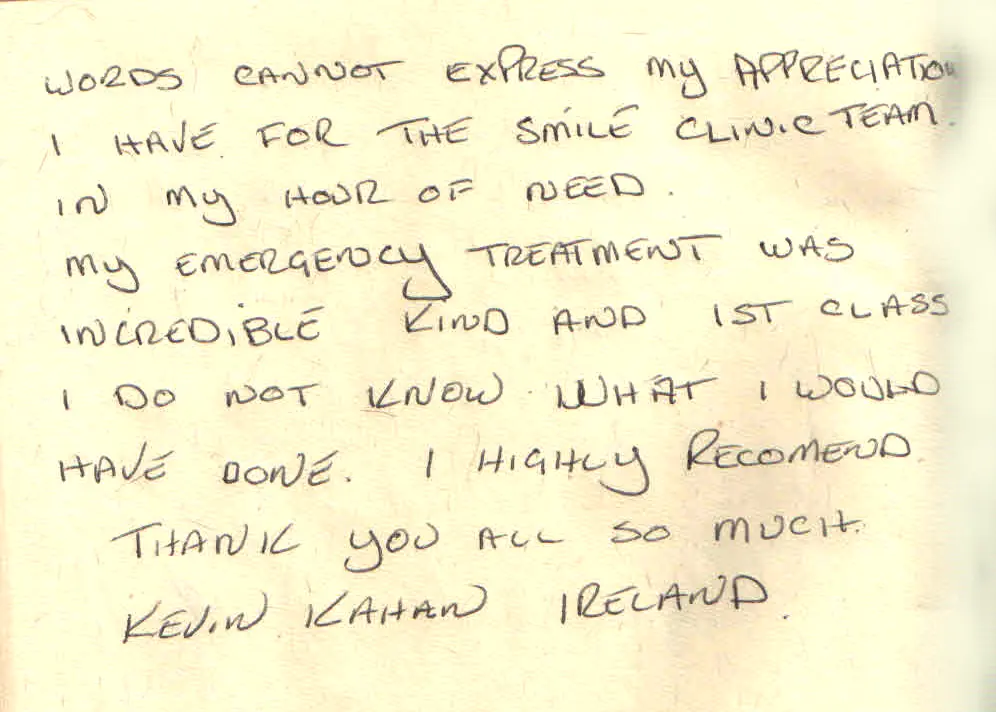
"My emergency treatment was incredible kind and 1st class....."
Kevin Kahan
Location:- Ireland
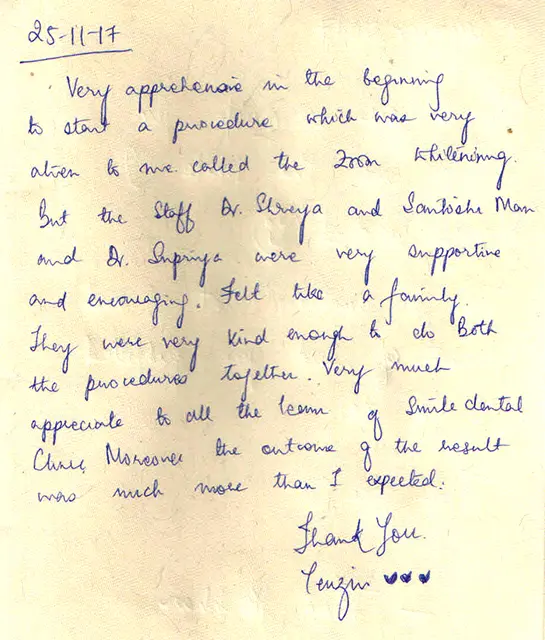

"The result was much more than I expected in zoom whitening....."
Tenzin
Location:- Bhutan
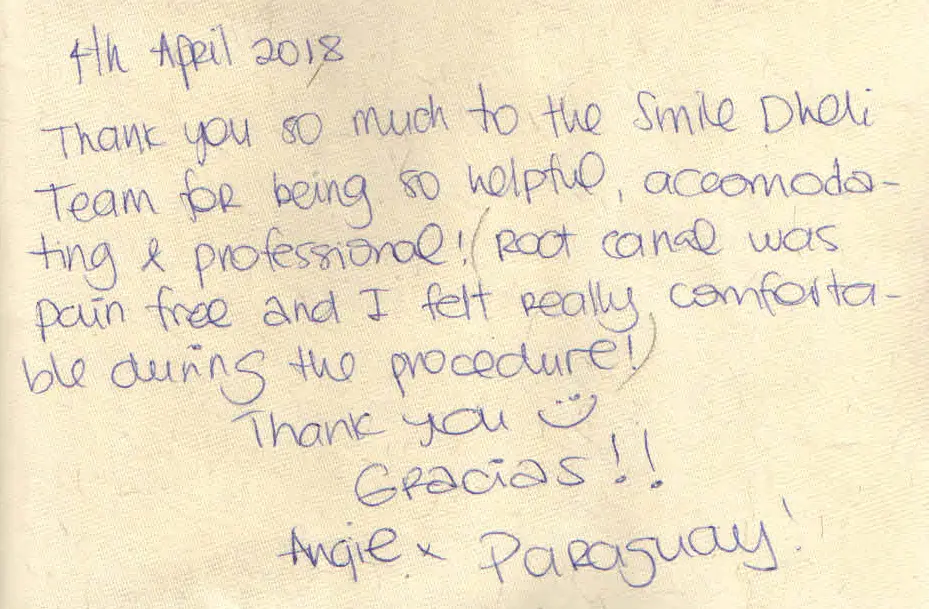

"Root canal was pain free and i felt really comfortable during the procedure....."
Angie
Location:- Paraguay
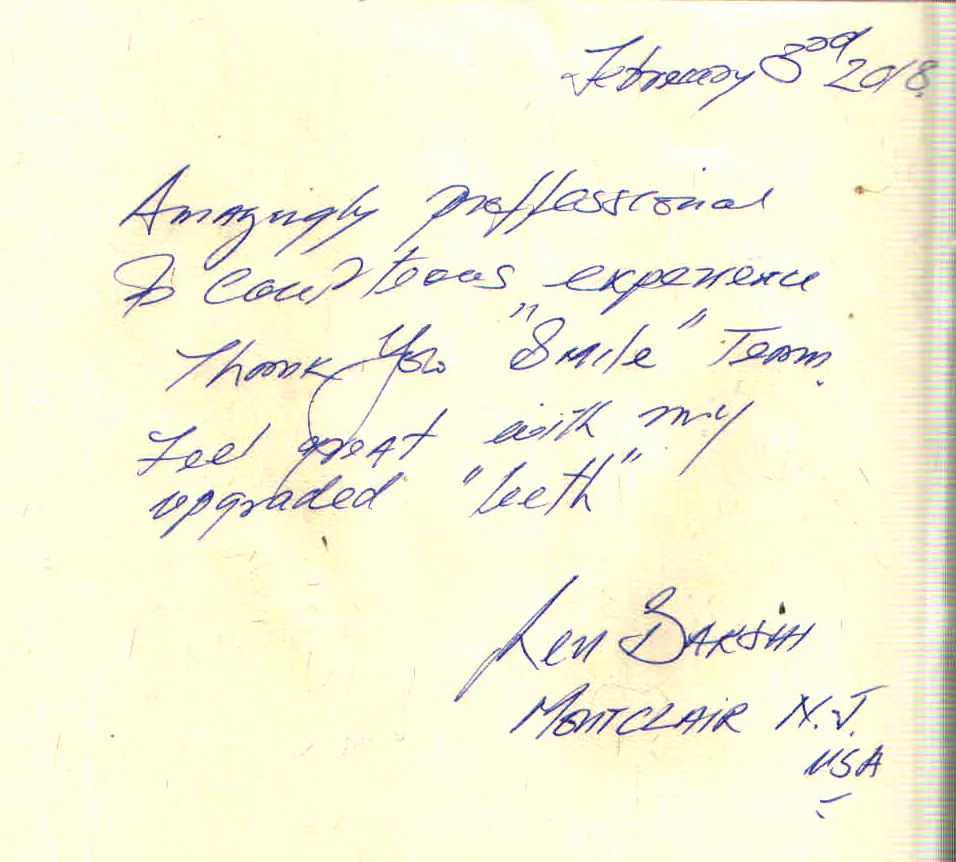
"Amazingly professional and courteous experience......"
Ken Bakshi
Location:- USA
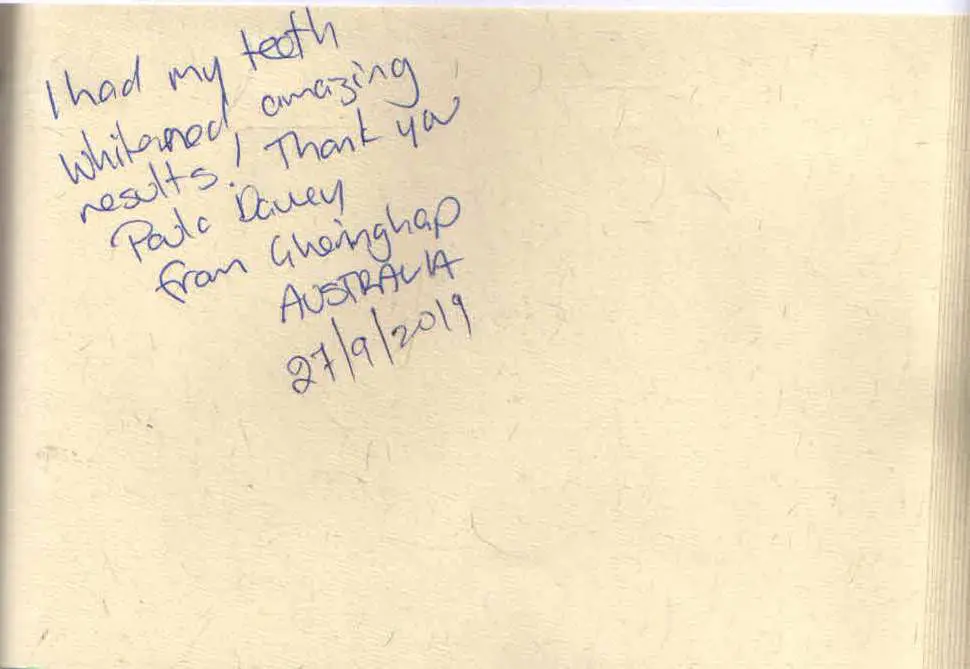

"I had my teeth whitened amazing results!"
Paula Davey
Location:- Australia


"I would like to have sometimes so good dentist in Europe like Dr Suprriya..."
DANNY
Location:- Austria

"I would highly recommend Suprriya to anyone seeking good oral health care..."
ALLISON WEST
Location:- Australia


"Dr Suprriya, I just want to thank you for the very well done..."
MARIO
Location:- Columbia (Diplomat in India)