

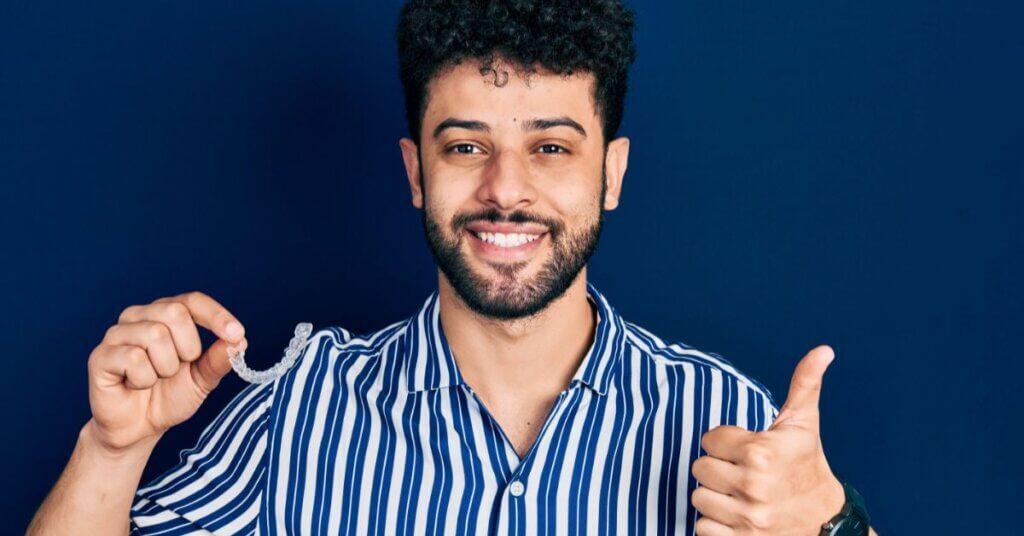
How Often Do Invisalign Aligners Need to Be Changed?
Starting clear aligner treatment can feel exciting and confusing at the same time. One of the most common questions patients ask is how often aligners should be changed. The timing matters because each set plays a role in moving teeth safely and steadily.
Changing aligners at the right moment helps keep treatment comfortable and effective. When you understand how the schedule works, it becomes easier to stay confident and consistent throughout the process.
Clear aligner treatment is planned carefully, with each step building on the last. Missing a change or rushing ahead can affect results.
This guide explains how often aligners are usually changed, why the timing matters, and what can happen if the schedule is not followed.
Understanding Clear Aligners
Clear aligners are thin, transparent trays made to fit snugly over your teeth. Each set is shaped slightly differently from the one before it, creating small changes that apply gentle pressure and move teeth little by little.
This is why many people prefer invisible braces in south delhi, as they straighten teeth without wires or brackets while using steady, controlled force over time.
The treatment plan is mapped out before you even start. Your dentist decides how many aligners you will need and how long each one should be worn, based on your bite, tooth position, and overall oral health.
For patients in south Delhi, many clinics follow global treatment standards while adjusting each plan to match individual dental needs.
How Often Do Aligners Need to Be Changed?
Most patients change their aligners on a regular schedule. This schedule allows teeth and gums to adapt safely. While the exact timing can vary, there is a general pattern that works for many people.
The goal is to move teeth without causing stress or discomfort. Giving each aligner enough time allows the bone around the teeth to adjust. This is why dentists are careful when setting change intervals.
The Standard 1–2 Week Change Cycle
For many patients, aligners are changed every one to two weeks. A common plan is switching to a new set every 7 or 14 days. This timeline has been tested and shown to work well for controlled tooth movement.
When aligners are worn as directed, usually 20 to 22 hours a day, teeth respond as expected. Each new tray continues the progress started by the previous one.
Invisalign treatment plans often follow this schedule, though your dentist may adjust it based on your response.
Why Some Patients Change Faster or Slower
Not everyone follows the same timeline. Some patients may be told to change aligners every week, while others may wait longer. Younger patients often see quicker movement because their bone structure adapts faster. Adults may need more time for each step.
Another factor is how well aligners are worn. Patients who remove them too often may need extra days with each set. Dentists also consider gum health, tooth shape, and past dental work before setting a pace.
What Happens If You Change Aligners Too Early
Switching aligners too soon can cause problems. Teeth may not have finished moving into the planned position. This can lead to discomfort, pressure, or aligners that do not fit properly.
Early changes can also stress the roots of the teeth. Over time, this may slow progress instead of speeding it up. Dentists plan the schedule to protect both teeth and gums. Following their advice helps avoid setbacks that could lengthen treatment.

What Happens If You Change Aligners Too Late
Keeping aligners in for too long may seem harmless, but it can affect overall results. Once teeth settle into position, they may stop responding to pressure, which can slow down progress.
This is why following the plan provided by the best dental clinic in south Delhi helps ensure each aligner works at the right time. Delayed changes can also make the next aligner feel unusually tight or uncomfortable.
Staying on schedule keeps tooth movement smooth, predictable, and gentle, allowing each aligner to do its job without extra strain.
Factors That Decide Your Aligner Schedule
Several personal factors help dentists decide how often aligners should be changed. One key factor is daily wear time. Patients who wear aligners consistently tend to stay on track.
Oral health also plays a role. Healthy gums and strong bones support better movement. Lifestyle habits, such as frequent snacking or forgetting trays, can affect timing too. In south delhi, dentists often review progress during regular check-ups and adjust schedules if needed.
Real-Life Patient Examples
Imagine a student who wears aligners as directed and switches every 7 days. Their treatment moves smoothly, and each new tray fits well.
Compare this to someone who forgets to wear aligners overnight. Their dentist may ask them to wear each set longer to make up for lost time.
Another example is an adult with minor crowding. Their dentist may choose a slower pace to keep movement gentle. These examples show how schedules are adjusted based on real needs, not a fixed rule.
Tips to Stay on Track With Aligner Changes
Staying organised makes aligner treatment easier. Many patients set reminders on their phone for change days. Keeping clear aligners in their case when eating helps prevent loss or damage.
Tracking wear time also helps. Some patients note their hours each day to stay consistent. Following these habits helps the treatment plan stay on course and avoids delays.
How Dentists Monitor Progress
Dentists check how teeth are responding at regular visits. They look at fit, comfort, and movement. If something feels off, they may adjust the schedule or request extra wear time.
This monitoring helps catch issues early. Small changes can make a big difference over months of treatment. Invisalign plans rely on this feedback to stay effective and comfortable.
Why Following Instructions Matters
Aligner treatment works best when patients and dentists work as a team. Wearing trays correctly and changing them on time keeps movement steady. Skipping steps or guessing timelines can slow results.
Clear instructions are given at the start for a reason. They are based on research and patient outcomes. Trusting the process helps you reach the final result with fewer problems along the way.
Conclusion
Changing aligners on the right schedule plays a big role in successful treatment. Most patients switch trays every one to two weeks, but personal factors can affect this timing. Wearing aligners as directed, attending check-ups, and following advice all help keep progress smooth.
With proper guidance and support from Smile Delhi – The Dental Clinic, patients can feel confident knowing their treatment is moving at a safe and steady pace.
Sources:
- https://www.nhs.uk/tests-and-treatments/orthodontics/treatments/
- https://bos.org.uk/clear-aligners/
- https://www.cdc.gov/oral-health/about/?CDC_AAref_Val=https://www.cdc.gov/oralhealth/basics/index.html
- https://www.fda.gov/consumers/consumer-updates/braces-have-changed-metal-tooth-colored-clear

Dr. Suprriya B. Bhatia is a highly experienced dental professional with over 25 years of clinical expertise. A leading dentist in South Delhi, she is the founder of Smile Delhi – The Dental Clinic and specialises in cosmetic dentistry, dental implants, and smile makeovers. Dr. Suprriya B. Bhatia is known for her compassionate, patient-centred approach and commitment to creating healthy, confident smiles for patients from India and abroad.


"Extremely good service and care..."
Tim Gound
Location:- U. K.


"The standard of the clinic is like a first country’s clinic..."
PEDRO MORAES
Location:- Brazil


"Me and my family were very reluctant to undergo my dental treatment in India, but..."
RICHARD SALDANHA
Location:- Peru, South America


"The hygiene is good, the care up to European standards if not better. Strong on explaining..."
THOMAS BAINS
Location:- European Commission

"A new beautiful smile made by a beautiful lady who truly cares for her patients..."
Sinead
Location:- England


"I have the smile of my dream….This clinic is very professional and they use only best materials..."
Alla Lu
Location:- Russia


"Thank you so much for making my dream come true to have a perfect smile..."
Jacyln Gopinathan
Location:- Mindro Philippines


"I felt very comfortable through my treatment and i had 100% trust in you..."
Arnar Gislason
Location:- Iceland


"Thank you for giving me a smile that i’ve dreamed of for years..."
Yuto Harrison
Location:- Canada


"Dr. Suprriya’s work was amazing…. She is super professional and polite..."
Todd
Location:- Australia


"Dr. Suprriya is such a lovely and warm hearted woman as well as a truly and high qualified professional..."
Victor Vique
Location:- Switzerland


"After travelling all through India and visiting 7 different clinics, this..."
JEFF MC CLEAN
Location:- New Zealand

"From the moment i got here i knew i had made the right decision."


"Thank you so much, Dr. Suprriya! I am so grateful for you and your practice."

"Very attentive and grateful for the results. I will keep in Touch"

"You saved my teeth. Lovely clinic and very professional staff..."


"My teeth are 7-8 shades whiter, thanks to you and your team..."

"Thank you very much dr. suprriya for wonderful treatment for implants and bridge and giving me my smile back."


"Felt in good hands during the whole treatment..."

"Visited many dentist around the world and smile delhi definitely gives you a great smile..."


"Over all experience was wonderful…"
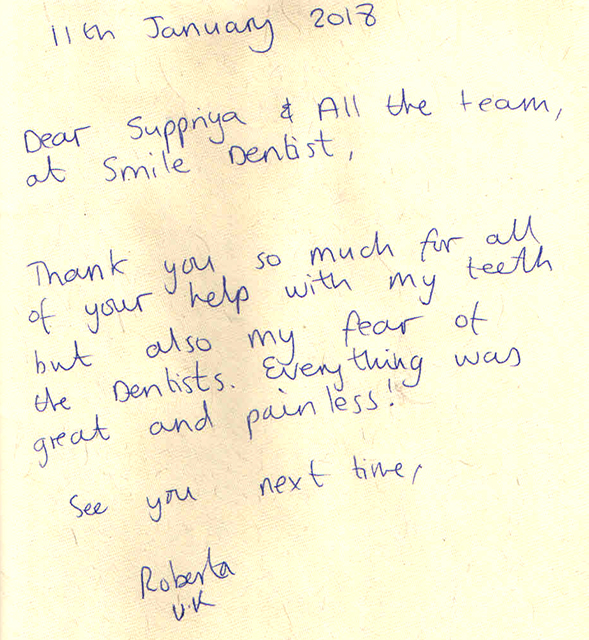
"Every thing was great and pain less !....."
Roberta
Location:- UK

"Dr. Suprriya is such a lovely and warm hearted woman as well as a..."
Victor
Location:- Switzerland


"Didn’t hurt, looked good, felt good, clearly explained and professionally done..."
Jeff
Location:- New zealand

"Dr. Supria is a unic dentice and an exellent person..”, “…honest and direct.."
Yaron Mayer
Location:- Israel Embassy

"Dr. Suprriya is very gentle and excellent human being. A perfect Dentist I...."
Uarely
Location:- Finland


"You treated me gentle as a child!..."
Andreas
Location:- Norway


"You are probably one of the best dentist I have ever been to in the last 50 years..."
Usama
Location:- Saudi Arabia


"I have the Hollywood teeth I always wanted…"
Belle
Location:- Canada

"The root canal was almost pain free....."
David Seeley
Location:- UK
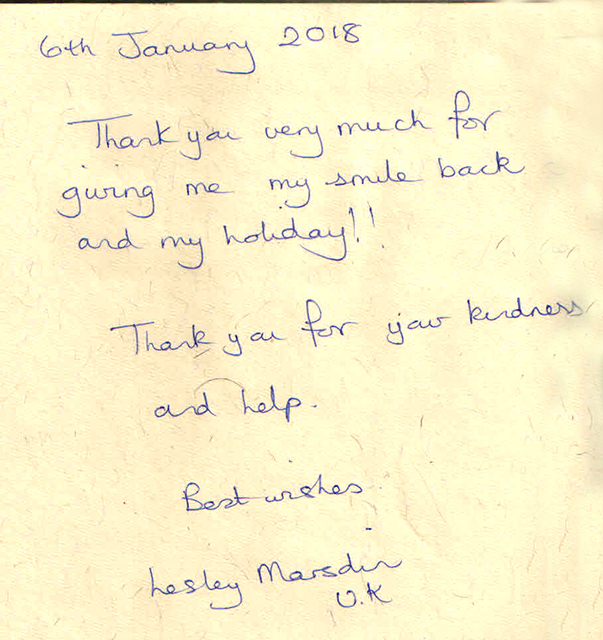
"Thank You very much for giving me my smile back and my holiday!....."
Lesley Marsdin
Location:- UK

"I even laughed when they screwed the posts in ! very professional even enjoyed it a bit"
Laurewce Moon
Location:- UK

"It has been very professional. Very clean, very good......"
Mr. & Mrs. Piper
Location:-Winchester, England

"My emergency treatment was incredible kind and 1st class....."
Kevin Kahan
Location:- Ireland


"The result was much more than I expected in zoom whitening....."
Tenzin
Location:- Bhutan


"Root canal was pain free and i felt really comfortable during the procedure....."
Angie
Location:- Paraguay

"Amazingly professional and courteous experience......"
Ken Bakshi
Location:- USA


"I had my teeth whitened amazing results!"
Paula Davey
Location:- Australia


"I would like to have sometimes so good dentist in Europe like Dr Suprriya..."
DANNY
Location:- Austria

"I would highly recommend Suprriya to anyone seeking good oral health care..."
ALLISON WEST
Location:- Australia


"Dr Suprriya, I just want to thank you for the very well done..."
MARIO
Location:- Columbia (Diplomat in India)