
RESTORING FUNCTION AND AESTHETICS WITH ALL CERAMIC ZIRCONIA CROWNS, ROOT CANAL TREATMENTS AND A DENTAL IMPLANT
CASE STUDY VIII– RESTORING FUNCTION AND AESTHETICS WITH ALL CERAMIC ZIRCONIA CROWNS, ROOT CANAL TREATMENTS AND A DENTAL IMPLANT
Introduction
A 60-year-old male patient visited Smile Delhi – The Dental Clinic, New Delhi, with concerns about severely worn front teeth, discomfort while chewing, and recurring pain accompanied by an abscess in the upper right back tooth region. The patient was also concerned about an existing crown that had developed decay underneath, compromising both function and oral health.
Following a comprehensive clinical examination, a multidisciplinary treatment plan was developed to restore the patient’s oral function, eliminate infection, and rehabilitate his smile. The treatment included root canal treatment, full-mouth crown rehabilitation, dental implant placement with bone grafting, restorative fillings, and a custom night guard. The result was a healthier, stronger, and more aesthetically pleasing smile with improved long-term stability.
Patient Background
The patient presented with significant wear of the anterior teeth, affecting both appearance and function. Over time, the excessive wear had altered the shape and length of the front teeth, resulting in an aged appearance and compromised bite function.
In addition to the worn dentition, the patient reported persistent pain and swelling in the upper right molar region. Clinical examination also revealed an old crown with recurrent decay beneath it, contributing to infection and discomfort. The patient sought a comprehensive solution that would address both the immediate dental concerns and the overall condition of his dentition.
Initial Assessment & Diagnosis
A detailed clinical examination was performed to evaluate the condition of the patient’s teeth, bite, and supporting structures.
The assessment revealed:
- Severe wear of the upper and lower anterior teeth.
- Infection and abscess associated with the upper right second molar.
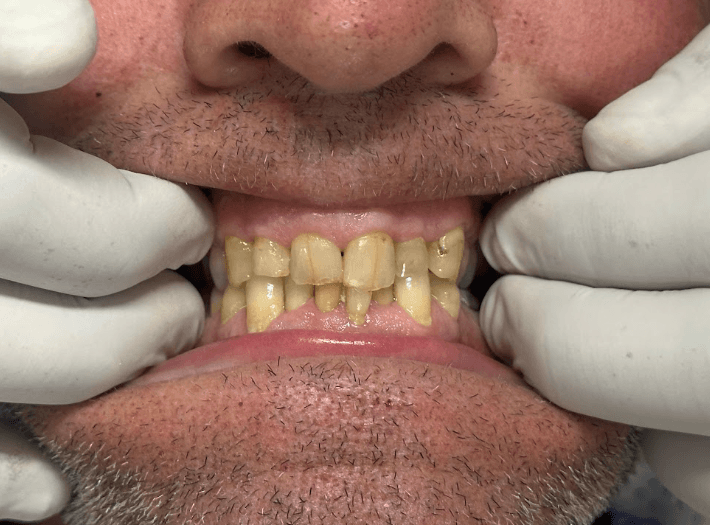
- Recurrent decay beneath an existing crown restoration.
- Structural compromise of multiple teeth requiring full-coverage restorations.
- A non-restorable upper right first molar requiring extraction and replacement.
- Occlusal wear patterns suggestive of excessive grinding forces, indicating the need for long-term protection through a night guard.
Based on these findings, a comprehensive rehabilitation plan was recommended to eliminate infection, restore the worn dentition, replace the missing tooth with a dental implant, and protect the final restorations from future wear.
Treatment Plan
The recommended treatment plan consisted of multiple phases designed to restore both function and aesthetics while ensuring long-term stability.
The treatment included:
- Root canal treatment for:
- Upper right second molar.
- Lower left first molar.
- All ceramic zirconia crowns extending from:
- Upper right first premolar to upper left first premolar.
- Lower right first premolar to lower left first molar.
- Extraction of the upper right first molar followed by immediate dental implant placement.
- Bone grafting at the implant site to enhance stability and support healing.
- Composite restoration for the upper left second premolar.
- Fabrication and delivery of a custom night guard to protect the new restorations from excessive occlusal forces and nighttime grinding.
The treatment was carefully staged over multiple appointments to achieve predictable healing and optimal restorative outcomes.
Treatment Process
Phase 1 – Crown Preparation and Temporary Restorations
14 February 2026
Treatment commenced with the preparation of teeth requiring crowns. The upper teeth from the upper right first premolar to the upper left first premolar and the lower teeth from the lower right first premolar to the lower left first molar were prepared.
Following tooth preparation, high-precision impressions were obtained, and temporary crowns were fabricated and placed to maintain function, aesthetics, and patient comfort during the laboratory phase.
Phase 2 – Endodontic Treatment and Implant Placement
16 February 2026
Root canal treatment was successfully completed for the upper right second molar and lower left first molar to eliminate infection and preserve these strategically important teeth.
During the same appointment, the upper right first molar was extracted and replaced with a dental implant. To improve primary stability and support long-term implant success, bone grafting material was placed around the implant site.
The procedure was completed successfully, and post-operative instructions were provided to support healing.
Phase 3 – Final Restorative Phase
19 February 2026
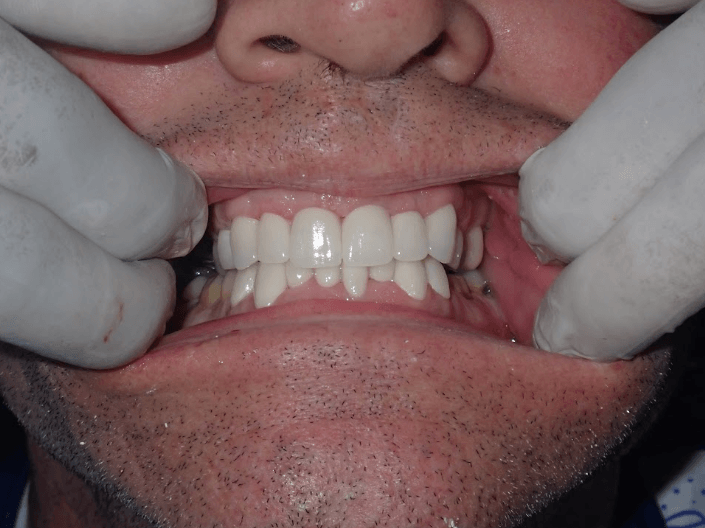
After confirming satisfactory healing and restoration fit, the definitive all ceramic zirconia crowns were cemented. These restorations re-established proper tooth anatomy, function, and smile aesthetics.
A composite filling was also placed on the upper left second premolar to restore structural integrity and prevent future complications.
Phase 4 – Protective Appliance Therapy
20–21 February 2026
During the follow-up visit, healing was assessed and found to be progressing satisfactorily.
Impressions were taken for a custom-made night guard designed to protect the newly restored teeth and crowns from excessive biting forces and parafunctional habits.
On 21 February 2026, the night guard was delivered and adjusted for optimal comfort and effectiveness.
Results & Outcome
The treatment successfully addressed all of the patient’s concerns, including pain, infection, tooth wear, and compromised restorations.
The completed rehabilitation provided:
- Elimination of infection and abscess-related discomfort.
- Restoration of severely worn anterior teeth.
- Improved bite function and chewing efficiency.
- Replacement of the compromised upper right first molar with a stable dental implant.
- Enhanced aesthetics through full-mouth crown rehabilitation.
- Improved support and protection through a custom night guard.
- Long-term preservation of remaining natural teeth.
The patient reported significant improvement in comfort, function, and confidence following completion of treatment. The final restorations restored natural tooth proportions while maintaining harmony with the patient’s facial features and occlusion.
Before |
After |
PATIENT FEEDBACK:
Dentist’s Insight
This case demonstrates the importance of addressing both disease and function when planning comprehensive dental rehabilitation. The patient’s worn dentition, infected molar, and failing restorations required a coordinated approach involving endodontic treatment, implant dentistry, restorative dentistry, and preventive care.
By combining root canal therapy, implant placement with bone grafting, full-mouth crown rehabilitation, and protective appliance therapy, it was possible to restore not only the patient’s smile but also the long-term stability of the dentition. Careful treatment sequencing and attention to occlusal management were key factors in achieving a successful outcome.
Conclusion
Comprehensive dental rehabilitation can dramatically improve both oral health and quality of life when multiple dental concerns are addressed through a coordinated treatment approach. In this case, the combination of root canal treatment, dental implant therapy, full-mouth crowns, and a custom night guard successfully restored function, aesthetics, and comfort.
If you are experiencing worn teeth, recurring dental infections, missing teeth, or failing restorations, the team at Smile Delhi – The Dental Clinic in New Delhi can create a personalized treatment plan to help restore your smile and confidence.
Book a consultation today to learn more about your treatment options and begin your journey toward a healthier smile.


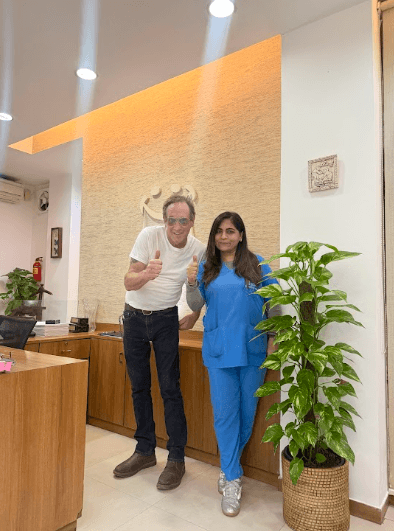
"Extremely good service and care..."
Tim Gound
Location:- U. K.
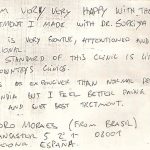

"The standard of the clinic is like a first country’s clinic..."
PEDRO MORAES
Location:- Brazil


"Me and my family were very reluctant to undergo my dental treatment in India, but..."
RICHARD SALDANHA
Location:- Peru, South America


"The hygiene is good, the care up to European standards if not better. Strong on explaining..."
THOMAS BAINS
Location:- European Commission
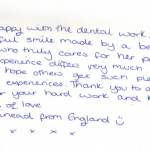
"A new beautiful smile made by a beautiful lady who truly cares for her patients..."
Sinead
Location:- England
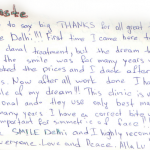

"I have the smile of my dream….This clinic is very professional and they use only best materials..."
Alla Lu
Location:- Russia


"Thank you so much for making my dream come true to have a perfect smile..."
Jacyln Gopinathan
Location:- Mindro Philippines


"I felt very comfortable through my treatment and i had 100% trust in you..."
Arnar Gislason
Location:- Iceland

"Thank you for giving me a smile that i’ve dreamed of for years..."
Yuto Harrison
Location:- Canada

"Dr. Suprriya’s work was amazing…. She is super professional and polite..."
Todd
Location:- Australia

"Dr. Suprriya is such a lovely and warm hearted woman as well as a truly and high qualified professional..."
Victor Vique
Location:- Switzerland

"After travelling all through India and visiting 7 different clinics, this..."
JEFF MC CLEAN
Location:- New Zealand
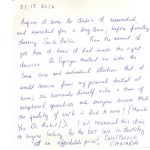
"From the moment i got here i knew i had made the right decision."


"Thank you so much, Dr. Suprriya! I am so grateful for you and your practice."
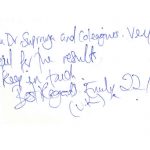
"Very attentive and grateful for the results. I will keep in Touch"

"You saved my teeth. Lovely clinic and very professional staff..."


"My teeth are 7-8 shades whiter, thanks to you and your team..."

"Thank you very much dr. suprriya for wonderful treatment for implants and bridge and giving me my smile back."
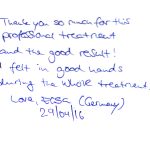

"Felt in good hands during the whole treatment..."

"Visited many dentist around the world and smile delhi definitely gives you a great smile..."
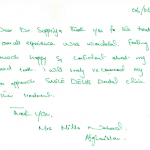

"Over all experience was wonderful…"
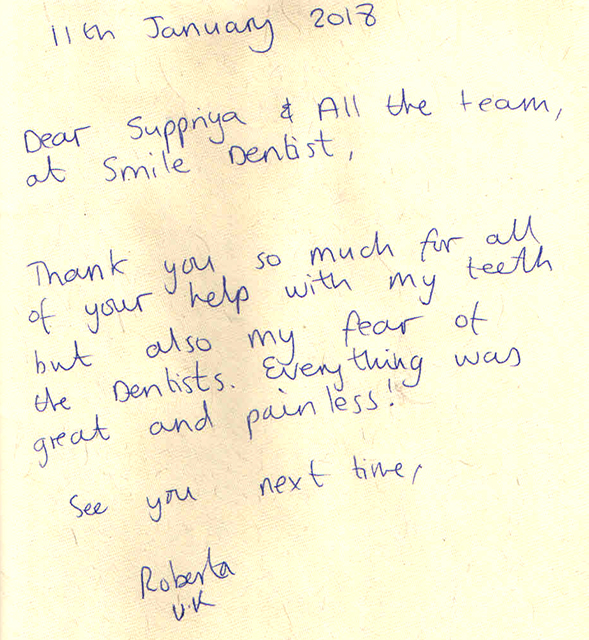
"Every thing was great and pain less !....."
Roberta
Location:- UK

"Dr. Suprriya is such a lovely and warm hearted woman as well as a..."
Victor
Location:- Switzerland
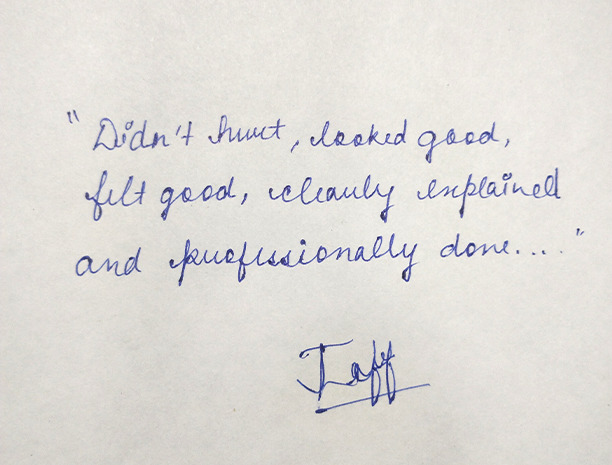

"Didn’t hurt, looked good, felt good, clearly explained and professionally done..."
Jeff
Location:- New zealand

"Dr. Supria is a unic dentice and an exellent person..”, “…honest and direct.."
Yaron Mayer
Location:- Israel Embassy

"Dr. Suprriya is very gentle and excellent human being. A perfect Dentist I...."
Uarely
Location:- Finland


"You treated me gentle as a child!..."
Andreas
Location:- Norway


"You are probably one of the best dentist I have ever been to in the last 50 years..."
Usama
Location:- Saudi Arabia
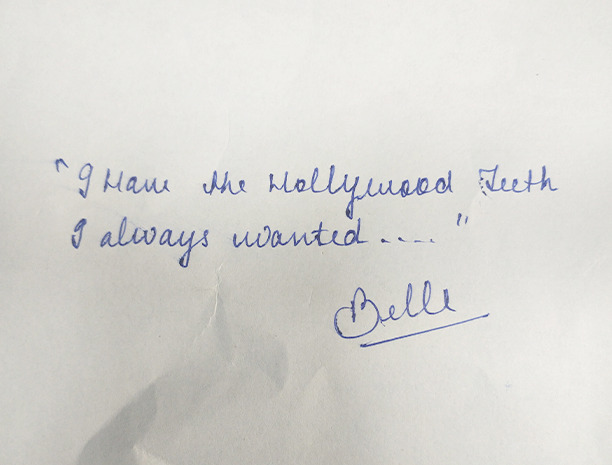

"I have the Hollywood teeth I always wanted…"
Belle
Location:- Canada
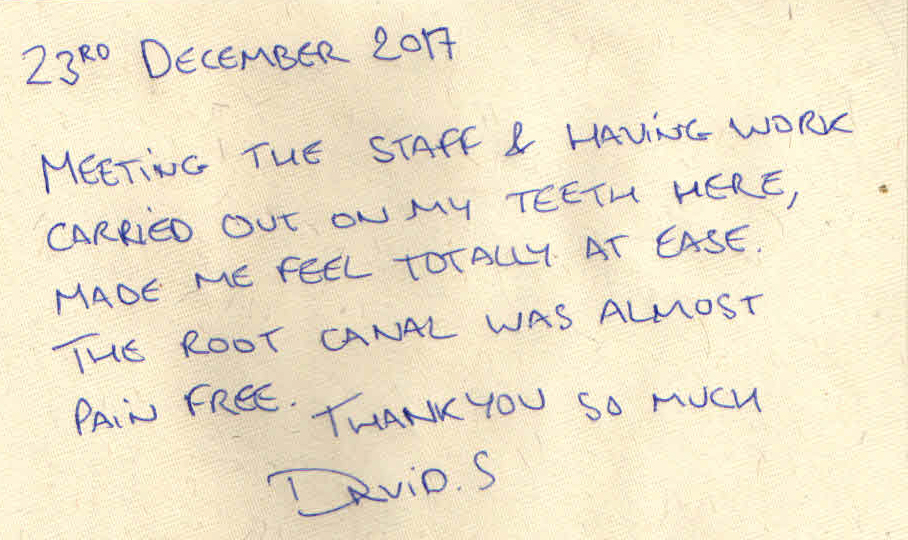
"The root canal was almost pain free....."
David Seeley
Location:- UK
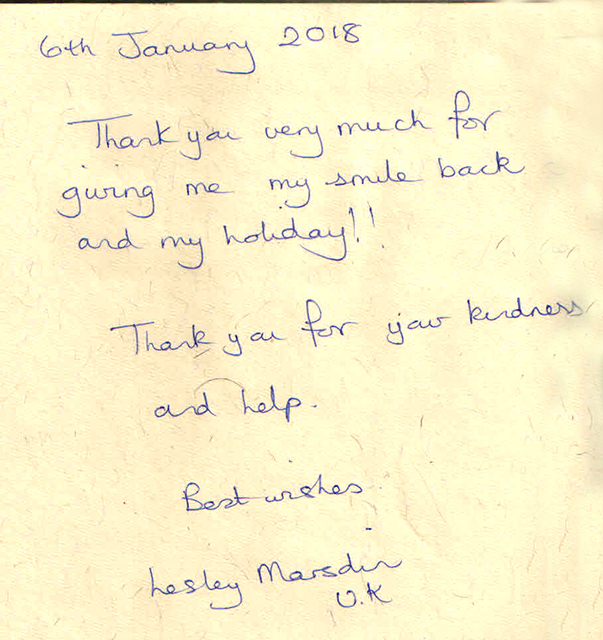
"Thank You very much for giving me my smile back and my holiday!....."
Lesley Marsdin
Location:- UK
"I even laughed when they screwed the posts in ! very professional even enjoyed it a bit"
Laurewce Moon
Location:- UK
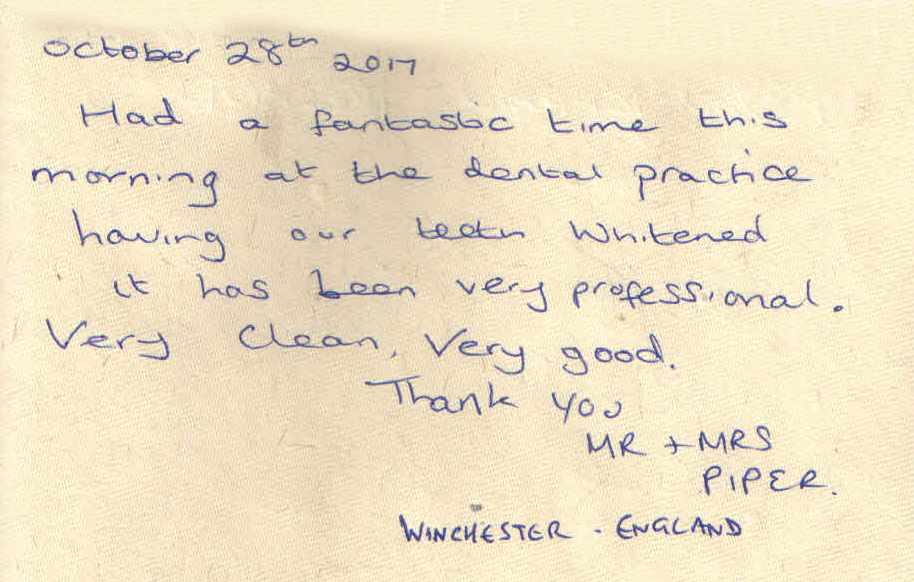
"It has been very professional. Very clean, very good......"
Mr. & Mrs. Piper
Location:-Winchester, England

"My emergency treatment was incredible kind and 1st class....."
Kevin Kahan
Location:- Ireland
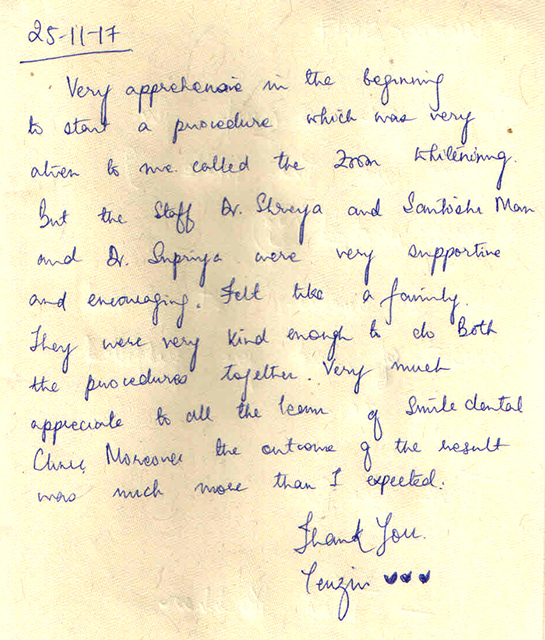

"The result was much more than I expected in zoom whitening....."
Tenzin
Location:- Bhutan
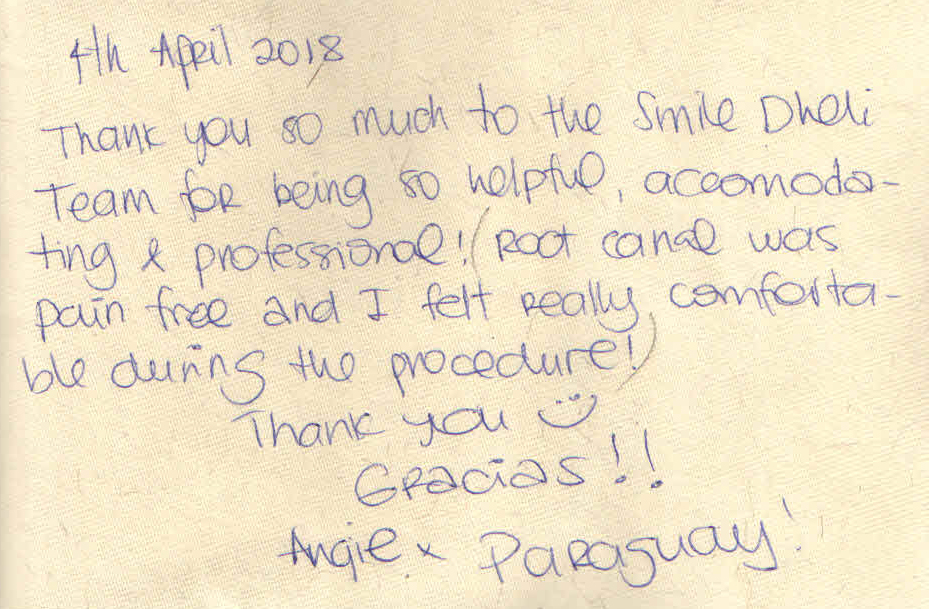

"Root canal was pain free and i felt really comfortable during the procedure....."
Angie
Location:- Paraguay
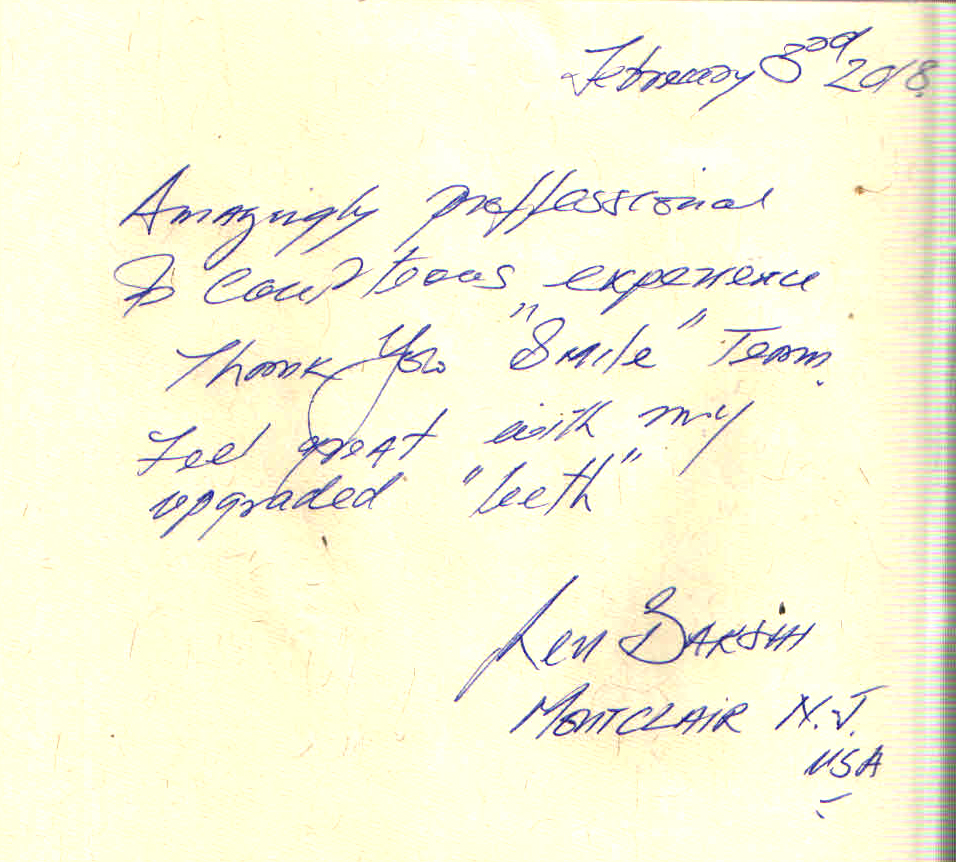
"Amazingly professional and courteous experience......"
Ken Bakshi
Location:- USA


"I had my teeth whitened amazing results!"
Paula Davey
Location:- Australia

"I would like to have sometimes so good dentist in Europe like Dr Suprriya..."
DANNY
Location:- Austria

"I would highly recommend Suprriya to anyone seeking good oral health care..."
ALLISON WEST
Location:- Australia


"Dr Suprriya, I just want to thank you for the very well done..."
MARIO
Location:- Columbia (Diplomat in India)