


5 Things to Do in Delhi While Having Dental Treatment
If you are travelling to India for dental treatment, you may wonder what there is to do in Delhi between appointments. This guide suggests five things to do in Delhi, with notes on planning them sensibly around your treatment. Your treatment comes first: your clinician decides what activity is suitable for you, and schedules can change. The suggestions here are general travel information drawn from published sources, not medical advice, and sightseeing should never replace follow-up appointments or rest if you are advised to take it.
Each place is a recognised landmark in South, Central or Old Delhi, and three are UNESCO World Heritage Sites. Opening days, hours and ticket rules change, so check each site’s official information before you go. Statements are as of October 2026. Where a claim comes from a clinic rather than an independent source, the guide says so. Treat it as a starting point for planning, then confirm every detail with your clinic and the sites themselves.
At a Glance
- The five things to do in Delhi covered here are Humayun’s Tomb, the Lotus Temple, Qutb Minar, the Red Fort Complex and Lodi Garden.
- Humayun’s Tomb, Qutb Minar and the Red Fort Complex are listed by UNESCO as World Heritage Sites.
- Ask your clinician what activity is suitable during and after treatment before you book tours.
- Keep outings flexible so you never miss an appointment or follow-up.
- Check opening days, hours and ticket rules on each site’s official information before you go.
How Should You Plan Sightseeing Around Dental Treatment?
Plan sightseeing around your treatment schedule, not the other way round. Ask your clinician what activity is suitable during and after treatment, get your appointment timeline in writing before booking tours, and keep outings flexible. Recovery and travel needs vary from person to person, and your clinician is the right person to advise you.
- Get your appointment timeline in writing before you book flights or tours.
- Leave gaps between appointments and outings.
- Choose shorter, flexible visits over long full-day tours.
- Keep your clinic’s contact details with you.
- Ask when it is appropriate to fly home.
Smile Delhi – The Dental Clinic is in New Friends Colony, South Delhi. For those considering dental tourism In India, its website describes the clinic as a short drive from much of South and South-East Delhi and lists Ashram (Pink Line) and Sukhdev Vihar (Magenta Line) as the nearest metro stations. These are the clinic’s own statements, so confirm routes and travel times before you plan a day out.

What Are Five Things to Do in Delhi During Your Visit?
Five things to do in Delhi during your visit are Humayun’s Tomb, the Lotus Temple, Qutb Minar, the Red Fort Complex and Lodi Garden. If you are also looking for a dental clinic in South Delhi during your stay, consider planning your appointment around these sightseeing spots. They are listed in no particular order, and each entry gives a short description from a published source plus a practical note. Check each site’s official information for opening days and ticket rules, which change.
What Is Humayun’s Tomb?
Humayun’s Tomb is a UNESCO World Heritage Site built in the 16th century with the patronage of Emperor Akbar. UNESCO describes it as the first of the grand dynastic mausoleums of Mughal architecture and notes that over 150 Mughal family members are buried there. It stands within a complex of 27.04 hectares, so expect to walk across a large site.
What Is the Lotus Temple?
The Lotus Temple, in Kalkaji, south Delhi, is a Bahá’í House of Worship opened in 1986. According to the Bahá’í World News Service it is one of seven Bahá’í Houses of Worship in the world. Several sources report that it closes on Mondays, so confirm opening days and visitor guidance before you go.
What Is Qutb Minar?
Qutb Minar is a UNESCO World Heritage Site and, according to UNESCO, the tallest masonry tower in India at 72.5 metres. Built in the early 13th century, it stands in an archaeological area that includes the Alai Darwaza gate and the Quwwatu’l-Islam mosque, which UNESCO describes as the oldest in northern India.
What Is the Red Fort Complex?
The Red Fort Complex, in Old Delhi, is a UNESCO World Heritage Site built as the palace fort of Shahjahanabad, the capital of Mughal Emperor Shah Jahan. It takes its name from its massive red sandstone walls and was inscribed by UNESCO in 2007. For visitors combining sightseeing with dental tourism, allow extra time to travel between South Delhi and Old Delhi.
What Is Lodi Garden?
Lodi Garden is a 90-acre park on Lodi Road in south Delhi, between Safdarjung’s Tomb and Khan Market. According to the World Monuments Fund, it is dotted with tombs and mosques from the 15th and early 16th centuries and was landscaped in 1936. It may suit a shorter, slower outing if your clinician agrees.
What Should You Check Before Sightseeing During Dental Treatment?
Check four things before you go: what your clinician says about activity, what your insurance covers, whether each site is open, and how you will get back for appointments. GOV.UK says standards and treatments abroad can vary widely, and Smartraveller says there are always risks with medical procedures.
- Ask your clinician. Ask which activities are suitable and whether anything should be avoided while you heal.
- Check your insurance. Smartraveller says Medicare does not cover you overseas and basic travel insurance rarely covers medical tourism. The CDC notes that medical travellers may need supplemental cover.
- Check your visa conditions. Confirm what your visa allows through official sources such as the Heal in India portal (healinindia.gov.in).
- Check each site’s information. Opening days, hours, ticket rules and security restrictions can change, so use each site’s official information.
- Put follow-up first. Treatment and follow-up appointments come before sightseeing. The UK Foreign Office usually cannot help with problems about care or costs abroad, so agree a plan with your clinic before you go out.
Frequently Asked Questions
Can I go sightseeing in Delhi during dental treatment?
It depends on your treatment and how you feel. Ask your clinician before you book tours, and keep outings flexible so you can rest or attend appointments. Your clinician can advise which activities suit your situation and when it is appropriate to fly home.
How much spare time will I have between dental appointments?
It varies by treatment and by case. Ask your clinic for a written timeline before you book flights or tours, and expect the schedule to change if your treatment plan does. Leave some gaps so a delay does not force you to cancel plans.
Are Delhi’s attractions open every day?
Not always. Opening days, hours and ticket rules change, and some sites close one day a week. Several sources report that the Lotus Temple closes on Mondays. Check each site’s official information before you travel, and confirm again close to your date because holidays and special events can change opening arrangements.
Does travel insurance cover dental treatment abroad?
Often not. Smartraveller says basic travel insurance rarely covers medical tourism, and the CDC notes that medical travellers may need supplemental cover. Ask your insurer in writing what your policy covers before you book. Policies differ, so ask what is excluded and whether complications or changes to your return date are covered.
What should I ask my dental clinic before planning sightseeing?
Ask which activities are suitable, how many appointments you will need and when, what to do if you feel unwell, and who to contact out of hours. Get the answers in writing before you book tours or onward travel. Ask also whether any limits apply to food, activity or travel in the days after treatment.
Are These Things to Do in Delhi Right for Your Trip?
Delhi offers plenty of things to do between dental appointments, from UNESCO World Heritage Sites to a quiet city park. Whether any of them suits your trip depends on your treatment, how you feel and your appointment schedule, so ask your clinician before you book. Keep outings flexible, put follow-up appointments first and check opening days and ticket rules with each site.
UK, US and Australian government sources advise researching providers, checking insurance and planning aftercare before you travel for treatment. If you would like to discuss dental treatment in Delhi, Smile Delhi – The Dental Clinic in South Delhi offers consultations for international patients, where a clinician can assess your needs and provide a written treatment plan and quote. A consultation is a sensible first step before you plan the rest of your trip.
Sources
- Oral Health Foundation: Dental tourism explained – https://www.dentalhealth.org/dental-tourism-explained
- Journal of Clinical and Diagnostic Research (via PubMed Central): Dental Tourism in India – A Systematic Review – https://pmc.ncbi.nlm.nih.gov/articles/PMC5072095
- Journal of Indian Academy of Oral Medicine and Radiology: Holistic Oral Health Care in India – A Corporate Perspective – https://doaj.org/article/67d0ff9696f548b28d7c2b5d4404b334
- General Dental Council: Going abroad for dental treatment – https://www.gdc-uk.org/standards-guidance/information-for-patients-public/going-abroad-for-dental-treatment

Dr. Suprriya B. Bhatia is a highly experienced dental professional with over 25 years of clinical expertise. A leading dentist in South Delhi, she is the founder of Smile Delhi – The Dental Clinic and specialises in cosmetic dentistry, dental implants, and smile makeovers. Dr. Suprriya B. Bhatia is known for her compassionate, patient-centred approach and commitment to creating healthy, confident smiles for patients from India and abroad.


"Extremely good service and care..."
Tim Gound
Location:- U. K.


"The standard of the clinic is like a first country’s clinic..."
PEDRO MORAES
Location:- Brazil


"Me and my family were very reluctant to undergo my dental treatment in India, but..."
RICHARD SALDANHA
Location:- Peru, South America


"The hygiene is good, the care up to European standards if not better. Strong on explaining..."
THOMAS BAINS
Location:- European Commission
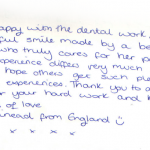
"A new beautiful smile made by a beautiful lady who truly cares for her patients..."
Sinead
Location:- England
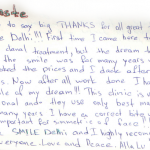

"I have the smile of my dream….This clinic is very professional and they use only best materials..."
Alla Lu
Location:- Russia


"Thank you so much for making my dream come true to have a perfect smile..."
Jacyln Gopinathan
Location:- Mindro Philippines


"I felt very comfortable through my treatment and i had 100% trust in you..."
Arnar Gislason
Location:- Iceland
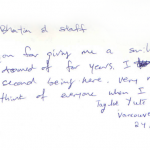

"Thank you for giving me a smile that i’ve dreamed of for years..."
Yuto Harrison
Location:- Canada
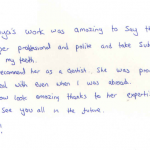

"Dr. Suprriya’s work was amazing…. She is super professional and polite..."
Todd
Location:- Australia
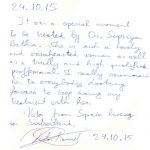

"Dr. Suprriya is such a lovely and warm hearted woman as well as a truly and high qualified professional..."
Victor Vique
Location:- Switzerland
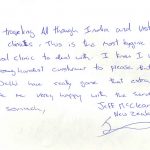

"After travelling all through India and visiting 7 different clinics, this..."
JEFF MC CLEAN
Location:- New Zealand

"From the moment i got here i knew i had made the right decision."


"Thank you so much, Dr. Suprriya! I am so grateful for you and your practice."

"Very attentive and grateful for the results. I will keep in Touch"

"You saved my teeth. Lovely clinic and very professional staff..."


"My teeth are 7-8 shades whiter, thanks to you and your team..."

"Thank you very much dr. suprriya for wonderful treatment for implants and bridge and giving me my smile back."
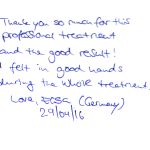

"Felt in good hands during the whole treatment..."
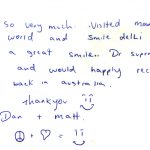
"Visited many dentist around the world and smile delhi definitely gives you a great smile..."
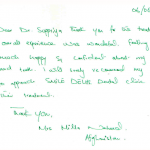

"Over all experience was wonderful…"
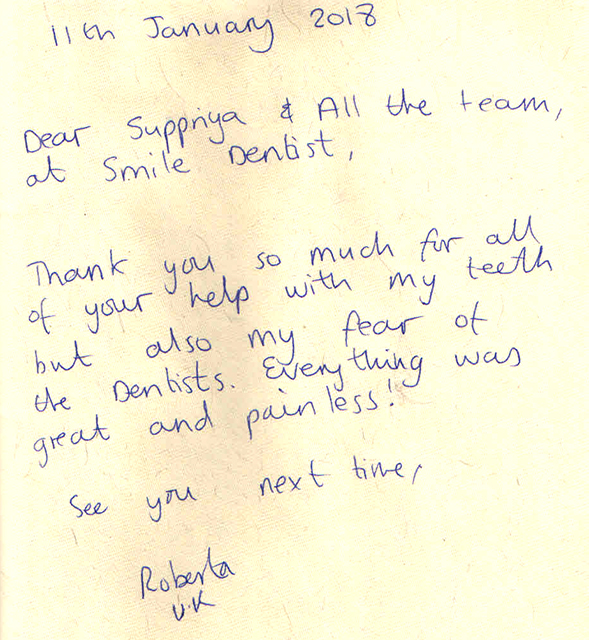
"Every thing was great and pain less !....."
Roberta
Location:- UK

"Dr. Suprriya is such a lovely and warm hearted woman as well as a..."
Victor
Location:- Switzerland
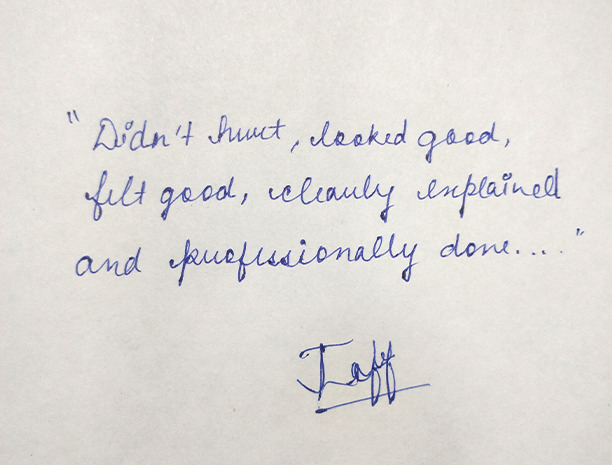

"Didn’t hurt, looked good, felt good, clearly explained and professionally done..."
Jeff
Location:- New zealand

"Dr. Supria is a unic dentice and an exellent person..”, “…honest and direct.."
Yaron Mayer
Location:- Israel Embassy

"Dr. Suprriya is very gentle and excellent human being. A perfect Dentist I...."
Uarely
Location:- Finland


"You treated me gentle as a child!..."
Andreas
Location:- Norway


"You are probably one of the best dentist I have ever been to in the last 50 years..."
Usama
Location:- Saudi Arabia
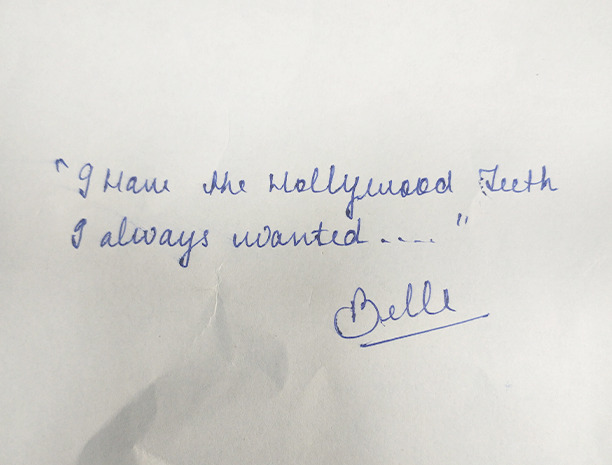

"I have the Hollywood teeth I always wanted…"
Belle
Location:- Canada
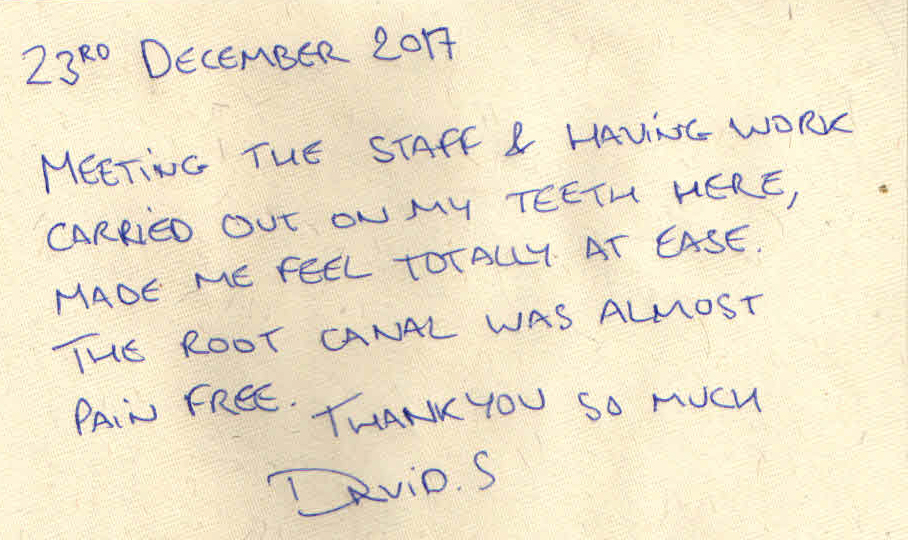
"The root canal was almost pain free....."
David Seeley
Location:- UK
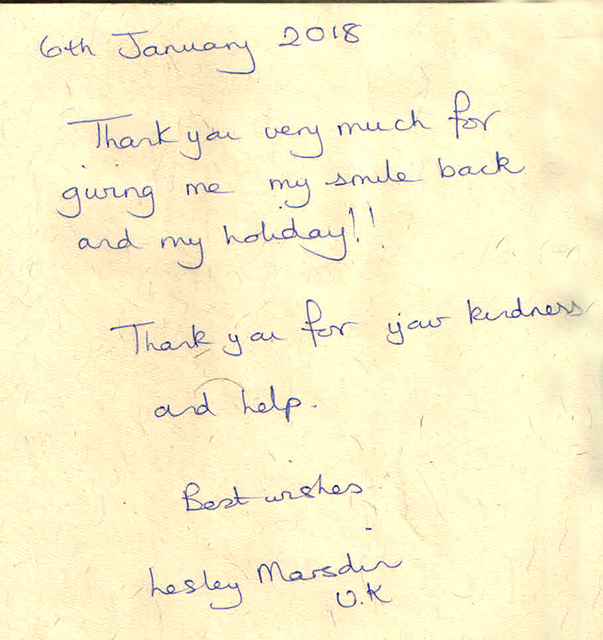
"Thank You very much for giving me my smile back and my holiday!....."
Lesley Marsdin
Location:- UK
"I even laughed when they screwed the posts in ! very professional even enjoyed it a bit"
Laurewce Moon
Location:- UK
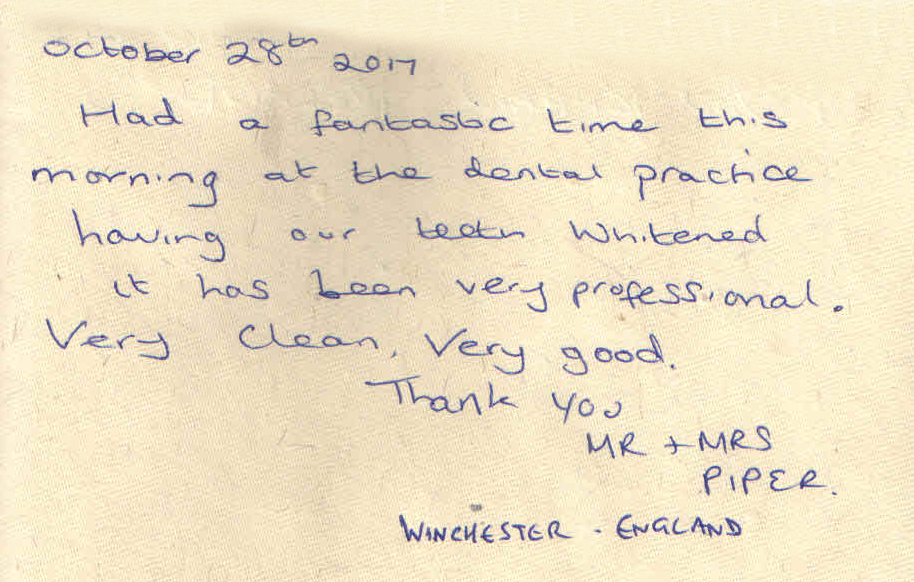
"It has been very professional. Very clean, very good......"
Mr. & Mrs. Piper
Location:-Winchester, England

"My emergency treatment was incredible kind and 1st class....."
Kevin Kahan
Location:- Ireland
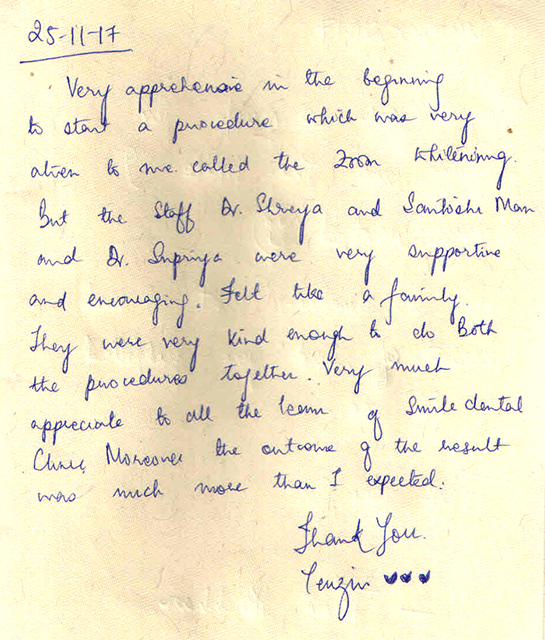

"The result was much more than I expected in zoom whitening....."
Tenzin
Location:- Bhutan
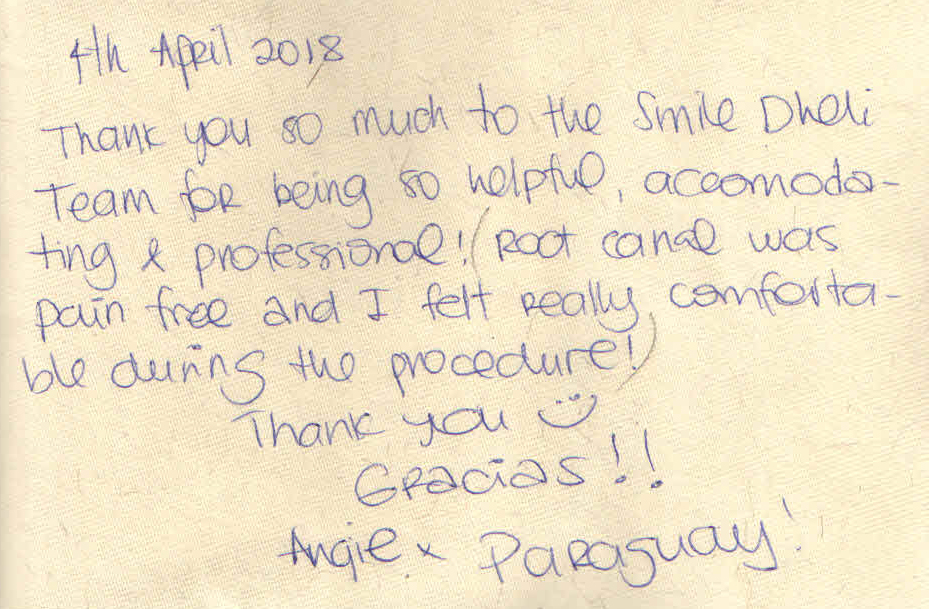

"Root canal was pain free and i felt really comfortable during the procedure....."
Angie
Location:- Paraguay
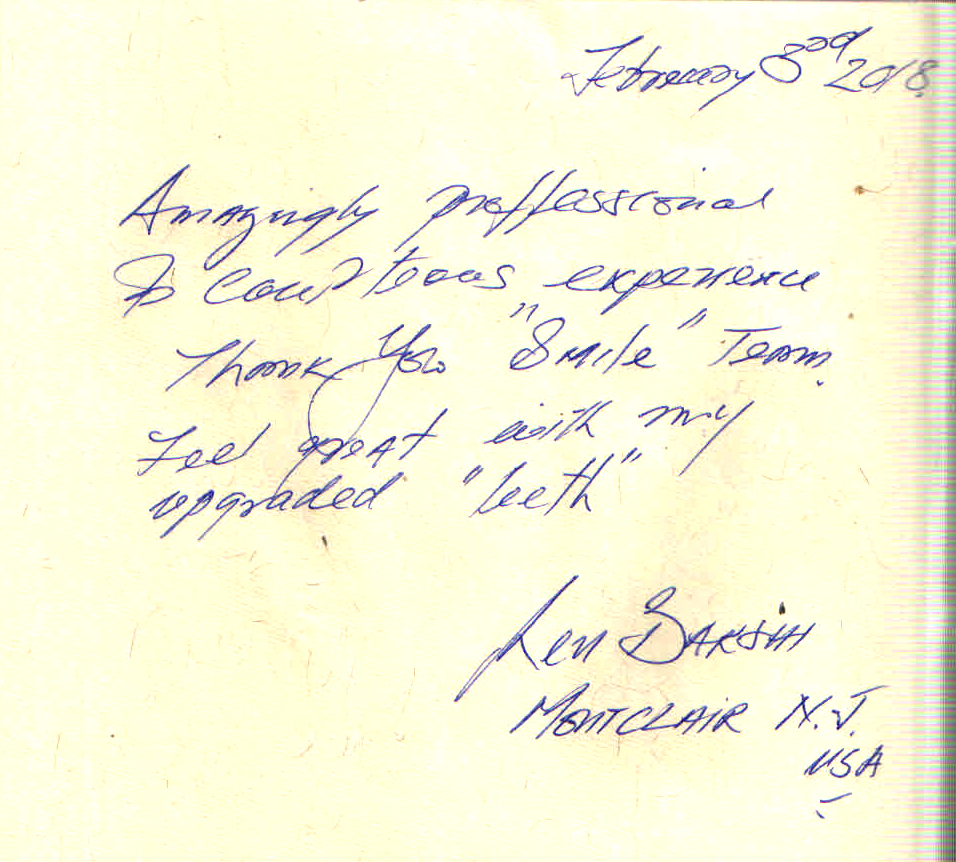
"Amazingly professional and courteous experience......"
Ken Bakshi
Location:- USA

"I had my teeth whitened amazing results!"
Paula Davey
Location:- Australia


"I would like to have sometimes so good dentist in Europe like Dr Suprriya..."
DANNY
Location:- Austria

"I would highly recommend Suprriya to anyone seeking good oral health care..."
ALLISON WEST
Location:- Australia


"Dr Suprriya, I just want to thank you for the very well done..."
MARIO
Location:- Columbia (Diplomat in India)