


How Do Dentists Design a Smile Makeover Plan?
A confident Smile Makeover can completely change how a person feels about themselves. It brings comfort in conversations, boosts mood, and even improves social and professional confidence.
But transforming a smile is never left to chance. Dentists follow a step-by-step method to study the teeth, gums, and facial details before creating a plan that suits each individual.
Whether a patient lives in a busy city or an area like South Delhi, this planning method stays consistent because it brings safe, accurate, and predictable results.
This article explains the entire process that dentists use to design a personalised smile improvement plan.
You will understand how they examine your teeth, decide the best treatments, use digital tools, and prepare a clear timeline for the transformation.
You will also see how clinics such as Smile Delhi – The Dental Clinic help patients feel confident and supported throughout the process.
Understanding the Purpose of a Smile Makeover Plan
Why Dentists Use a Structured Approach
Dentists rely on a structured plan because every patient has different needs. One person may have stained teeth, another may have chipped edges, while someone else may want a fuller and brighter smile.
A step-by-step approach prevents mistakes and gives results that look natural. It also keeps the plan organised from start to finish, which makes the entire experience easier for the patient.
When planning a smile makeover in South Delhi, this careful method becomes even more important because it helps the dentist match treatments to each person’s goals. A planned approach allows the dentist to create balance between the teeth, gums, and facial features.
It also helps them make sensible decisions about which treatments should come first and which ones should wait until later stages. The goal is to create a healthy, strong, and attractive smile that lasts long and feels comfortable.
What Patients Usually Want to Improve
Most patients come in wanting visible changes. Many want whiter teeth, smoother edges, better shape, or straighter alignment.
Others want to fix damage caused by grinding or replace missing teeth. Some patients seek help because their smile looks uneven or worn.
When the dentist hears these concerns, they begin shaping the full smile makeover plan in a way that fits the patient’s goals while keeping oral health in mind.
The First Step:A Detailed Smile Evaluation
Checking Oral Health
Before any cosmetic work begins, the dentist checks your oral health. They look for cavities, gum disease, worn enamel, cracks, loose fillings, and any signs of infection. Healthy foundations are important.
Cosmetic treatments cannot be placed over unhealthy teeth or irritated gums. If a patient has decay or swollen gums, those issues are treated first to avoid future complications.
This early stage protects the patient’s long-term results. It also prevents discomfort and gives the dentist a clearer view of which cosmetic treatments will work best.
Understanding a Patient’s Goals
The next step is a conversation. Dentists talk with patients to understand what they hope to change. Some want a brighter and younger-looking smile. Others want to fix crooked or uneven teeth.
Some want small improvements, while others want a full transformation. Understanding expectations early helps the dentist give accurate advice and create a plan that feels realistic and comfortable.
Analysing the Face and Smile Together
A beautiful smile fits the person’s face, which is why dentists carefully study facial structure, lip shape, and jaw movement before planning any changes. They also observe how much of the teeth show when you speak, smile, or simply rest your lips.
In many cases, a dentist in South Delhi may notice that some people show too much gum, while others hardly reveal their upper teeth at all.
These small details help guide the shaping of the final result so the smile looks balanced and blends naturally with your overall facial features.
Dentists often notice subtle elements that patients may overlook, which leads to a more refined and confident smile.

Digital Tools That Help Dentists Plan Better
Digital Photographs
Dentists take a series of high-quality photos of the teeth and face. These photos are used to study symmetry, tooth shape, and gum levels.
Photographs also help patients understand their current condition and follow their progress. Comparing before and after pictures later brings clarity and satisfaction.
Digital Scans and Models
Digital scanning has replaced traditional moulds in many clinics. Scanners create a 3D image of the teeth that is highly accurate.
These models allow dentists to examine bite alignment, space distribution, crowding, and the exact shape of every tooth. These models also help create restorations like veneers and crowns with greater accuracy.
Smile Simulation Software
Some clinics use advanced design software that shows what the smile may look like after treatment. Patients get a digital preview of their future results.
This helps them feel confident and reduces fear of the unknown. It also gives the dentist a clear design guide for the entire smile makeover process.
How Dentists Choose the Right Treatments
Looking at Tooth Colour and Shape
Tooth colour makes a big difference in how a smile looks. Dentists decide whether simple whitening will help or if veneers or crowns are more suitable.
If a tooth is chipped, worn, or uneven, fixing the shape brings harmony to the full smile. Dentists also look at how light reflects off the teeth to pick the right shade.
Planning for Alignment
If a patient has gaps, crowding, or crooked teeth, alignment is often part of the plan. Treatments like aligners or braces can make the smile look more organised and healthier.
Even small alignment adjustments can create a big improvement in the final result. Many patients in areas like South Delhi choose clear aligners because they offer straighter teeth without interrupting daily routines.
Restoring Damaged or Missing Teeth
If teeth are missing, worn out, or cracked, the dentist may add implants, bridges, or crowns into the plan. Missing teeth affect chewing, speech, jaw support, and overall confidence.
Restoring them is an essential part of creating a complete smile. It also prevents the surrounding teeth from shifting out of place.
Gum Health and Gum Shape
Healthy gums frame the teeth beautifully. Dentists check for swelling, infection, or uneven gum lines.
If needed, they reshape the gums to make the teeth look more symmetrical. If a patient has gum disease, treatments are done first before any cosmetic procedure.
Creating a Step-by-Step Treatment Timeline
What Gets Done First
The first steps always focus on health. This includes cleaning, treating gum problems, and fixing cavities. After the foundation is healthy, dentists move to whitening, alignment, and reshaping.
Advanced restorations such as veneers, crowns, and implants are usually done near the end. This sequence ensures that the final results look fresh and natural.
Making the Plan Comfortable and Practical for the Patient
Dentists understand that patients have different schedules, comfort levels, and time commitments. They create a timeline that fits the patient’s daily routine.
They also consider healing periods so the process feels smooth and stress-free. A well-planned timeline builds confidence and keeps the patient informed at every step.
Helping Patients See Their Future Smile
Digital Previews
Digital previews help patients understand the final goal before treatment starts. Seeing the future smile makeover builds excitement and makes the journey easier. It also allows the dentist to make adjustments based on patient preference.
Temporary Restorations for Testing
When doing veneers or crowns, dentists often use temporary versions first. These allow patients to “test” their new smile in real life before the final restorations are placed.
Temporary restorations help patients check comfort, shape, and appearance. Any needed adjustments are made before the final step.
Why Communication Matters in the Design Phase
Dentist and Patient Working Together
Good communication is the centre of a successful plan. The dentist offers professional advice, but the patient’s thoughts are equally important.
Together, they choose shapes, shades, and treatments that feel natural. This teamwork helps avoid surprises and builds trust.
Reviewing Progress and Making Adjustments
Throughout the treatment, the dentist reviews progress and makes adjustments if needed. This flexible approach makes sure the final result meets the patient’s expectations. Patients feel more relaxed knowing they can discuss changes anytime.
Conclusion
Designing a plan for a smile transformation requires careful study, digital support, and clear conversations between the dentist and the patient.
Each stage builds upon the previous one, creating a smooth and predictable path to a brighter and more confident smile.
With thoughtful planning and professional guidance, the results feel natural and long-lasting. For those ready to begin this journey, Smile Delhi – The Dental Clinic is here to help create a smile that truly reflects your best self.
Sources:
- https://www.who.int/health-topics/oral-health
- https://nhm.gov.in/index1.php?lang=1&level=2&lid=608&sublinkid=1044&utm
- https://www.ada.org/resources/ada-library/oral-health-topics
- cdc.gov/oralhealth

Dr. Suprriya B. Bhatia is a highly experienced dental professional with over 25 years of clinical expertise. A leading dentist in South Delhi, she is the founder of Smile Delhi – The Dental Clinic and specialises in cosmetic dentistry, dental implants, and smile makeovers. Dr. Suprriya B. Bhatia is known for her compassionate, patient-centred approach and commitment to creating healthy, confident smiles for patients from India and abroad.


"Extremely good service and care..."
Tim Gound
Location:- U. K.


"The standard of the clinic is like a first country’s clinic..."
PEDRO MORAES
Location:- Brazil


"Me and my family were very reluctant to undergo my dental treatment in India, but..."
RICHARD SALDANHA
Location:- Peru, South America


"The hygiene is good, the care up to European standards if not better. Strong on explaining..."
THOMAS BAINS
Location:- European Commission
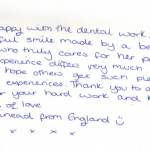
"A new beautiful smile made by a beautiful lady who truly cares for her patients..."
Sinead
Location:- England
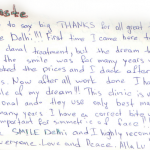

"I have the smile of my dream….This clinic is very professional and they use only best materials..."
Alla Lu
Location:- Russia


"Thank you so much for making my dream come true to have a perfect smile..."
Jacyln Gopinathan
Location:- Mindro Philippines


"I felt very comfortable through my treatment and i had 100% trust in you..."
Arnar Gislason
Location:- Iceland
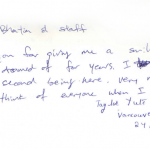

"Thank you for giving me a smile that i’ve dreamed of for years..."
Yuto Harrison
Location:- Canada
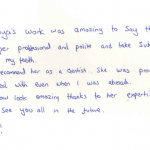

"Dr. Suprriya’s work was amazing…. She is super professional and polite..."
Todd
Location:- Australia


"Dr. Suprriya is such a lovely and warm hearted woman as well as a truly and high qualified professional..."
Victor Vique
Location:- Switzerland


"After travelling all through India and visiting 7 different clinics, this..."
JEFF MC CLEAN
Location:- New Zealand

"From the moment i got here i knew i had made the right decision."


"Thank you so much, Dr. Suprriya! I am so grateful for you and your practice."

"Very attentive and grateful for the results. I will keep in Touch"

"You saved my teeth. Lovely clinic and very professional staff..."


"My teeth are 7-8 shades whiter, thanks to you and your team..."

"Thank you very much dr. suprriya for wonderful treatment for implants and bridge and giving me my smile back."


"Felt in good hands during the whole treatment..."

"Visited many dentist around the world and smile delhi definitely gives you a great smile..."


"Over all experience was wonderful…"
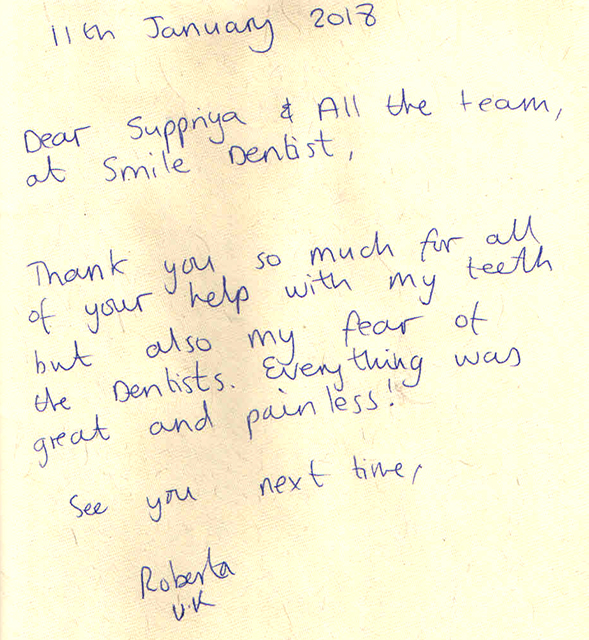
"Every thing was great and pain less !....."
Roberta
Location:- UK

"Dr. Suprriya is such a lovely and warm hearted woman as well as a..."
Victor
Location:- Switzerland
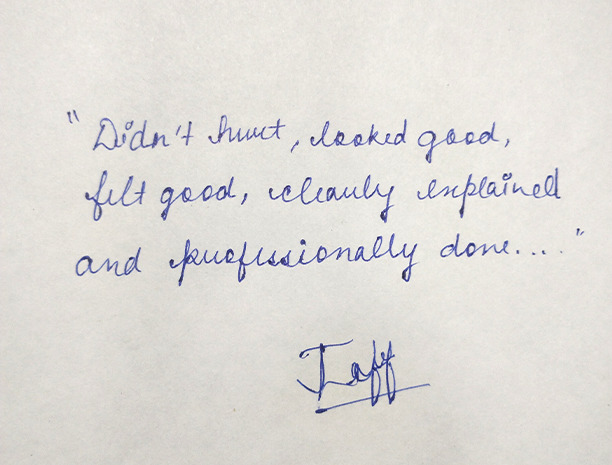

"Didn’t hurt, looked good, felt good, clearly explained and professionally done..."
Jeff
Location:- New zealand

"Dr. Supria is a unic dentice and an exellent person..”, “…honest and direct.."
Yaron Mayer
Location:- Israel Embassy

"Dr. Suprriya is very gentle and excellent human being. A perfect Dentist I...."
Uarely
Location:- Finland


"You treated me gentle as a child!..."
Andreas
Location:- Norway


"You are probably one of the best dentist I have ever been to in the last 50 years..."
Usama
Location:- Saudi Arabia
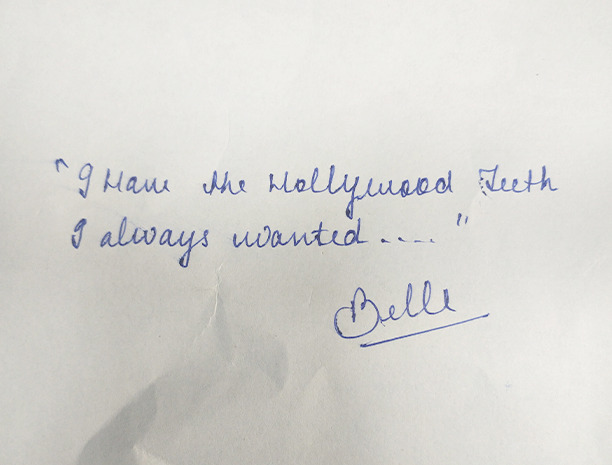

"I have the Hollywood teeth I always wanted…"
Belle
Location:- Canada
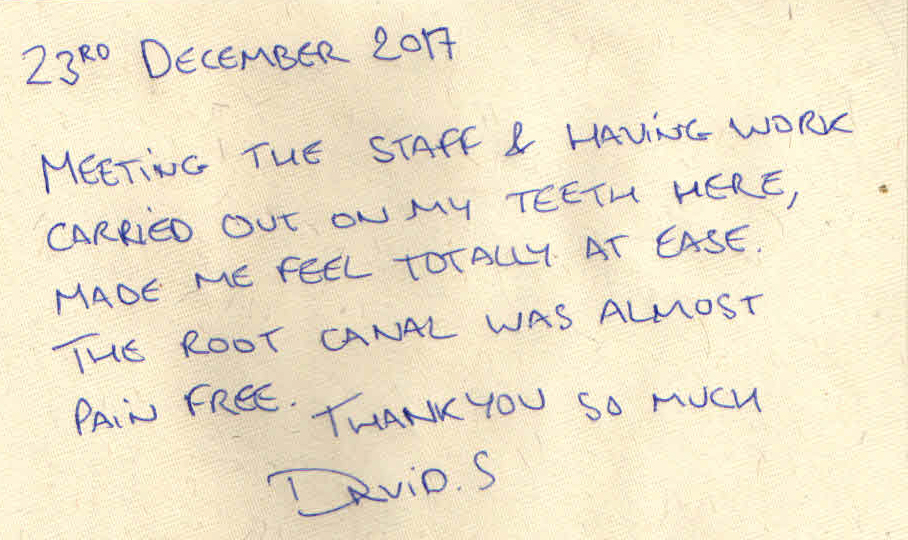
"The root canal was almost pain free....."
David Seeley
Location:- UK
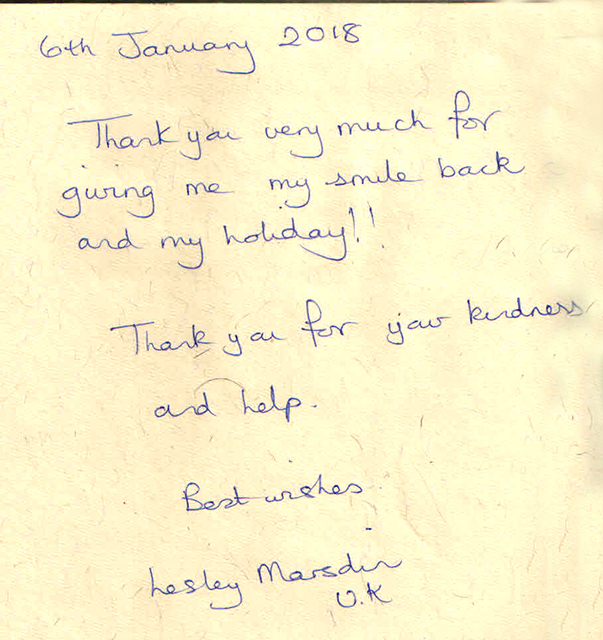
"Thank You very much for giving me my smile back and my holiday!....."
Lesley Marsdin
Location:- UK
"I even laughed when they screwed the posts in ! very professional even enjoyed it a bit"
Laurewce Moon
Location:- UK
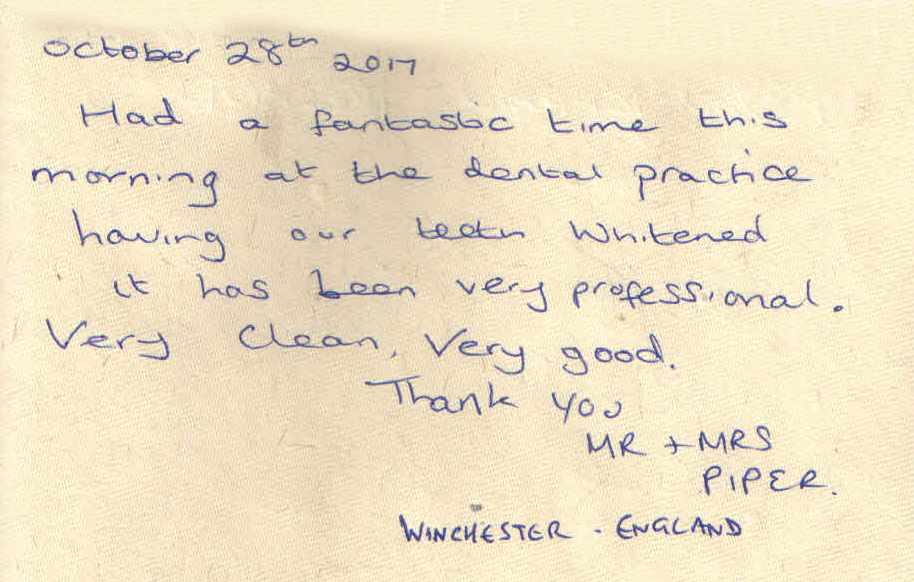
"It has been very professional. Very clean, very good......"
Mr. & Mrs. Piper
Location:-Winchester, England

"My emergency treatment was incredible kind and 1st class....."
Kevin Kahan
Location:- Ireland
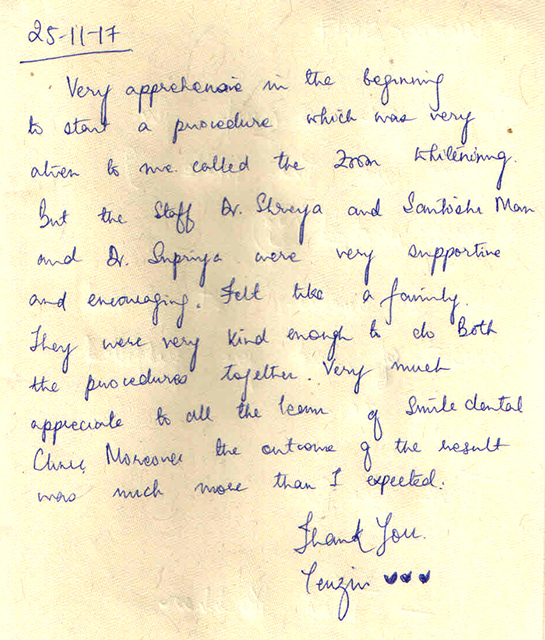

"The result was much more than I expected in zoom whitening....."
Tenzin
Location:- Bhutan
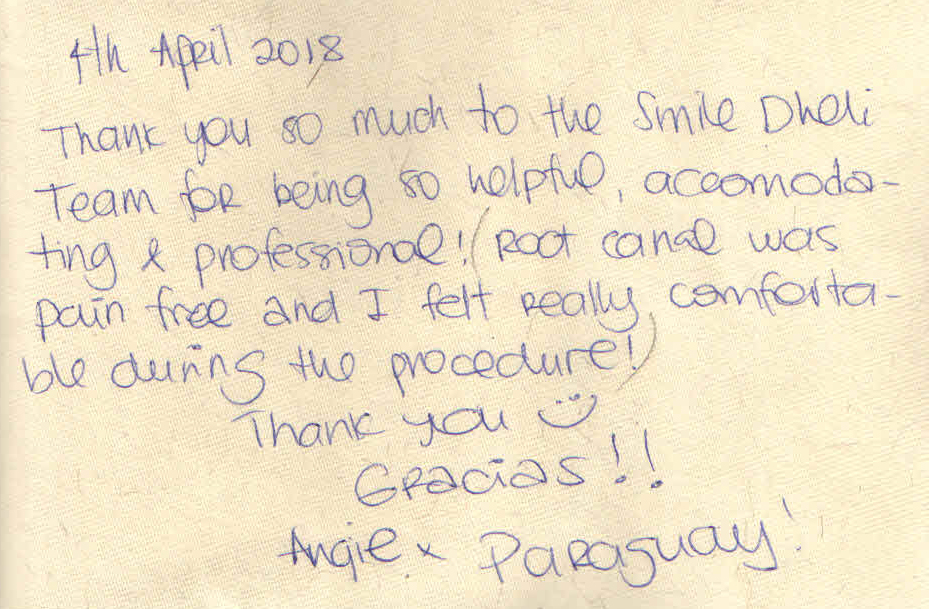

"Root canal was pain free and i felt really comfortable during the procedure....."
Angie
Location:- Paraguay
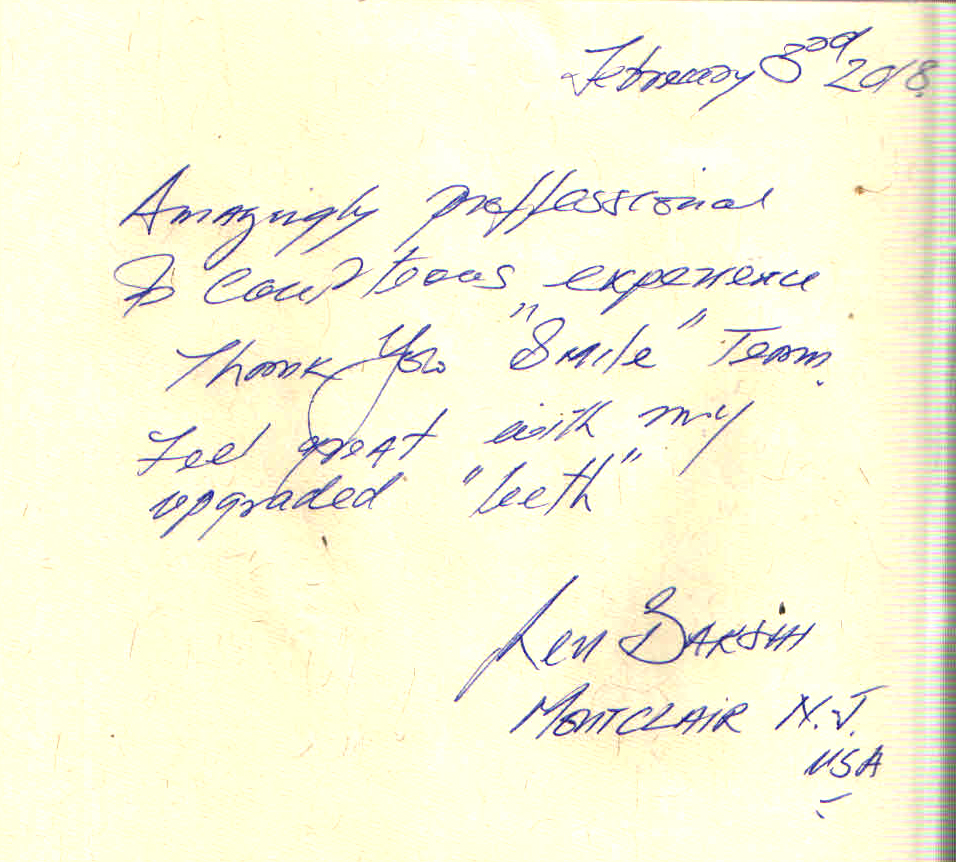
"Amazingly professional and courteous experience......"
Ken Bakshi
Location:- USA


"I had my teeth whitened amazing results!"
Paula Davey
Location:- Australia


"I would like to have sometimes so good dentist in Europe like Dr Suprriya..."
DANNY
Location:- Austria

"I would highly recommend Suprriya to anyone seeking good oral health care..."
ALLISON WEST
Location:- Australia


"Dr Suprriya, I just want to thank you for the very well done..."
MARIO
Location:- Columbia (Diplomat in India)