

Do Dental Implants Need Special Cleaning and Daily Care?
It is one of the most common misunderstandings in implant dentistry: because an implant is made of titanium and cannot decay, many patients assume it needs less attention than a natural tooth. The opposite is closer to the truth.
An implant cannot get a cavity. What it can get is inflammation of the gum around it, and if that inflammation is left alone, it can progress to loss of the bone holding the implant in place. That bone is the only thing anchoring your implant, which is why daily cleaning is not optional maintenance, it is the part of implant care most within your control.
For most patients, implant care takes little more time than caring for natural teeth, though full-arch restorations need a more involved routine. It uses mostly the same tools you already own, with a few adjustments in technique and one or two additions.
This guide covers what changes, which tools are worth buying, how often you need professional cleaning, and the early warning signs that mean something needs checking.
At a Glance
- Implants cannot decay, but the tissue around them can become inflamed and lose bone – a condition known as peri-implantitis.
- Daily cleaning matters more, not less. Brushing twice daily plus cleaning between and underneath the restoration is the core routine.
- Interdental brushes are often the most practical tool for cleaning around implant-supported crowns and bridges.
- Professional cleaning is not optional. The European Federation of Periodontology recommends professional cleaning at least twice a year for implant patients.
- Early sign to watch for: bleeding when you clean around the implant. Bleeding is not normal and is worth reporting.
What Does a Daily Cleaning Routine for Dental Implants Look Like?
Effective home cleaning combined with professional care is the foundation of implant maintenance. The EFP’s clinical guidance on peri-implant mucositis recommends self-performed oral hygiene alongside professional mechanical plaque removal, rather than treating either as a substitute for the other.
At Smile Delhi – The Dental Clinic, patients are also provided with personalised guidance on effective home-care techniques and professional maintenance to help support the long-term health of their dental implants.
The EFP’s patient guidance is equally direct that good oral hygiene at home is the key to preventing peri-implant disease in the first place.
Brushing
Brush twice daily with a soft-bristled manual or electric brush and a fluoride toothpaste. Angle the bristles towards the gumline where the crown meets the gum, since that junction is where plaque collects and where inflammation starts. Avoid heavily abrasive whitening pastes, which offer no benefit to a titanium implant or ceramic crown and can be rough on the surrounding tissue.
Cleaning between and underneath
This is the step that separates adequate implant care from good implant care. Plaque accumulates in the spaces beside and beneath an implant restoration, and a toothbrush cannot reach those areas.
Interdental brushes sized correctly to your gaps are often the most practical tool, and many patients find them easier to use consistently than floss. For implant-supported bridges and full-arch restorations, cleaning underneath the framework is essential, superfloss, floss threaders or specific implant-cleaning aids allow you to pass floss beneath the prosthesis and clean along its underside.
Which Tools Are Worth Using, and Which Should You Avoid?
Worth considering: interdental brushes, a soft-bristled or electric toothbrush, floss designed for implants, and a water flosser. Oral irrigation with water as something that may be considered as an adjunct to professional cleaning, useful support, but not a replacement for mechanical cleaning with a brush.
Worth being cautious about: metal picks and scrapers of any kind. Instruments that can scratch the implant or abutment surface should be left to your dental team, who use materials selected specifically for implant surfaces. Highly abrasive pastes and aggressive scrubbing also cause more problems than they solve.
Worth knowing the evidence on: antiseptic mouthwashes. Current EFP guidance does not suggest routine use of locally administered antiseptics as adjuncts to professional plaque removal for peri-implant mucositis. A rinse may be prescribed for a defined period after surgery or during active treatment of an existing problem, but it is not a long-term substitute for cleaning.
If you are unsure which tools suit your restoration, that is a reasonable question to bring to any consultation about dental implants in South Delhi, a short demonstration on your own crown or bridge is worth more than a general recommendation, because the correct interdental brush size and the correct angle differ from patient to patient.
How Often Do Implants Need Professional Cleaning?
The European Federation of Periodontology recommends that professional cleaning be carried out at least twice a year for the prevention and treatment of peri-implant mucositis. The 2019 consensus report of Working Group 3, published in the International Dental Journal, sets out the same principle in more detail:
maintenance frequency should be based on the patient’s risk indicators, how well they manage home care, and the design of the prosthesis, with an interval of six months or shorter generally preferred.
That means some patients are advised to attend more frequently, typically those with a history of gum disease, smokers, patients with diabetes, or anyone whose restoration is difficult to clean at home.
Professional maintenance does more than remove plaque you have missed. A maintenance appointment is where your dental team checks for bleeding around the implant, examines the fit of the restoration, and takes X-rays periodically to compare bone levels over time. The EFP recommends annual radiographs of implants to detect early bone loss, noting that peri-implantitis can begin two to three years after placement in some patients.
Practically, this means the maintenance schedule your dentist in Delhi sets for you is part of your treatment plan. Ask what your recall interval is and why it has been set at that frequency, so you understand the reasoning behind it.

Do Implants Last Forever If You Look After Them?
No, and it is worth being clear about this because the claim appears frequently in dental marketing. Implants have well-documented long-term survival in the research literature, but survival is not the same as a guarantee, and no dentist can promise a lifetime outcome for any individual patient.
What the evidence does support is more useful: outcomes are strongly influenced by factors you and your dental team can act on daily plaque control, not smoking, managing diabetes, keeping to a maintenance schedule, and having a restoration you can physically clean. The crown or bridge on top may also need repair or replacement over the years even when the implant beneath it remains sound, which is a normal part of long-term implant ownership rather than a failure.
Frequently Asked Questions
Can you use an electric toothbrush on dental implants?
Yes. A soft-bristled electric toothbrush is suitable for implant-supported crowns and bridges, and many patients find it easier to clean the gumline consistently with one. Avoid pressing hard, and pair it with interdental cleaning, since no toothbrush reaches the surfaces between and beneath a restoration.
Do dental implants get cavities?
No. Titanium and ceramic cannot decay. However, the gum and bone around an implant can become inflamed and infected, which is why dental implant care focuses on the tissues surrounding the implant rather than on the implant itself. Natural teeth alongside the implant remain fully susceptible to decay.
Is bleeding around an implant normal?
No. Bleeding when cleaning around an implant is the main sign of peri-implant mucositis and should be reported to your dentist rather than monitored at home. At this stage the inflammation is generally reversible, which is why acting early matters.
Do I still need to clean between my teeth if I have a water flosser?
Generally yes. Current guidance treats water irrigation as a possible adjunct rather than a replacement for mechanical cleaning. Interdental brushes or implant floss physically disrupt plaque in a way water pressure alone does not reliably achieve.
How soon after implant surgery can I clean around the implant normally?
Your dentist will give you specific instructions, which usually involve keeping the surgical site undisturbed initially and gradually resuming normal cleaning as healing progresses. Follow the instructions you are given rather than a general timeline, since it depends on the extent of your surgery.
The Bottom Line
Dental implants do need particular care, not necessarily more time, but a slightly different technique and a genuine commitment to maintenance appointments.
The routine comes down to brushing twice daily with attention to the gumline, cleaning between and underneath the restoration every day with the right tools, attending professional cleanings at the interval your dentist sets, and reporting bleeding rather than ignoring it.
If you have questions about caring for your implants or need personalised guidance, the team at Smile Delhi -The Dental Clinic can assess your oral health, demonstrate the most suitable cleaning techniques for your restoration, and recommend an appropriate maintenance schedule based on your individual needs.
Sources:
- The Journal of the American Dental Association. (2014). Persistent pain after dental implant placement. Available at: https://jada.ada.org/article/S0002-8177(14)60300-7/fulltext
- National Library of Medicine. (2013). Osseointegration: an update. Available at: https://pmc.ncbi.nlm.nih.gov/articles/PMC3602536/
- Cambridge University Hospitals NHS Foundation Trust. (n.d.). Dental implants in restorative dentistry. Available at: https://www.cuh.nhs.uk/patient-information/dental-implants-in-restorative-dentistry/
- Manchester University NHS Foundation Trust. (n.d.). Dental implants – Referral information. Available at: https://mft.nhs.uk/dental/about/referral-information-for-dental-practitioners/implant/

Dr. Suprriya B. Bhatia is a highly experienced dental professional with over 25 years of clinical expertise. A leading dentist in South Delhi, she is the founder of Smile Delhi – The Dental Clinic and specialises in cosmetic dentistry, dental implants, and smile makeovers. Dr. Suprriya B. Bhatia is known for her compassionate, patient-centred approach and commitment to creating healthy, confident smiles for patients from India and abroad.


"Extremely good service and care..."
Tim Gound
Location:- U. K.


"The standard of the clinic is like a first country’s clinic..."
PEDRO MORAES
Location:- Brazil


"Me and my family were very reluctant to undergo my dental treatment in India, but..."
RICHARD SALDANHA
Location:- Peru, South America


"The hygiene is good, the care up to European standards if not better. Strong on explaining..."
THOMAS BAINS
Location:- European Commission
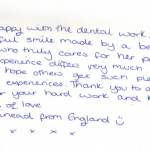
"A new beautiful smile made by a beautiful lady who truly cares for her patients..."
Sinead
Location:- England
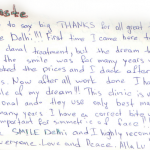

"I have the smile of my dream….This clinic is very professional and they use only best materials..."
Alla Lu
Location:- Russia


"Thank you so much for making my dream come true to have a perfect smile..."
Jacyln Gopinathan
Location:- Mindro Philippines


"I felt very comfortable through my treatment and i had 100% trust in you..."
Arnar Gislason
Location:- Iceland
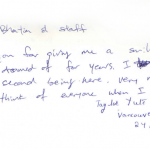

"Thank you for giving me a smile that i’ve dreamed of for years..."
Yuto Harrison
Location:- Canada
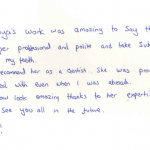

"Dr. Suprriya’s work was amazing…. She is super professional and polite..."
Todd
Location:- Australia
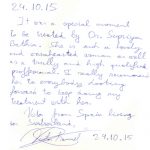

"Dr. Suprriya is such a lovely and warm hearted woman as well as a truly and high qualified professional..."
Victor Vique
Location:- Switzerland


"After travelling all through India and visiting 7 different clinics, this..."
JEFF MC CLEAN
Location:- New Zealand

"From the moment i got here i knew i had made the right decision."


"Thank you so much, Dr. Suprriya! I am so grateful for you and your practice."

"Very attentive and grateful for the results. I will keep in Touch"

"You saved my teeth. Lovely clinic and very professional staff..."


"My teeth are 7-8 shades whiter, thanks to you and your team..."

"Thank you very much dr. suprriya for wonderful treatment for implants and bridge and giving me my smile back."
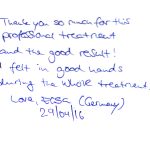

"Felt in good hands during the whole treatment..."

"Visited many dentist around the world and smile delhi definitely gives you a great smile..."
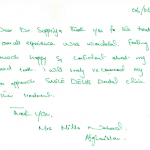

"Over all experience was wonderful…"
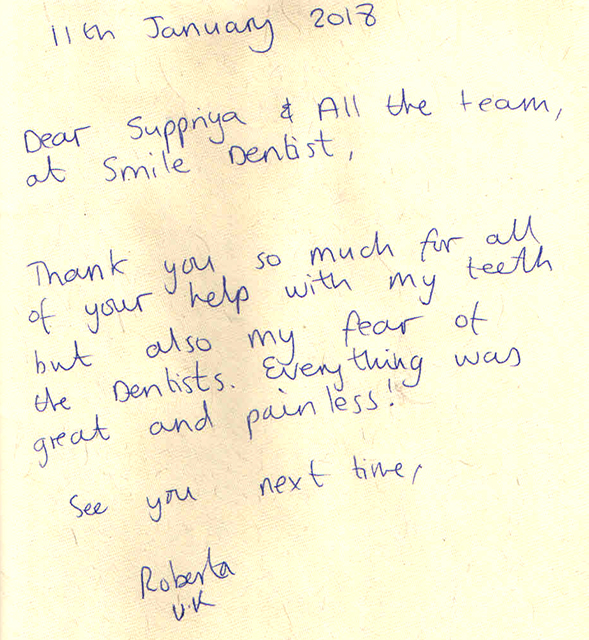
"Every thing was great and pain less !....."
Roberta
Location:- UK

"Dr. Suprriya is such a lovely and warm hearted woman as well as a..."
Victor
Location:- Switzerland
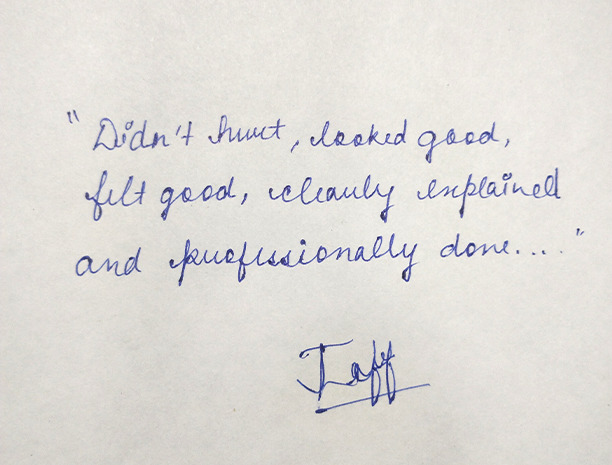

"Didn’t hurt, looked good, felt good, clearly explained and professionally done..."
Jeff
Location:- New zealand

"Dr. Supria is a unic dentice and an exellent person..”, “…honest and direct.."
Yaron Mayer
Location:- Israel Embassy

"Dr. Suprriya is very gentle and excellent human being. A perfect Dentist I...."
Uarely
Location:- Finland


"You treated me gentle as a child!..."
Andreas
Location:- Norway


"You are probably one of the best dentist I have ever been to in the last 50 years..."
Usama
Location:- Saudi Arabia
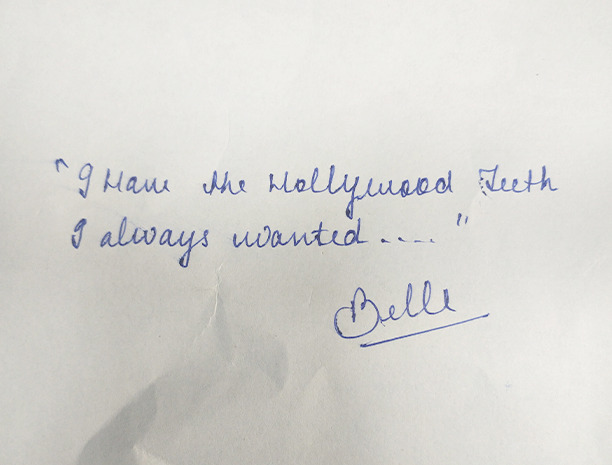

"I have the Hollywood teeth I always wanted…"
Belle
Location:- Canada
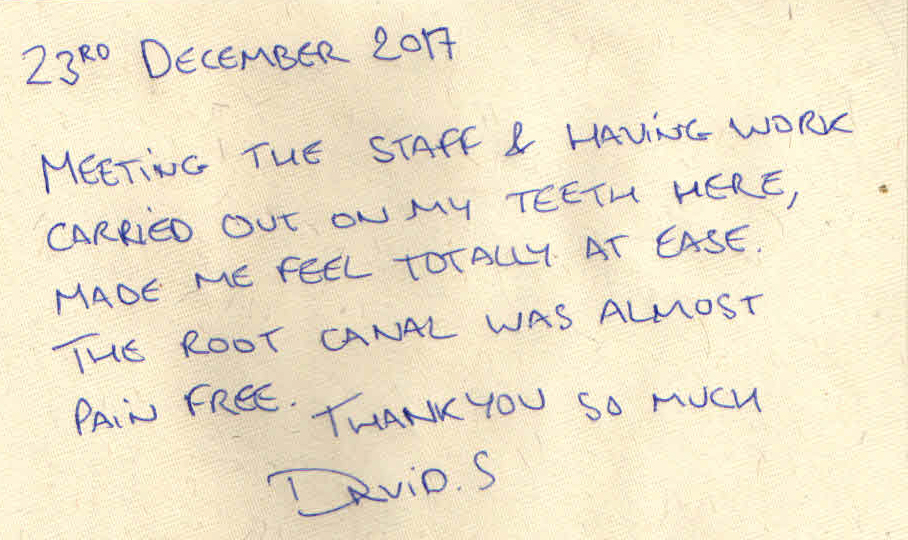
"The root canal was almost pain free....."
David Seeley
Location:- UK
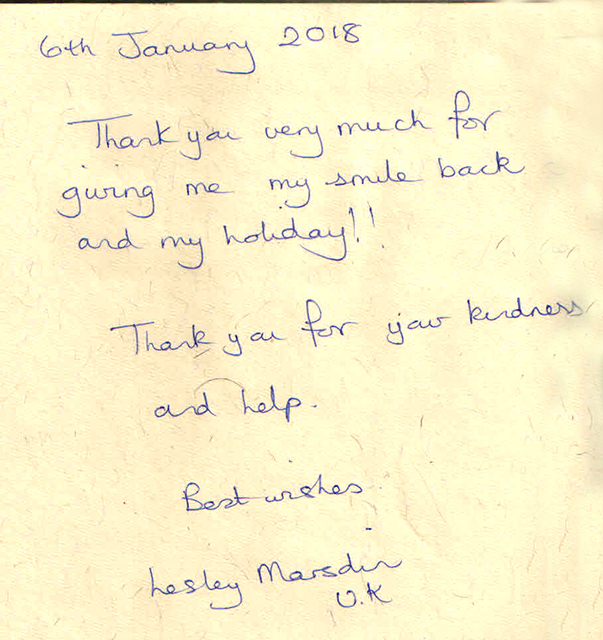
"Thank You very much for giving me my smile back and my holiday!....."
Lesley Marsdin
Location:- UK
"I even laughed when they screwed the posts in ! very professional even enjoyed it a bit"
Laurewce Moon
Location:- UK
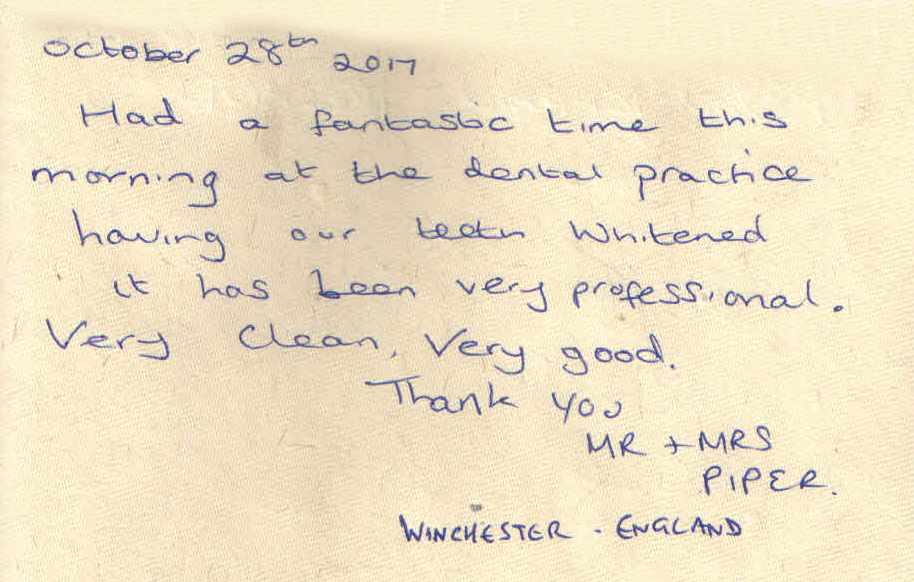
"It has been very professional. Very clean, very good......"
Mr. & Mrs. Piper
Location:-Winchester, England

"My emergency treatment was incredible kind and 1st class....."
Kevin Kahan
Location:- Ireland
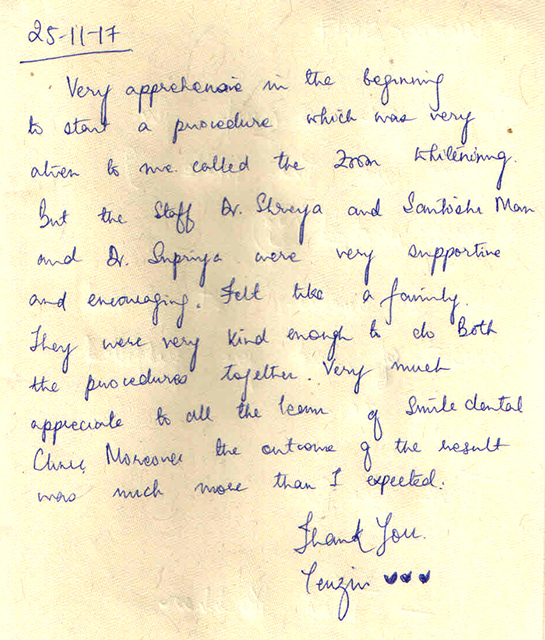

"The result was much more than I expected in zoom whitening....."
Tenzin
Location:- Bhutan
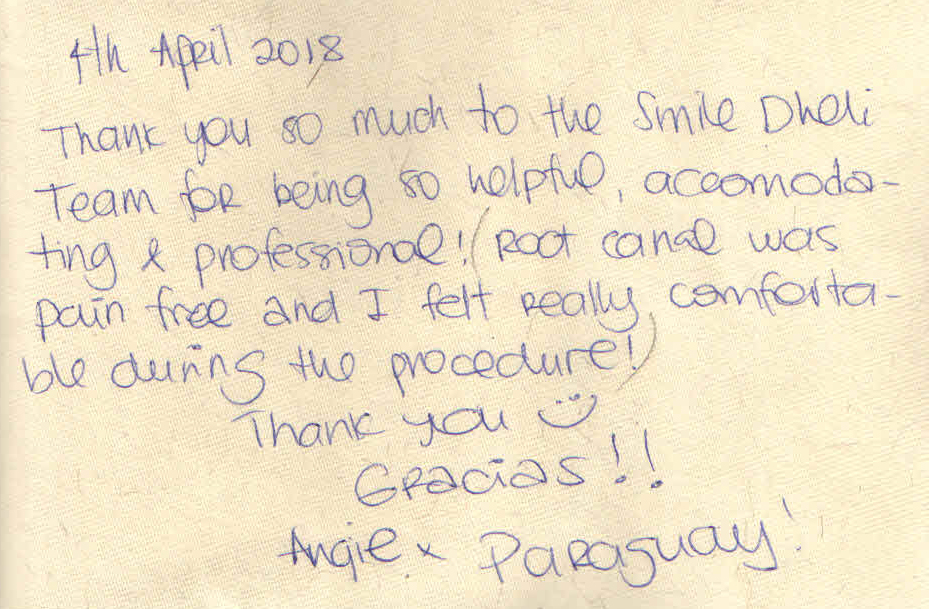

"Root canal was pain free and i felt really comfortable during the procedure....."
Angie
Location:- Paraguay
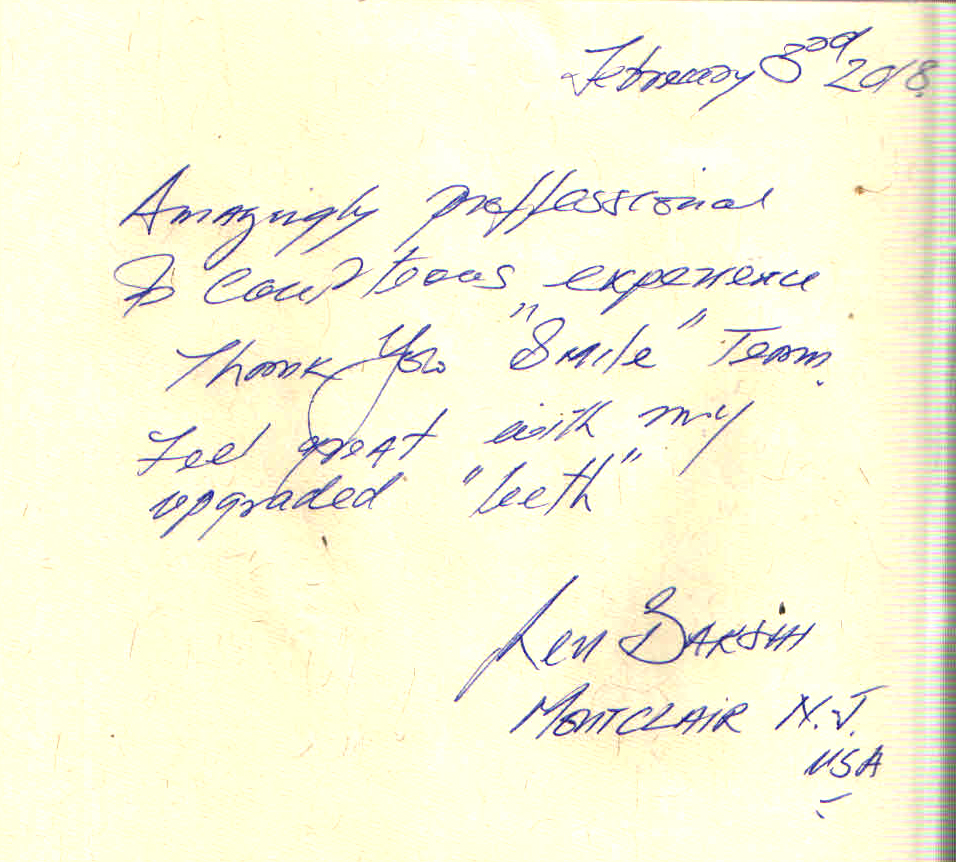
"Amazingly professional and courteous experience......"
Ken Bakshi
Location:- USA


"I had my teeth whitened amazing results!"
Paula Davey
Location:- Australia


"I would like to have sometimes so good dentist in Europe like Dr Suprriya..."
DANNY
Location:- Austria

"I would highly recommend Suprriya to anyone seeking good oral health care..."
ALLISON WEST
Location:- Australia


"Dr Suprriya, I just want to thank you for the very well done..."
MARIO
Location:- Columbia (Diplomat in India)