

Which Option Works Better for Multiple Missing Teeth?
Losing several teeth can change the way you speak, chew, and even smile. It affects simple daily tasks and can make you feel uncomfortable in social situations.
Many people in South Delhi face this challenge and want to know which treatment will help them get back their confidence and comfort.
There are several ways to restore multiple missing teeth, and each option works differently. Choosing the right one can make a big difference in how your mouth feels and functions.
This guide explains every major option in clear language so you understand what might work best for your needs.
Why Replacing Multiple Missing Teeth Matters
How Missing Teeth Affect Daily Life
When several teeth are missing, chewing becomes harder. Food that was once easy to eat starts feeling difficult, and over time this reduces the variety in your meals and affects nutrition.
In many cases, people even start avoiding certain foods without realising it. This is where missing teeth replacement in South Delhi becomes important because it helps restore normal function and lets you enjoy your meals comfortably again.
Speech can also change because missing teeth alter how your tongue forms sounds, making certain words harder to pronounce.
Emotionally, visible gaps can affect self-confidence. Many people smile less, avoid photos, or feel shy around others. Restoring these teeth helps bring back comfort in everyday life, not only physically but also emotionally.
How Missing Teeth Impact Oral Health
Multiple missing teeth do more than create gaps. The nearby teeth slowly move toward the empty spaces, leading to misalignment. This makes cleaning harder and increases the chance of gum issues and cavities.
The jawbone beneath missing teeth also begins to shrink because it lacks stimulation. Over time, the shape of your face may change. Replacing missing teeth early helps maintain a healthy and steady foundation for your mouth.
Main Options for Multiple Missing Teeth
Your dentist will consider your oral health, your goals, and your comfort before recommending one of the major treatments. Each option works in a different way and offers its own benefits.
Dental Implants
Dental implants act like artificial roots placed inside the jawbone. Once healed, a crown is attached on top.
For multiple missing teeth, implants can support several crowns or even a bridge. They feel strong and behave much like natural teeth.
Many people in South Delhi choose implants because they offer long-term stability and preserve jawbone health. They also provide a natural appearance that blends smoothly with the rest of your smile.
Implant-Supported Bridges
Instead of using one implant for each missing tooth, implant-supported bridges use fewer implants to hold several teeth together.
This approach gives the strength of implants while reducing the number of implants needed.This option is ideal for people who want stability but prefer fewer surgical steps.
Traditional Dental Bridges
Traditional bridges use the nearby natural teeth as support. After shaping these teeth, a row of artificial teeth is fixed into place.
This solution works well when the surrounding teeth are strong and healthy.This option avoids surgery and can restore your smile relatively quickly.
Partial Dentures
Partial dentures replace several missing teeth and can be removed for cleaning. They are often the fastest way to fill gaps, especially when missing teeth appear in different areas of the mouth.They are simple to wear and can be adjusted easily over time.
Comparing All Options for Multiple Missing Teeth
Understanding the strengths and differences between these options helps you choose confidently.
Durability
Dental implants and implant-supported bridges last the longest with proper care. They can stay strong for many years, especially when placed by the best dentist in South Delhi, who ensures the treatment is planned and maintained well.
Traditional bridges also last well but may need replacement later because they depend on the strength of nearby teeth. Partial dentures usually need more adjustments over time and may wear out sooner, making long-term care important.

Comfort and Function
Implants provide the closest feel to natural teeth. They do not shift when chewing or speaking. Implant-supported bridges offer similar comfort. Traditional bridges feel secure but rely on the supporting teeth.
Partial dentures may feel loose at first. With time, most patients adapt, but they still require more care to maintain comfort.
Appearance / Aesthetics
All options can look natural. Implants offer the best appearance because they emerge from the gums like natural teeth.
Bridges also provide a natural look, especially when crafted with quality materials. Partial dentures look good but may sometimes show small metal clasps depending on the design.
Daily Care and Maintenance
Implants and bridges need simple brushing and flossing. Partial dentures need special cleaning and must be removed daily. Regular check-ups are important for every option to maintain long-term health.
Suitability Based on Jawbone Health
Implants require enough bone support. If the jawbone is thin or weak, your dentist might suggest a bone graft before placing implants.
Bridges and partial dentures do not depend on jawbone height, making them good choices for patients with bone loss.
Which Option Works Better for Different Patients?
Each patient’s needs are different. The right choice depends on bone strength, comfort with procedures, lifestyle, and long-term goals.
Patients With Strong Jawbone Support
A healthy jawbone allows dental implants or implant-supported bridges to work well. These options offer the best stability and feel close to natural teeth.
Patients With Weak or Thin Bone
If the jawbone lacks strength, a bone graft might be needed for implants. If you prefer a simpler process, a traditional bridge or partial denture can restore your smile without additional procedures.
Patients Looking for Faster Results
Traditional bridges and partial dentures can be made and fitted faster than implants. If you want a quick improvement in appearance and function, these choices may work best.
Patients Wanting the Most Natural Feel
Implants remain the top choice for a natural feel, steady function, and long-lasting comfort. They help maintain bone structure and preserve facial shape.
Example Scenarios to Understand the Differences
Understanding common patient situations makes it easier to see how each option works.
Case of a Young Adult With Three Missing Teeth
A 25-year-old who lost three teeth in an accident might choose implants or an implant-supported bridge.
Their jawbone is usually strong, making implants a stable and long-lasting solution. The bone remains stimulated, helping preserve facial shape for many years.
Case of a Middle-Aged Patient With Bone Loss
A patient in their 40s or 50s who has missing teeth for a long time might experience bone loss. If they prefer to avoid additional procedures like grafting, a bridge can be a good solution. It restores function without complex steps.
Case of an Older Adult Wanting Stability Without Surgery
Some older adults want comfort but do not want surgery. A partial denture gives them the ability to eat and speak comfortably, and it can be adjusted easily as the mouth changes over time. This offers flexibility without the need for surgical procedures.
What to Discuss With Your Dentist Before Choosing an Option
Oral Health Condition
Your dentist will check gum health, bone strength, and the number of missing teeth. These factors guide which option will work best for you.
Budget and Long-Term Value
Some treatments cost more at the beginning but last longer. Others are affordable but may need more replacements. Think about long-term comfort and maintenance.
Comfort With Surgical Treatments
If you are comfortable with minor surgery, implants may be a strong choice. If you prefer non-surgical options, bridges and dentures provide reliable alternatives.
Lifestyle and Daily Habits
Patients who want a fixed, natural-feeling option may prefer implants or bridges. Those who want flexibility or easy adjustments may find partial dentures more suitable.
Conclusion
Finding the best option for multiple missing teeth depends on your oral health, the strength of your jawbone, and what feels comfortable for your daily life. Each treatment implants, bridges, and partial dentures offers its own strengths.
Talking with a trusted dentist helps you choose the one that fits your needs. You deserve a healthy smile that lets you eat, speak, and live confidently. Smile Delhi – The Dental Clinic is here to support your journey toward a complete and comfortable smile.
Sources:
- https://www.mayoclinic.org/tests-procedures/laryngotracheal-reconstruction/doctors-departments/pdc-20384653
- https://www.nhs.uk/tests-and-treatments/dentures/
- https://www.webmd.com/oral-health/cm/dental-implants
- pubmed.ncbi.nlm.nih.gov/31495407

Dr. Suprriya B. Bhatia is a highly experienced dental professional with over 25 years of clinical expertise. A leading dentist in South Delhi, she is the founder of Smile Delhi – The Dental Clinic and specialises in cosmetic dentistry, dental implants, and smile makeovers. Dr. Suprriya B. Bhatia is known for her compassionate, patient-centred approach and commitment to creating healthy, confident smiles for patients from India and abroad.


"Extremely good service and care..."
Tim Gound
Location:- U. K.
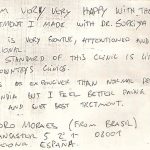

"The standard of the clinic is like a first country’s clinic..."
PEDRO MORAES
Location:- Brazil


"Me and my family were very reluctant to undergo my dental treatment in India, but..."
RICHARD SALDANHA
Location:- Peru, South America


"The hygiene is good, the care up to European standards if not better. Strong on explaining..."
THOMAS BAINS
Location:- European Commission
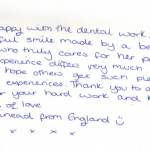
"A new beautiful smile made by a beautiful lady who truly cares for her patients..."
Sinead
Location:- England
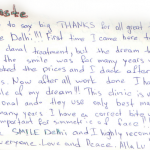

"I have the smile of my dream….This clinic is very professional and they use only best materials..."
Alla Lu
Location:- Russia


"Thank you so much for making my dream come true to have a perfect smile..."
Jacyln Gopinathan
Location:- Mindro Philippines


"I felt very comfortable through my treatment and i had 100% trust in you..."
Arnar Gislason
Location:- Iceland

"Thank you for giving me a smile that i’ve dreamed of for years..."
Yuto Harrison
Location:- Canada

"Dr. Suprriya’s work was amazing…. She is super professional and polite..."
Todd
Location:- Australia

"Dr. Suprriya is such a lovely and warm hearted woman as well as a truly and high qualified professional..."
Victor Vique
Location:- Switzerland


"After travelling all through India and visiting 7 different clinics, this..."
JEFF MC CLEAN
Location:- New Zealand

"From the moment i got here i knew i had made the right decision."


"Thank you so much, Dr. Suprriya! I am so grateful for you and your practice."

"Very attentive and grateful for the results. I will keep in Touch"

"You saved my teeth. Lovely clinic and very professional staff..."


"My teeth are 7-8 shades whiter, thanks to you and your team..."

"Thank you very much dr. suprriya for wonderful treatment for implants and bridge and giving me my smile back."

"Felt in good hands during the whole treatment..."

"Visited many dentist around the world and smile delhi definitely gives you a great smile..."

"Over all experience was wonderful…"
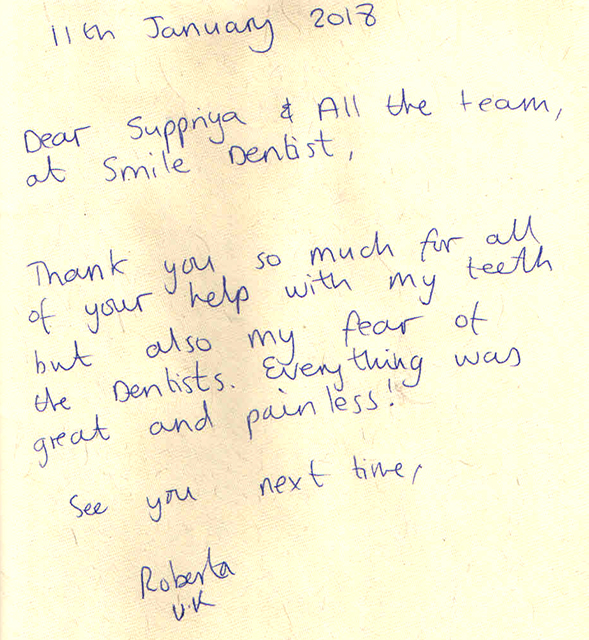
"Every thing was great and pain less !....."
Roberta
Location:- UK

"Dr. Suprriya is such a lovely and warm hearted woman as well as a..."
Victor
Location:- Switzerland
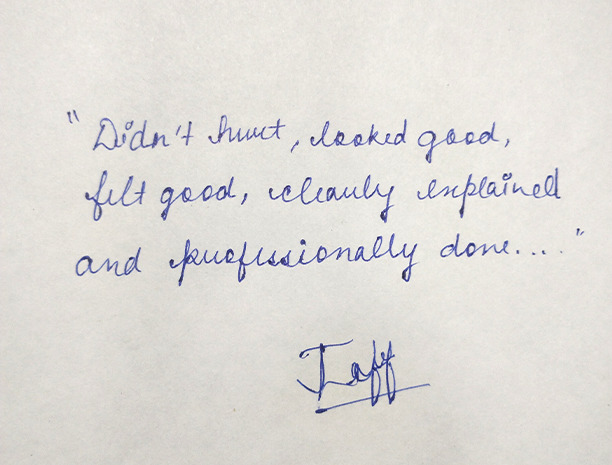

"Didn’t hurt, looked good, felt good, clearly explained and professionally done..."
Jeff
Location:- New zealand

"Dr. Supria is a unic dentice and an exellent person..”, “…honest and direct.."
Yaron Mayer
Location:- Israel Embassy

"Dr. Suprriya is very gentle and excellent human being. A perfect Dentist I...."
Uarely
Location:- Finland


"You treated me gentle as a child!..."
Andreas
Location:- Norway


"You are probably one of the best dentist I have ever been to in the last 50 years..."
Usama
Location:- Saudi Arabia
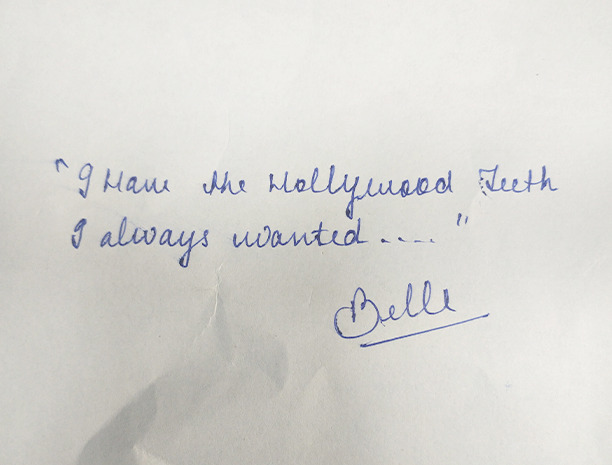

"I have the Hollywood teeth I always wanted…"
Belle
Location:- Canada
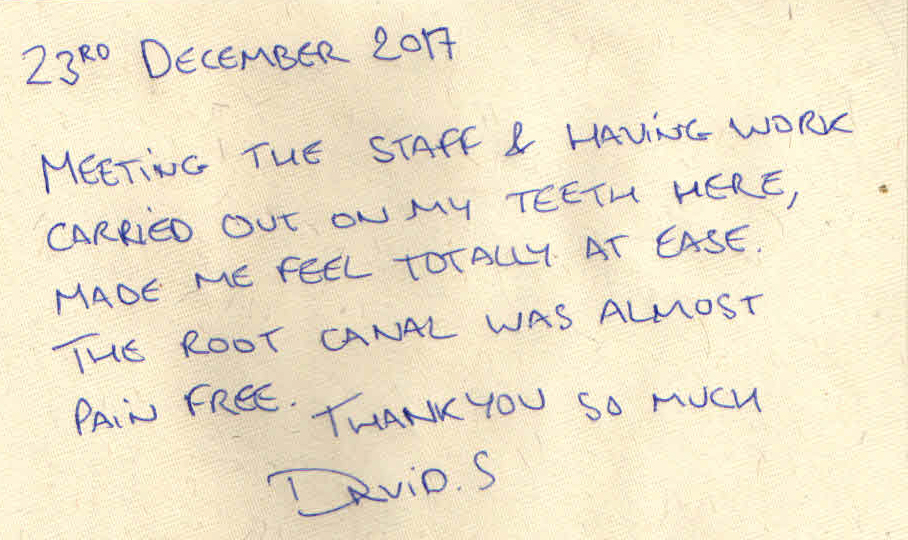
"The root canal was almost pain free....."
David Seeley
Location:- UK
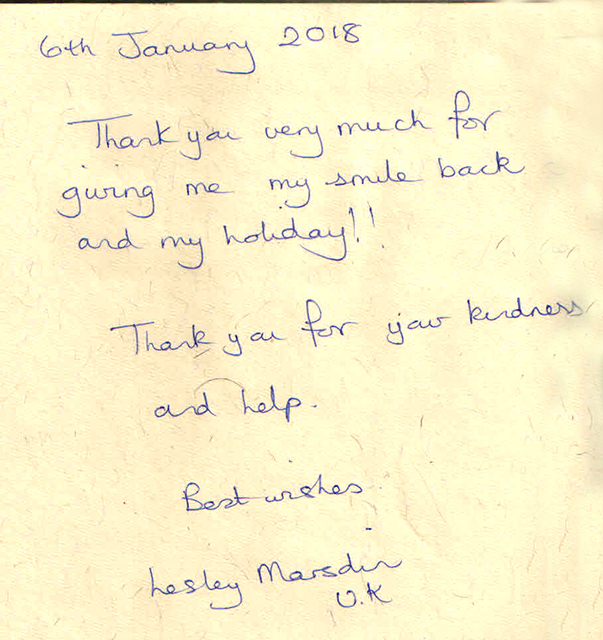
"Thank You very much for giving me my smile back and my holiday!....."
Lesley Marsdin
Location:- UK
"I even laughed when they screwed the posts in ! very professional even enjoyed it a bit"
Laurewce Moon
Location:- UK
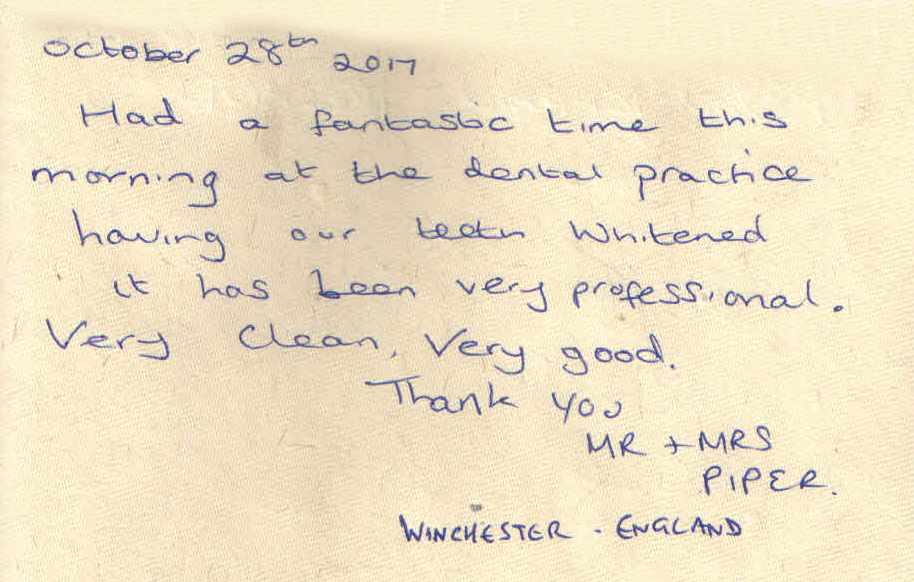
"It has been very professional. Very clean, very good......"
Mr. & Mrs. Piper
Location:-Winchester, England

"My emergency treatment was incredible kind and 1st class....."
Kevin Kahan
Location:- Ireland
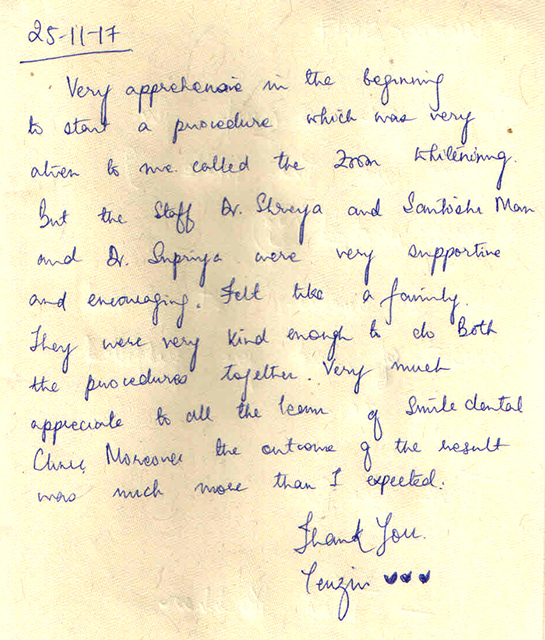

"The result was much more than I expected in zoom whitening....."
Tenzin
Location:- Bhutan
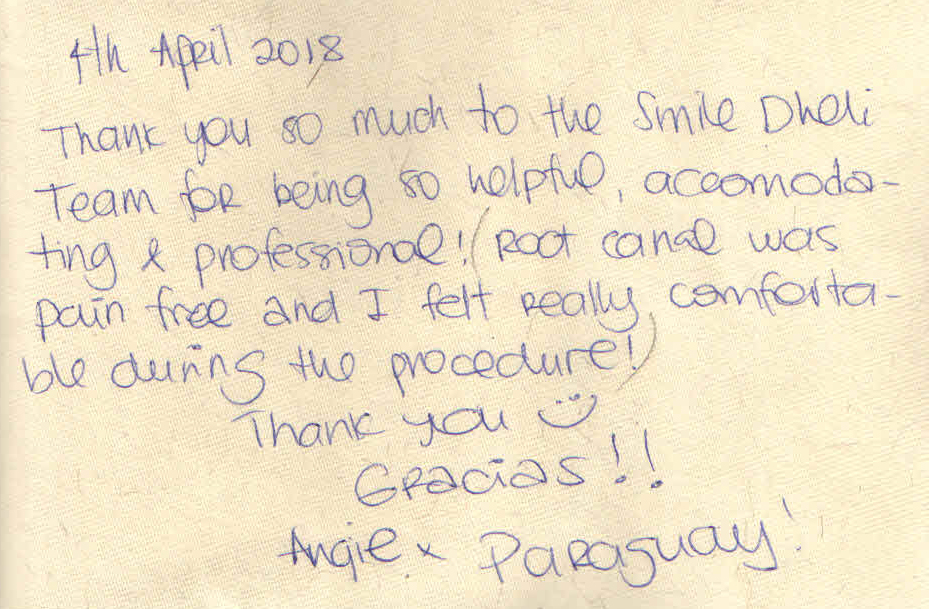

"Root canal was pain free and i felt really comfortable during the procedure....."
Angie
Location:- Paraguay
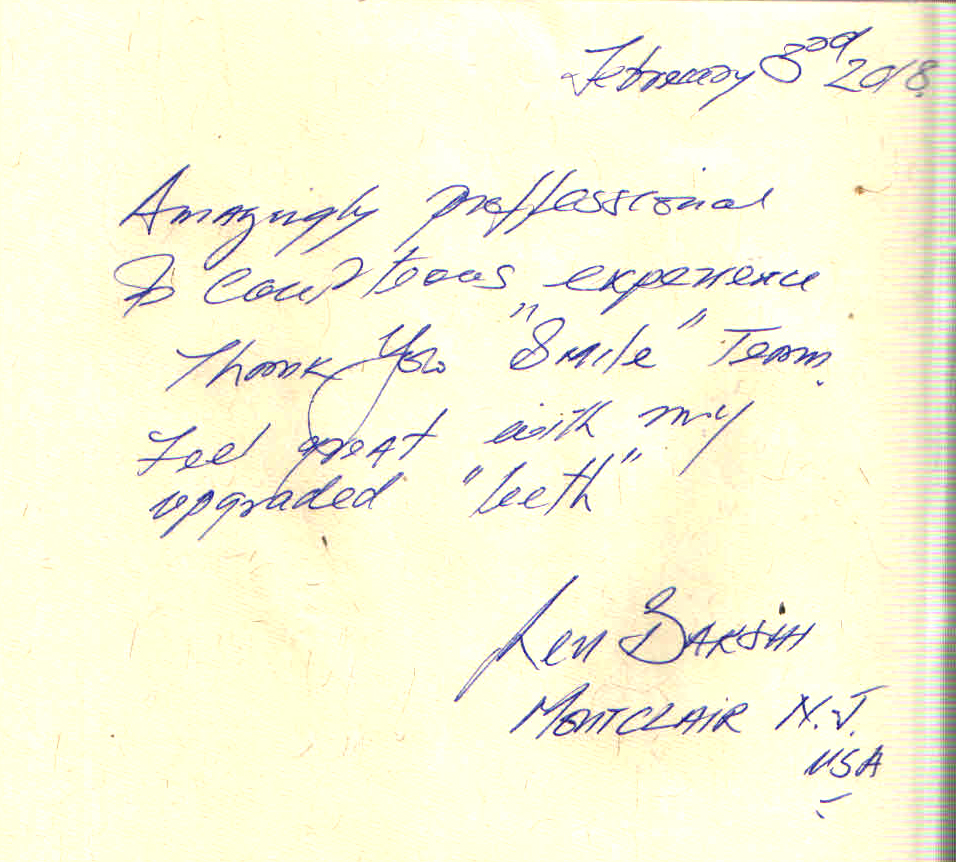
"Amazingly professional and courteous experience......"
Ken Bakshi
Location:- USA


"I had my teeth whitened amazing results!"
Paula Davey
Location:- Australia


"I would like to have sometimes so good dentist in Europe like Dr Suprriya..."
DANNY
Location:- Austria

"I would highly recommend Suprriya to anyone seeking good oral health care..."
ALLISON WEST
Location:- Australia


"Dr Suprriya, I just want to thank you for the very well done..."
MARIO
Location:- Columbia (Diplomat in India)