
Full-Arch Implant Rehabilitation: A Case Study of a 60-Year-Old Patient in Delhi
CASE STUDY X–FULL-ARCH IMPLANT REHABILITATION: A CASE STUDY OF A 60-YEAR-OLD PATIENT IN DELHI
Introduction
A 60-year-old male patient visited our dental clinic in Delhi with a chief complaint of mobile teeth and frequent food lodgement in the upper jaw. Clinical examination revealed crowns in all his teeth and a significant bone loss in the maxillary arch, which had progressively affected the stability of the patient’s natural teeth. The upper teeth had become mobile and could not be predictably conserved. An existing implant was also present in the upper left incisal region.
The lower arch also showed significant bone loss, with mobility affecting teeth in the lower left and right region. After a comprehensive clinical assessment, a staged implant-supported rehabilitation plan was recommended for both arches. The treatment involved five implants in the upper arch and four implants in the lower arch, followed by temporary and permanent implant-supported teeth and a night guard.
Initial Assessment & Diagnosis
A detailed clinical examination was performed to evaluate the condition of the remaining teeth, supporting bone, and existing implant.
The upper arch demonstrated significant bone loss with mobility involving the teeth. The extent of periodontal support had deteriorated to a point where the affected teeth could not be predictably conserved.
The lower arch also presented with significant bone loss and mobility, particularly on the lower left side. The clinical findings indicated that attempting to preserve the severely compromised teeth would not provide a predictable long-term functional outcome.
The existing implant in the upper left incisal region was also taken into consideration while planning the rehabilitation.
Based on the clinical findings, the treatment plan focused on removing the compromised dentition and restoring function using strategically placed dental implants and implant-supported prostheses.
Treatment Plan
A staged full-arch rehabilitation plan was developed for the patient.
Upper Arch
The treatment plan included placement of five dental implants in the upper arch, followed by rehabilitation with an implant-supported bridge.
The planned implant positions included:
- Upper right central incisor region
- Upper right first premolar region
- Upper right molar region
- Upper left central incisor region
- Upper left first premolar and molar regions
Lower Arch
Four implants were planned for rehabilitation of the lower arch:
- Two implants on the lower right side
- Two implants on the lower left side
These implants were planned to support the rehabilitation extending from the first premolar to the first molar on both sides.
The rehabilitation was intentionally divided into stages. Temporary teeth would first be provided at our dental clinic in Delhi to restore function during the healing and integration period. Once adequate healing had taken place, impressions and laboratory trials would be performed before delivery of the definitive prosthetic permanent teeth.
Treatment Process
Phase 1: Implant Placement and Temporary Rehabilitation
24 October 2024 – Lower Implant Placement
The first stage of implant treatment was carried out on 24 October 2024.
Two implants were placed in the lower left region, corresponding to the planned first premolar and first molar areas. Implants were also placed on the lower right side according to the treatment plan.
Following implant placement, the rehabilitation was allowed to progress through the planned healing period.
26 October 2024 – Upper Implant Placement
On 26 October 2024, five implants were placed in the upper arch as part of the planned rehabilitation.
The implant positions included the upper right central incisor, first premolar and molar regions, along with the planned upper left implant positions.
Impressions were also taken for the upper and lower temporary teeth.
30 October 2024 – Temporary Teeth
On 30 October 2024, temporary teeth were fixed in both the upper and lower arches.
The temporary prostheses provided the patient with an interim restoration while allowing the implants and surrounding tissues to progress through the healing phase before definitive rehabilitation.
Phase 2: Definitive Implant-Supported Rehabilitation
After approximately seven months, the patient returned to the clinic for the second phase of treatment.
1 May 2025 – Impressions
On 1 May 2025, impressions were taken for the definitive upper and lower implant-supported bridges.
These impressions were used to prepare the final prosthetic restorations according to the planned design.
5 May 2025 – Jig Trial
On 5 May 2025, a jig trial was performed.
This stage allowed the dental team to verify the accuracy and relationship of the planned prosthetic framework before progressing to the next laboratory stage.
8 May 2025 – Metal Trial
On 8 May 2025, the metal framework trial was carried out for the definitive restorations.
The framework was assessed before proceeding with the final prosthetic teeth.
15 May 2025 – Final Trial
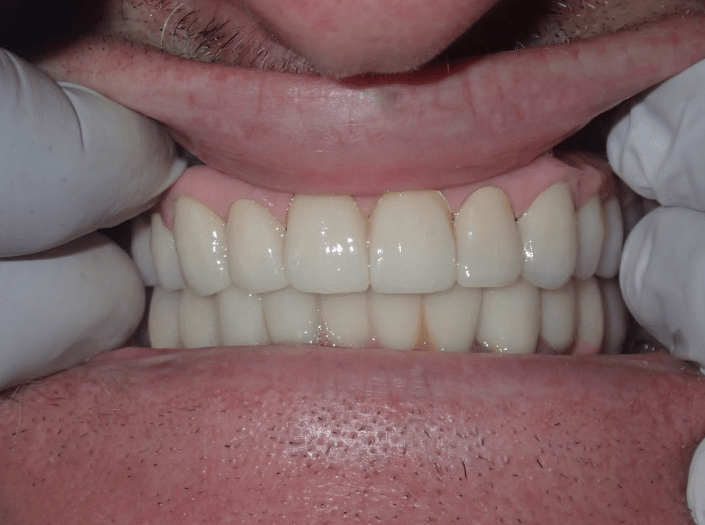
On 15 May 2025, the permanent implant-supported teeth for both arches were completed and delivered.
At this appointment, impressions were also taken for a night guard, which was planned as part of the patient’s long-term maintenance and protection of the rehabilitation.
16 May 2025 – Follow-Up and Night Guard Delivery
A follow-up appointment was conducted on 16 May 2025 to assess the completed rehabilitation.
The night guard was also delivered to the patient.
Results & Outcome
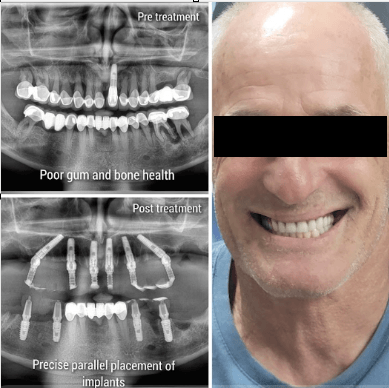
The staged rehabilitation provided the patient with a comprehensive restoration of both the upper and lower arches.
The initial concerns of mobile teeth and food lodgement were addressed through removal of the severely compromised dentition and replacement with implant-supported prosthetic teeth.
The treatment progressed through a carefully planned sequence: implant placement, temporary rehabilitation, healing, definitive impressions, framework trials, and final prosthetic delivery.
The use of temporary teeth during the healing phase allowed the patient to have an interim functional restoration before proceeding to the definitive prostheses.
Following completion of the permanent restorations, a night guard was provided as part of the patient’s ongoing care and maintenance.
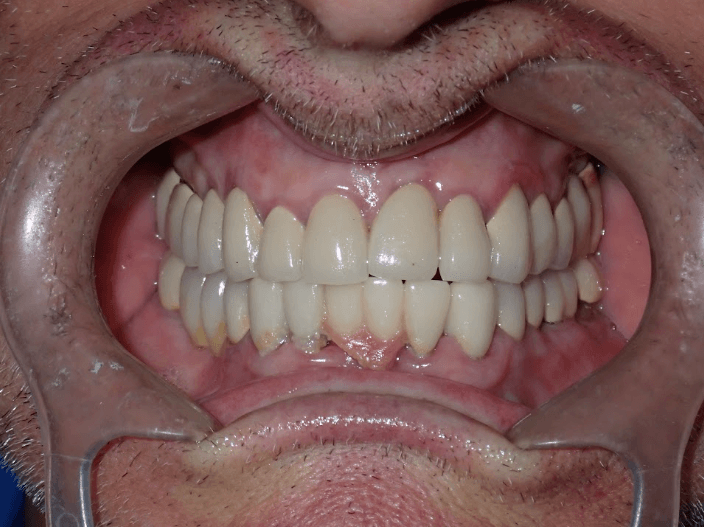
Pre-Treatment |
Post treatment |
Dentist’s Insight
This case demonstrates the importance of comprehensive treatment planning in patients presenting with advanced bone loss and widespread tooth mobility. Rather than treating individual mobile teeth separately, the rehabilitation was planned around the overall condition of both arches and the patient’s functional requirements.
The treatment was divided into clearly defined stages, beginning with implant placement and temporary rehabilitation, followed by an adequate healing period and subsequent fabrication of the definitive prostheses. The jig and metal trials provided additional stages for checking the planned restoration before the final teeth were delivered.
A night guard was also incorporated into the patient’s post-treatment care to support the long-term maintenance of the completed rehabilitation.
Conclusion
This case highlights how a carefully planned, staged approach can be used to rehabilitate a patient with extensive tooth mobility and significant bone loss affecting both arches. For this 60-year-old patient, five implants were used to support the upper rehabilitation, while four implants were placed for the planned lower posterior rehabilitation.
The treatment progressed from implant placement and temporary teeth to definitive impressions, laboratory trials and final implant-supported restorations after the healing period. The addition of a night guard and follow-up care completed the rehabilitation process.
If you are experiencing mobile teeth, difficulty chewing, recurrent food lodgement, or extensive tooth loss, a comprehensive dental examination at Smile Delhi-The Dental Clinic can help determine whether implant-supported rehabilitation may be appropriate for your individual condition.
Book a consultation with Smile Delhi – The Dental Clinic to discuss your smile goals and personalised treatment options.

"Extremely good service and care..."
Tim Gound
Location:- U. K.

"The standard of the clinic is like a first country’s clinic..."
PEDRO MORAES
Location:- Brazil


"Me and my family were very reluctant to undergo my dental treatment in India, but..."
RICHARD SALDANHA
Location:- Peru, South America


"The hygiene is good, the care up to European standards if not better. Strong on explaining..."
THOMAS BAINS
Location:- European Commission
"A new beautiful smile made by a beautiful lady who truly cares for her patients..."
Sinead
Location:- England

"I have the smile of my dream….This clinic is very professional and they use only best materials..."
Alla Lu
Location:- Russia


"Thank you so much for making my dream come true to have a perfect smile..."
Jacyln Gopinathan
Location:- Mindro Philippines


"I felt very comfortable through my treatment and i had 100% trust in you..."
Arnar Gislason
Location:- Iceland

"Thank you for giving me a smile that i’ve dreamed of for years..."
Yuto Harrison
Location:- Canada

"Dr. Suprriya’s work was amazing…. She is super professional and polite..."
Todd
Location:- Australia

"Dr. Suprriya is such a lovely and warm hearted woman as well as a truly and high qualified professional..."
Victor Vique
Location:- Switzerland

"After travelling all through India and visiting 7 different clinics, this..."
JEFF MC CLEAN
Location:- New Zealand

"From the moment i got here i knew i had made the right decision."


"Thank you so much, Dr. Suprriya! I am so grateful for you and your practice."
"Very attentive and grateful for the results. I will keep in Touch"

"You saved my teeth. Lovely clinic and very professional staff..."


"My teeth are 7-8 shades whiter, thanks to you and your team..."

"Thank you very much dr. suprriya for wonderful treatment for implants and bridge and giving me my smile back."

"Felt in good hands during the whole treatment..."

"Visited many dentist around the world and smile delhi definitely gives you a great smile..."

"Over all experience was wonderful…"
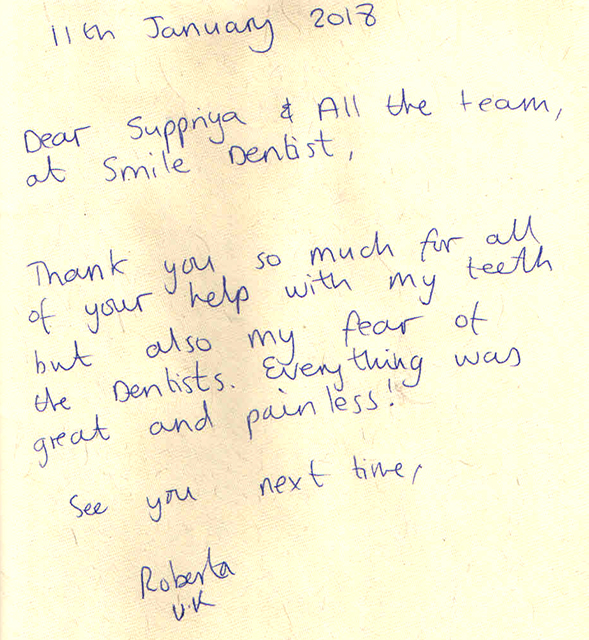
"Every thing was great and pain less !....."
Roberta
Location:- UK

"Dr. Suprriya is such a lovely and warm hearted woman as well as a..."
Victor
Location:- Switzerland
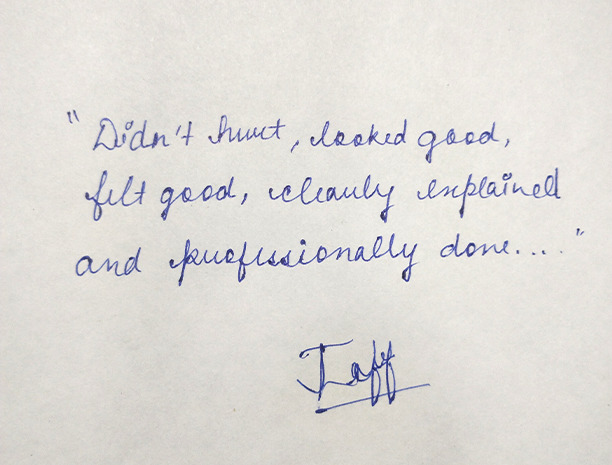

"Didn’t hurt, looked good, felt good, clearly explained and professionally done..."
Jeff
Location:- New zealand

"Dr. Supria is a unic dentice and an exellent person..”, “…honest and direct.."
Yaron Mayer
Location:- Israel Embassy

"Dr. Suprriya is very gentle and excellent human being. A perfect Dentist I...."
Uarely
Location:- Finland


"You treated me gentle as a child!..."
Andreas
Location:- Norway


"You are probably one of the best dentist I have ever been to in the last 50 years..."
Usama
Location:- Saudi Arabia
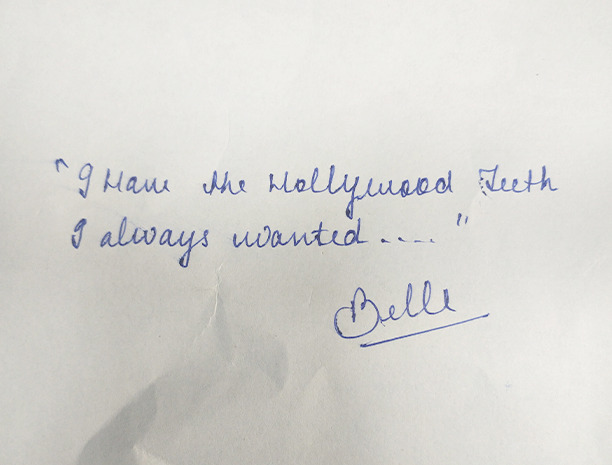

"I have the Hollywood teeth I always wanted…"
Belle
Location:- Canada
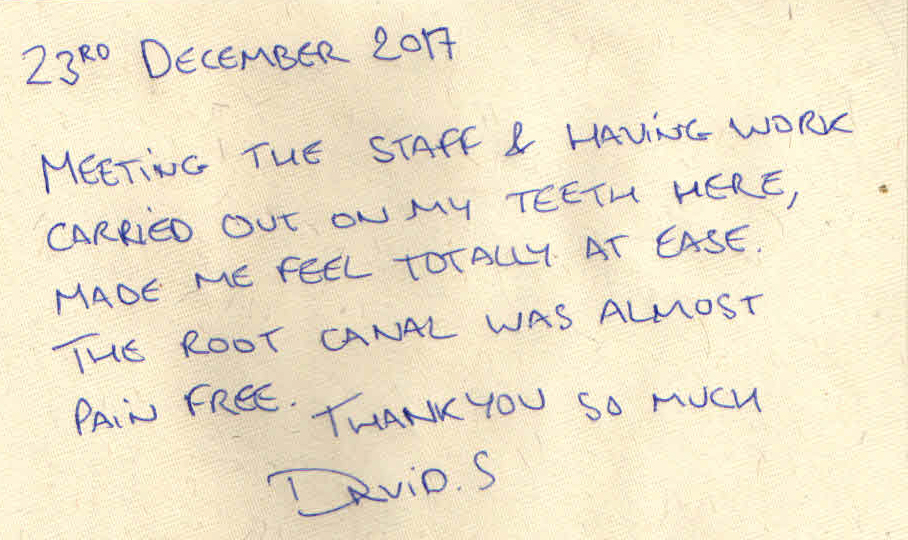
"The root canal was almost pain free....."
David Seeley
Location:- UK
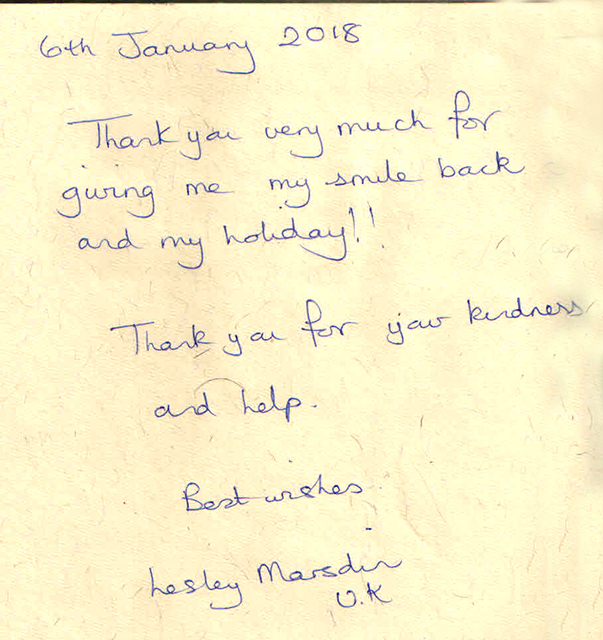
"Thank You very much for giving me my smile back and my holiday!....."
Lesley Marsdin
Location:- UK
"I even laughed when they screwed the posts in ! very professional even enjoyed it a bit"
Laurewce Moon
Location:- UK
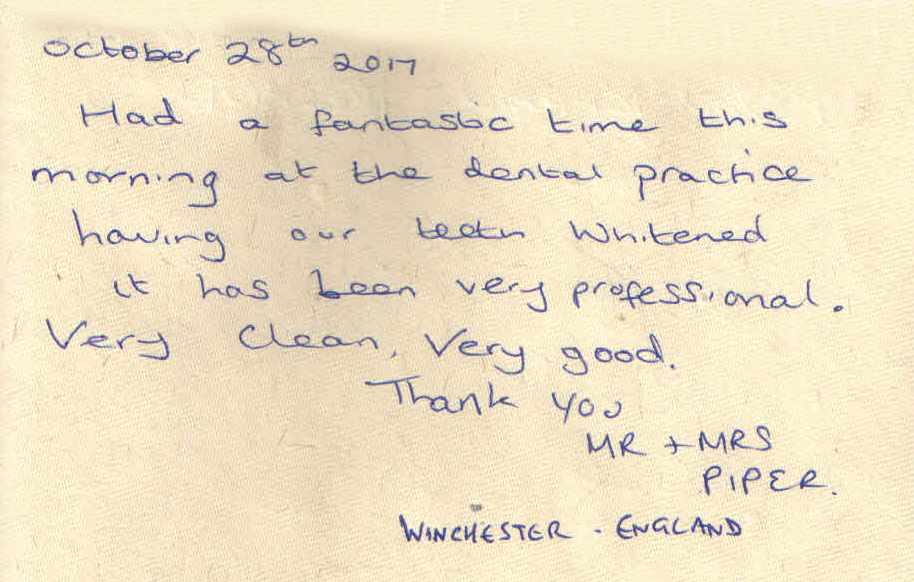
"It has been very professional. Very clean, very good......"
Mr. & Mrs. Piper
Location:-Winchester, England

"My emergency treatment was incredible kind and 1st class....."
Kevin Kahan
Location:- Ireland
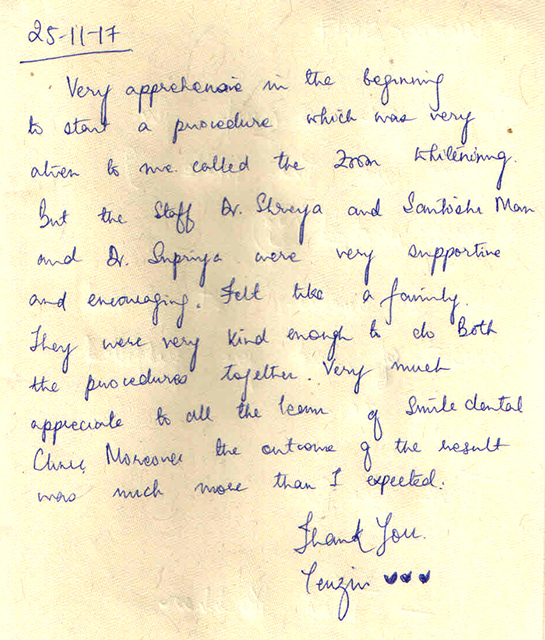

"The result was much more than I expected in zoom whitening....."
Tenzin
Location:- Bhutan
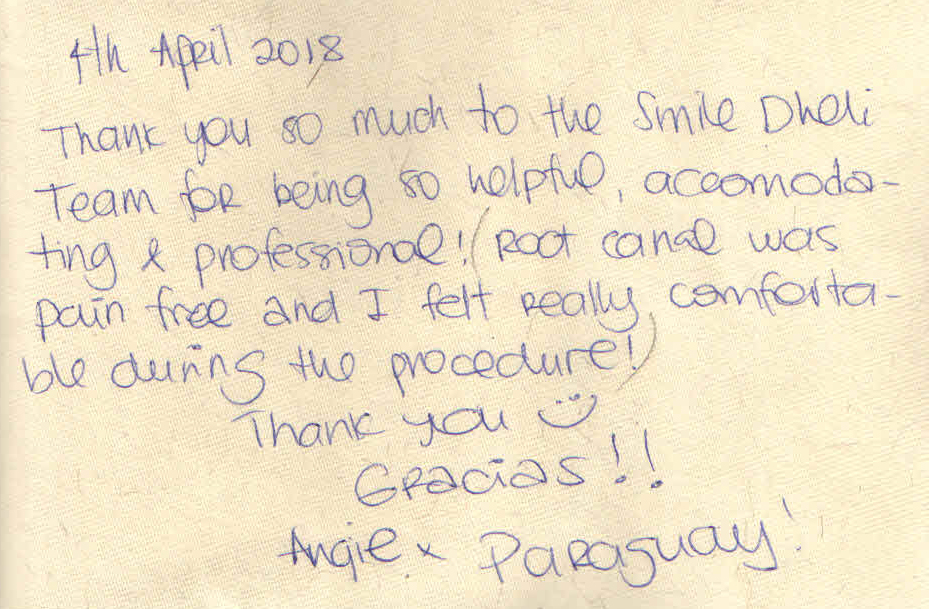

"Root canal was pain free and i felt really comfortable during the procedure....."
Angie
Location:- Paraguay
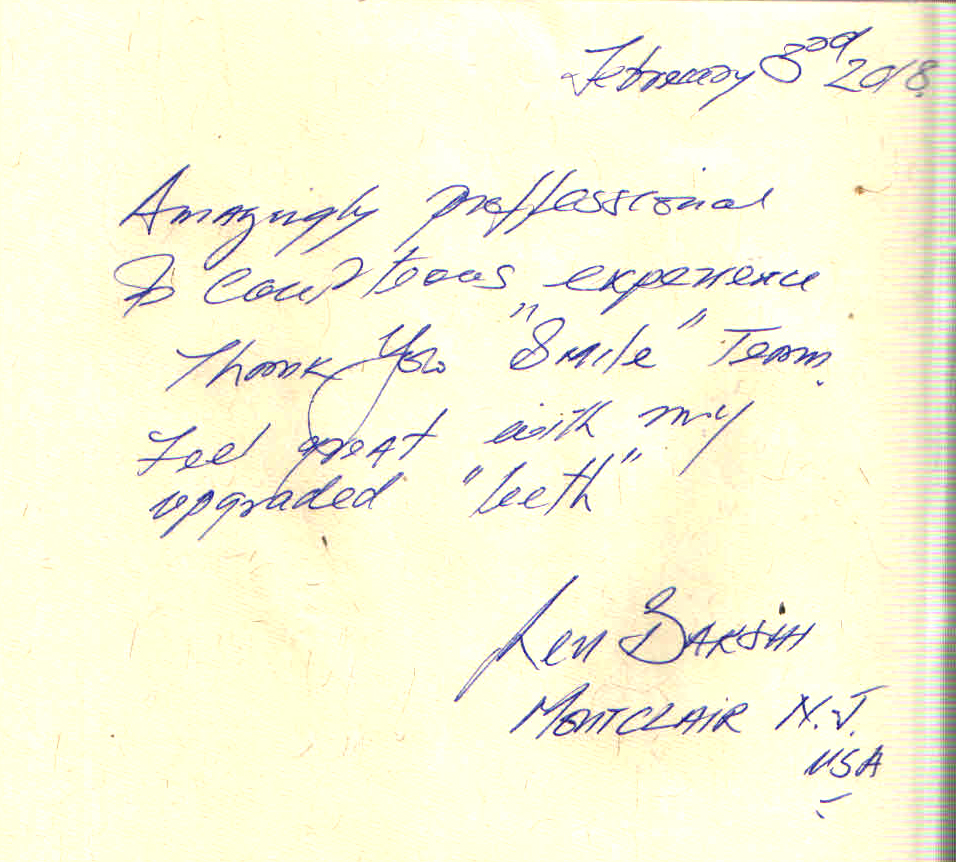
"Amazingly professional and courteous experience......"
Ken Bakshi
Location:- USA


"I had my teeth whitened amazing results!"
Paula Davey
Location:- Australia

"I would like to have sometimes so good dentist in Europe like Dr Suprriya..."
DANNY
Location:- Austria

"I would highly recommend Suprriya to anyone seeking good oral health care..."
ALLISON WEST
Location:- Australia


"Dr Suprriya, I just want to thank you for the very well done..."
MARIO
Location:- Columbia (Diplomat in India)