
What Makes an Emax Veneer Look Like a Real Tooth?
When people consider dental veneers, one of the most common concerns is simple: “Will my veneers look natural?”
A beautiful smile is not necessarily the whitest, brightest, or most perfectly symmetrical smile. Natural teeth have subtle variations in colour, translucency, shape, texture, and light reflection. These small details are what make them look alive rather than artificial.
This is one reason Emax veneers, made from lithium disilicate glass-ceramic, are widely used in aesthetic dentistry. Their optical properties allow dentists and dental technicians to create restorations that can closely reproduce some of the visual characteristics of natural enamel. Research comparing lithium disilicate with other ceramics has found that lithium disilicate veneers can demonstrate greater translucency than monolithic zirconia veneers.
However, the material alone does not create a natural-looking veneer. The final result depends on several factors working together: the ceramic selected, its translucency and thickness, the underlying tooth colour, the shade of the bonding cement, tooth preparation, the shape and proportions of the veneer, surface texture, finishing and polishing, and, perhaps most importantly, the skill of the dentist and dental laboratory.
So, what exactly makes an Emax veneer look like a real tooth?
1. Natural-looking translucency
One of the most important differences between a natural tooth and an artificial-looking restoration is how it interacts with light.
Natural teeth are not completely opaque. Enamel allows some light to pass through it, while the underlying dentine influences the colour and brightness that we see, a layered effect that ceramic veneers in south delhi are designed to replicate closely. This creates depth rather than a flat, painted appearance.
A good Emax veneer can reproduce this effect because lithium disilicate is a glass-ceramic with excellent optical properties. IPS e.max materials are available in different translucency levels and shades, giving clinicians and technicians greater flexibility when matching the restoration to the surrounding teeth.
This is particularly important around the incisal edge.
Look closely at a natural front tooth and you may notice that the edge is slightly more translucent than the middle or cervical portion of the tooth. Light interacts differently with each area. A well-designed veneer takes these variations into consideration instead of making the entire tooth one uniform colour.
The goal is not simply to make the veneer “transparent.” The goal is to control how much light passes through, how much is reflected, and how the underlying tooth affects the final appearance.
Research has identified translucency as one of the most important optical properties affecting the aesthetic appearance of ceramic laminate veneers.
This is why choosing the correct translucency level is a critical part of Emax veneer treatment.
2. The correct shade, not simply the whitest shade
A common misconception is that a natural-looking smile must be very white.
In reality, natural teeth rarely have exactly the same shade from the gumline to the incisal edge. They can contain subtle warm, cool, grey, yellow or translucent characteristics.
When designing Emax veneers, the dentist and laboratory technician need to consider the patient’s existing teeth, facial features, skin tone, lip position and the colour of adjacent teeth. A skilled dentist in south delhi factors in each of these details to ensure the veneers blend naturally with the smile.
The selected shade should also fit the patient’s expectations.
A very bright veneer may look attractive in isolation but artificial when placed next to natural teeth. Conversely, a carefully selected shade can blend into the smile so naturally that the veneers are difficult to distinguish from the surrounding dentition.
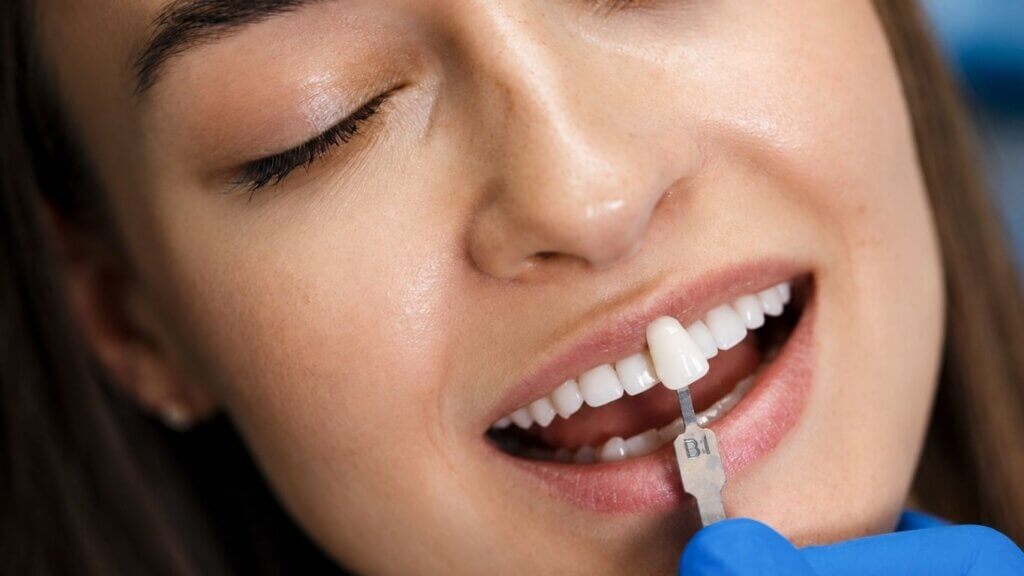
Modern Emax systems offer a range of shades, including A–D shades as well as specific bleach and impulse options. This allows greater control over the final appearance rather than forcing every patient into the same colour.
Natural aesthetics are about harmony, not simply whiteness.
3. The underlying tooth affects the final result
An Emax veneer is not viewed in isolation.
Because many veneers have some degree of translucency, the colour of the tooth underneath can influence the final appearance. This is especially important when a patient has dark, heavily stained, discoloured or previously restored teeth.
The same veneer can therefore appear slightly different depending on what is underneath it.
This is one reason why a thorough clinical assessment is necessary before deciding which type of ceramic, opacity and thickness is appropriate.
In some cases, a more translucent veneer may produce a beautiful result because the underlying tooth colour is favourable. In another case, a more masking material or design may be necessary.
The objective is to balance translucency with masking ability.
Too much opacity can make a veneer look flat and lifeless. Too much translucency can allow unwanted underlying discoloration to show through.
An experienced cosmetic dentist considers both.
4. Veneer thickness matters
Thickness is another important factor in the appearance of an Emax veneer.
Ceramic thickness influences how light travels through the restoration. Research has demonstrated that changes in veneer thickness can influence translucency and optical behaviour.
This means that simply choosing a material and shade is not enough.
The technician must consider:
- The thickness of the veneer
- The colour of the underlying tooth
- The desired final shade
- The translucency required
- The position of the tooth
- The surrounding natural teeth
- The amount of correction required
A veneer that is excessively thick may appear bulky or overly opaque. A veneer that is too thin for the clinical situation may not provide the desired colour correction or strength.
The correct thickness is therefore a balance between aesthetics, function, strength and conservation of tooth structure.
5. The shape is based on natural tooth anatomy
Colour gets a lot of attention, but shape is equally important.
Even a perfectly matched ceramic colour can look artificial if the tooth shape is incorrect.
Natural anterior teeth are not perfectly rectangular blocks. They contain anatomical features such as:
- Transition angles
- Facial ridges
- Developmental grooves
- Proximal contours
- Incisal characteristics
- Cervical contours
- Subtle asymmetries
Scientific literature on anterior ceramic restorations emphasizes reproducing natural morphology and surface features because these characteristics influence how light reflects from the restoration and how it integrates visually with the surrounding teeth.
This is why a natural-looking veneer should be designed around the individual patient rather than copied from a standard template.
The shape should complement the patient’s face, lips, smile line and existing tooth proportions.
6. Surface texture makes a surprising difference
Two veneers can have the same colour but look completely different because of their surface texture.
Natural enamel is not a perfectly smooth sheet of glass. It contains microscopic and macroscopic surface characteristics that influence the way light reflects.
If a veneer is excessively smooth and highly polished across every surface, it can sometimes produce a uniform, artificial shine.
A skilled dental technician can introduce subtle surface characteristics that mimic natural enamel.
These may include carefully controlled:
- Vertical grooves
- Horizontal texture
- Fine developmental lines
- Facial ridges
- Areas of varying reflection
Research has specifically highlighted the importance of surface texture and morphology in achieving natural-looking anterior ceramic restorations because surface characteristics affect light reflection and visual integration.
The key word is subtle.
The objective is not to make every veneer heavily textured. Instead, the surface should be designed according to the patient’s natural dentition and the desired aesthetic outcome.
7. The incisal edge needs character
The incisal edge is one of the most visible areas of an anterior veneer.
Natural teeth can show translucency, subtle opalescent effects and small variations along the incisal edge. A completely uniform white edge can make a veneer appear manufactured.
With Emax veneers, the ceramic can be selected and processed to create different levels of translucency and optical effects. The IPS e.max system includes different translucency levels and specialised shades that allow the laboratory to customise the appearance of restorations.
The technician may therefore create a slightly translucent incisal area while maintaining appropriate brightness and opacity through the body of the tooth.
This creates the perception of depth.
It is one of the small details that can make a significant difference when someone sees the smile in natural daylight.
8. The cervical area should not look like a straight line
Another important area is the transition between the veneer and the gumline.
Natural teeth generally show subtle changes in colour and contour from the cervical region toward the incisal edge.
The veneer margin should therefore be carefully designed and positioned so that it blends with the tooth and surrounding gum tissues.
A poorly designed restoration may create a visible transition, excessive contour or unnatural emergence profile.
A well-designed veneer should have a smooth, harmonious transition.
This is not only about appearance. Proper contour and finishing can also contribute to maintaining healthy surrounding tissues.
9. The bonding cement can influence the final colour
Many patients are surprised to learn that the material used to bond a veneer to the tooth can influence its final appearance.
For translucent ceramic restorations, the cement is part of the optical system.
Research on lithium disilicate veneers has demonstrated that different resin cement shades can produce measurable differences in the final colour of the restoration.
This is why aesthetic veneer treatment may involve trying different cement shades before final bonding.
A veneer may look slightly different during the try-in stage compared with its final appearance after cementation.
The dentist needs to consider the interaction between:
tooth + ceramic + cement + light.
The correct cement shade can help achieve the intended result, while an inappropriate shade can alter the final colour.
10. The preparation of the natural tooth matters
The veneer itself is only one part of the treatment.
How the natural tooth is prepared can influence the final restoration.
The aim of conservative aesthetic dentistry is generally to preserve as much healthy tooth structure as clinically appropriate while creating enough space for the restoration to achieve the required shape, colour and function.
Preparation design should be individualised rather than treating every tooth identically.
Scientific reviews have examined the relationship between preparation designs and the prognosis of porcelain laminate veneers, highlighting the importance of appropriate clinical preparation and bonding protocols.
This is also why patients should be cautious about choosing a veneer treatment simply because a particular preparation technique is being advertised as universally suitable.
There is no single design that is ideal for every patient.
11. The margins need to disappear visually
A natural-looking veneer should not draw attention to where the ceramic ends.
The transition between tooth and veneer needs to be carefully controlled.
This involves:
- Accurate preparation
- Precise impressions or digital scanning
- Correct laboratory fabrication
- Appropriate margin design
- Careful try-in
- Proper adhesive bonding
- Finishing and polishing
A restoration may have beautiful colour and shape but still look artificial if its margins are poorly adapted.
For this reason, the clinical and laboratory stages are equally important.
12. Emax is strong enough for appropriate veneer cases
Natural appearance is important, but veneers also need to function in the mouth.
IPS e.max is based on lithium disilicate glass-ceramic, which combines aesthetic properties with mechanical strength. Depending on the specific Emax material and manufacturing method, manufacturers report different strength values; for example, IPS e.max CAD has a reported flexural strength of approximately 530 MPa after crystallisation, while IPS e.max Press is reported at approximately 470 MPa.
This combination of strength and optical properties is one reason lithium disilicate is frequently selected for aesthetic ceramic restorations.
However, strong does not mean indestructible.
Veneers can still fracture, chip or debond, particularly when treatment planning or bonding is inadequate or when excessive functional forces are present.
Patients with significant bruxism or unfavourable bite relationships may require additional assessment and protective measures.
13. A natural smile is not perfectly symmetrical
One of the biggest differences between a natural smile and an artificial-looking smile is excessive uniformity.
Natural teeth have small differences in:
- Length
- Width
- Contour
- Rotation
- Incisal edge position
- Translucency
- Surface texture
- Shade
Trying to make every tooth identical can actually make the result look less natural.
Aesthetic dentistry is therefore not about creating mathematical perfection.
It is about creating controlled harmony.
The central incisors should work together, the lateral incisors should complement them, and the canines should transition naturally into the posterior teeth.
The overall smile should also work with the patient’s lips and facial proportions.
14. The laboratory technician plays a major role
A natural-looking Emax veneer is not simply “made by a machine.”
Digital technology and CAD/CAM systems can provide exceptional precision, but artistic judgement remains important.
Depending on the selected Emax workflow, veneers may be milled or pressed and then characterised or layered according to the clinical requirements. IPS e.max Press uses a press technique, while IPS e.max CAD is milled from pre-crystallised blocks and subsequently crystallised.
The laboratory technician must interpret the dentist’s prescription and reproduce the intended:
- Shape
- Shade
- Translucency
- Surface texture
- Incisal characteristics
- Contours
- Symmetry
- Individual character
This is why communication between the dentist and laboratory is so important in cosmetic dentistry.
15. Try-in and evaluation are essential
Before final bonding, veneers can be evaluated clinically.
This stage allows the dental team to assess:
- Colour
- Shape
- Length
- Proportion
- Midline
- Smile line
- Incisal display
- Phonetics
- Contours
- Overall facial harmony
The patient can also see the proposed result before permanent cementation.
In a carefully planned smile makeover, the objective is not simply to ask whether the veneers are “white enough.”
The more important question is:
Do these teeth look as though they belong to this person?
16. Why some Emax veneers can still look artificial
It is important to understand that Emax does not automatically guarantee a natural result.
Even an excellent ceramic material can look artificial if it is poorly planned or fabricated.
Common reasons include:
Excessive brightness
Extremely white veneers may lack the natural variation found in teeth.
Incorrect translucency
Too much translucency can expose undesirable underlying tooth colour, while insufficient translucency can make the restoration appear flat.
Uniform tooth shapes
Making every tooth the same size and contour can produce a “one-piece” appearance.
Poor surface texture
A completely flat or excessively glossy surface may not reflect light like natural enamel.
Incorrect contours
Over-contoured veneers can make teeth appear bulky.
Incorrect cement shade
The bonding material can influence the final appearance of translucent ceramic.
Inadequate treatment planning
If the underlying tooth position, bite, gum levels or proportions are not considered, the final veneers may not harmonise with the face.
Therefore, natural-looking Emax veneers are the result of planning and execution, not simply the name of the ceramic material.
17. Emax veneers and minimally invasive dentistry
One of the advantages of ceramic veneers is that they can provide aesthetic changes while preserving considerably more tooth structure than a full-coverage crown in appropriate cases.
However, “minimally invasive” does not mean that every patient is suitable for the same amount of preparation, or that every veneer case should be performed with no preparation.
The appropriate approach depends on the starting position and condition of the teeth.
Factors such as tooth alignment, existing restorations, enamel availability, discoloration, desired changes and bite must all be considered.
The priority should always be to create an appropriate restoration while preserving healthy tooth structure wherever clinically possible.
18. How long can Emax veneers last?
Patients often ask whether veneers are permanent.
A more accurate way to think about veneers is that they are long-term dental restorations that require care and maintenance.
Clinical research on porcelain laminate veneers has reported encouraging long-term survival rates, although outcomes vary between studies and depend on factors such as case selection, preparation, bonding, material, oral hygiene and functional forces. One systematic review of 25 clinical studies involving 6,500 porcelain laminate veneers reported an estimated 10-year cumulative survival rate of 95.5%.
This does not mean that every individual veneer will last ten years or longer.
It means that appropriately planned and maintained porcelain laminate veneers can have good long-term clinical performance.
Regular dental examinations, good oral hygiene and appropriate management of habits such as teeth grinding can all contribute to maintaining the restoration.
19. What should you look for when choosing Emax veneers?
If your priority is a natural-looking result, do not choose veneers based only on the material name.
Instead, ask about the complete treatment process.
Important questions include:
- Which ceramic is being recommended for my teeth and why?
- What shade and translucency will be used?
- How will my existing tooth colour affect the result?
- How much tooth preparation will be necessary?
- How will the shape and proportions be designed?
- Will the veneers be evaluated before final bonding?
- How will the margins and surface texture be created?
- What happens if I grind my teeth?
- How should I maintain the veneers after treatment?
- Can I see examples of similar cases treated by the dentist?
These questions shift the focus from simply buying “Emax veneers” to understanding the quality of the complete treatment.
20. The real secret: Emax is only one part of the equation
So, what makes an Emax veneer look like a real tooth?
The answer is not one single feature.
It is the combination of material science, optical properties, tooth preparation, shade selection, ceramic thickness, anatomy, surface texture, cement selection, laboratory craftsmanship and clinical planning.
Emax lithium disilicate provides an excellent foundation because it can offer a combination of strength and optical versatility. Its translucency options allow the restoration to be adapted to different clinical situations, while its ceramic properties can help reproduce the depth and light behaviour associated with natural teeth.
But the best veneer is not necessarily the one that looks like a veneer.
It is the one that looks like your tooth, only better balanced, healthier-looking and more harmonious with your smile.
The goal of natural-looking veneers
A successful smile makeover should not make people immediately ask, “Are those veneers?”
Ideally, they notice that your smile looks attractive, balanced and confident without being able to identify exactly why.
That is the difference between simply placing ceramic on teeth and designing a smile.
At Smile Delhi – The Dental Clinic, Emax veneers can be planned with attention to tooth proportions, facial harmony, colour, translucency and the individual characteristics of each patient’s smile. The goal of cosmetic dentistry should always be a result that looks natural, not artificial or excessively uniform.
If you are considering Emax veneers, a detailed consultation is the best way to determine whether veneers are appropriate for your teeth and what ceramic design would provide the most natural result.
References
- Aydoğdu HM, Yıldız P, Güneş Ünlü D. A comparative study of translucency and color perception in monolithic zirconia and lithium disilicate veneers. Heliyon. 2024;10(1).
- Malallah AD, Hasan NH, Qasim MH. Influence of Ceramic Material Type and Cement Shade on the Translucency of Lithium Disilicate Ceramic Veneers. International Journal of Dentistry. 2024:2540174.
- Gallucci GO, Guex P, Vinci D, Belser UC. Achieving natural-looking morphology and surface textures in anterior ceramic fixed rehabilitations. International Journal of Periodontics & Restorative Dentistry. 2007;27(2):117–125.
- AlJazairy YH. Survival Rates for Porcelain Laminate Veneers: A Systematic Review. European Journal of Dentistry. 2021;15(2):360–368.
- Alenezi A, Alsweed M, Alresheed S, et al. Long-Term Survival and Complication Rates of Porcelain Laminate Veneers in Clinical Studies: A Systematic Review. Journal of Clinical Medicine. 2021;10(5):1074.
- Hong N, Yang H, Li J, Wu S, Li Y. Effect of Preparation Designs on the Prognosis of Porcelain Laminate Veneers: A Systematic Review and Meta-Analysis. Operative Dentistry. 2017;42(6)–E213.
- Ivoclar. IPS e.max CAD – Lithium disilicate glass-ceramic for CAD/CAM. Manufacturer’s technical and product information.
- Ivoclar. IPS e.max System – Lithium disilicate and all-ceramic restorative materials. Manufacturer’s product information.
- Ivoclar. IPS e.max Ceram – Veneering ceramic for highly aesthetic restorations. Manufacturer’s product information.
Posted by Dr.Twesha Huidrom

Dr. Suprriya B. Bhatia is a highly experienced dental professional with over 25 years of clinical expertise. A leading dentist in South Delhi, she is the founder of Smile Delhi – The Dental Clinic and specialises in cosmetic dentistry, dental implants, and smile makeovers. Dr. Suprriya B. Bhatia is known for her compassionate, patient-centred approach and commitment to creating healthy, confident smiles for patients from India and abroad.


"Extremely good service and care..."
Tim Gound
Location:- U. K.


"The standard of the clinic is like a first country’s clinic..."
PEDRO MORAES
Location:- Brazil


"Me and my family were very reluctant to undergo my dental treatment in India, but..."
RICHARD SALDANHA
Location:- Peru, South America


"The hygiene is good, the care up to European standards if not better. Strong on explaining..."
THOMAS BAINS
Location:- European Commission
"A new beautiful smile made by a beautiful lady who truly cares for her patients..."
Sinead
Location:- England

"I have the smile of my dream….This clinic is very professional and they use only best materials..."
Alla Lu
Location:- Russia


"Thank you so much for making my dream come true to have a perfect smile..."
Jacyln Gopinathan
Location:- Mindro Philippines


"I felt very comfortable through my treatment and i had 100% trust in you..."
Arnar Gislason
Location:- Iceland

"Thank you for giving me a smile that i’ve dreamed of for years..."
Yuto Harrison
Location:- Canada

"Dr. Suprriya’s work was amazing…. She is super professional and polite..."
Todd
Location:- Australia

"Dr. Suprriya is such a lovely and warm hearted woman as well as a truly and high qualified professional..."
Victor Vique
Location:- Switzerland


"After travelling all through India and visiting 7 different clinics, this..."
JEFF MC CLEAN
Location:- New Zealand

"From the moment i got here i knew i had made the right decision."


"Thank you so much, Dr. Suprriya! I am so grateful for you and your practice."

"Very attentive and grateful for the results. I will keep in Touch"

"You saved my teeth. Lovely clinic and very professional staff..."


"My teeth are 7-8 shades whiter, thanks to you and your team..."

"Thank you very much dr. suprriya for wonderful treatment for implants and bridge and giving me my smile back."

"Felt in good hands during the whole treatment..."

"Visited many dentist around the world and smile delhi definitely gives you a great smile..."

"Over all experience was wonderful…"
"Every thing was great and pain less !....."
Roberta
Location:- UK

"Dr. Suprriya is such a lovely and warm hearted woman as well as a..."
Victor
Location:- Switzerland

"Didn’t hurt, looked good, felt good, clearly explained and professionally done..."
Jeff
Location:- New zealand

"Dr. Supria is a unic dentice and an exellent person..”, “…honest and direct.."
Yaron Mayer
Location:- Israel Embassy

"Dr. Suprriya is very gentle and excellent human being. A perfect Dentist I...."
Uarely
Location:- Finland


"You treated me gentle as a child!..."
Andreas
Location:- Norway


"You are probably one of the best dentist I have ever been to in the last 50 years..."
Usama
Location:- Saudi Arabia

"I have the Hollywood teeth I always wanted…"
Belle
Location:- Canada
"The root canal was almost pain free....."
David Seeley
Location:- UK
"Thank You very much for giving me my smile back and my holiday!....."
Lesley Marsdin
Location:- UK
"I even laughed when they screwed the posts in ! very professional even enjoyed it a bit"
Laurewce Moon
Location:- UK
"It has been very professional. Very clean, very good......"
Mr. & Mrs. Piper
Location:-Winchester, England

"My emergency treatment was incredible kind and 1st class....."
Kevin Kahan
Location:- Ireland
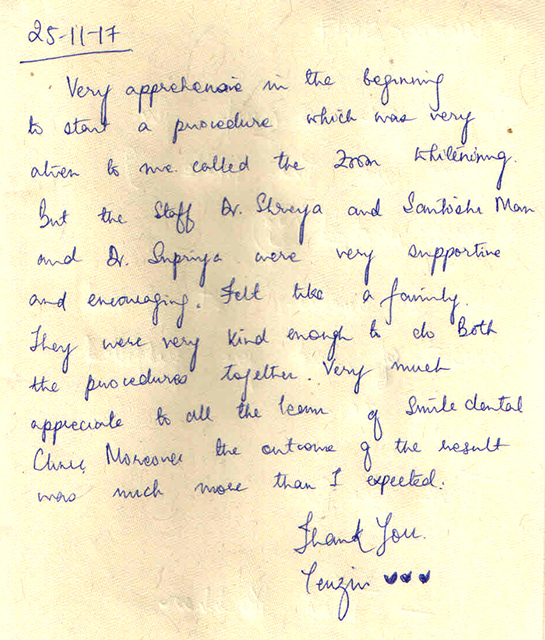

"The result was much more than I expected in zoom whitening....."
Tenzin
Location:- Bhutan
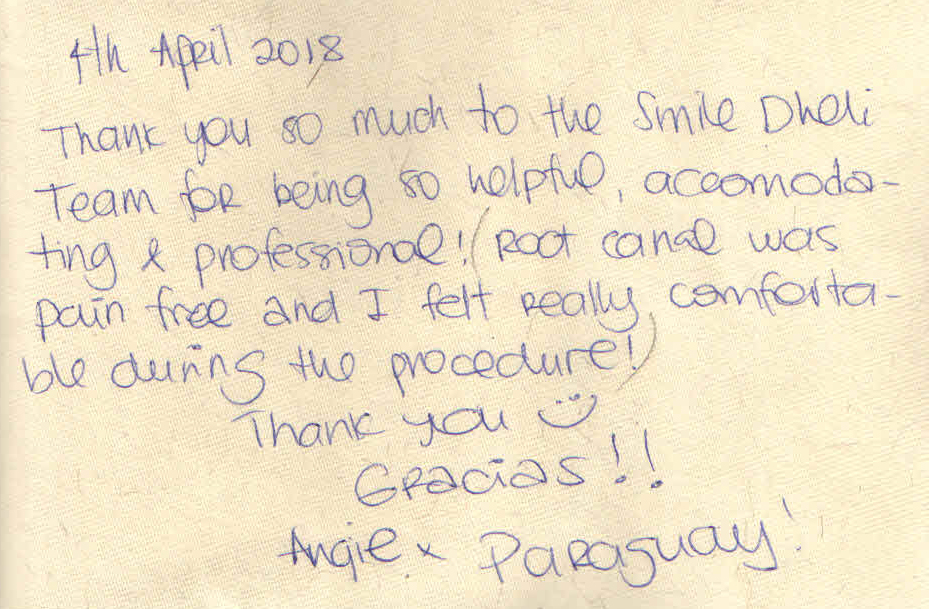

"Root canal was pain free and i felt really comfortable during the procedure....."
Angie
Location:- Paraguay
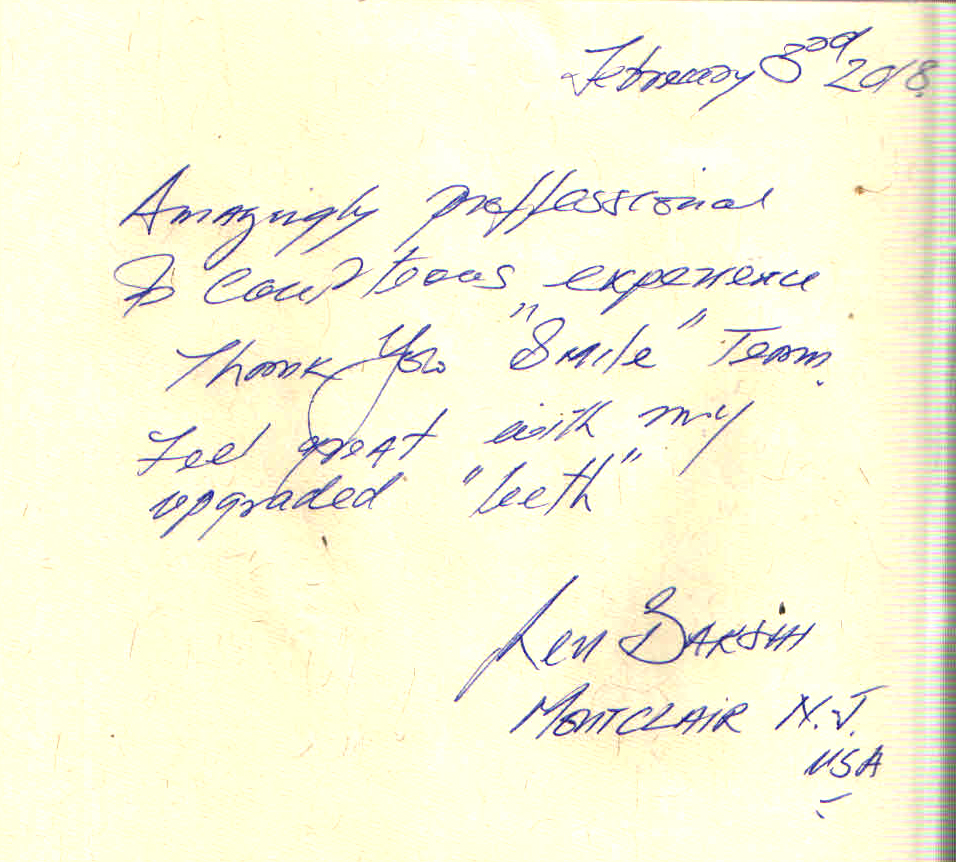
"Amazingly professional and courteous experience......"
Ken Bakshi
Location:- USA


"I had my teeth whitened amazing results!"
Paula Davey
Location:- Australia


"I would like to have sometimes so good dentist in Europe like Dr Suprriya..."
DANNY
Location:- Austria

"I would highly recommend Suprriya to anyone seeking good oral health care..."
ALLISON WEST
Location:- Australia


"Dr Suprriya, I just want to thank you for the very well done..."
MARIO
Location:- Columbia (Diplomat in India)