


The Dental Clock: What Your Teeth Say About Your Biological Age
Introduction
When patients search for teeth whitening in Delhi, compare teeth whitening cost in Delhi, or visit the best cosmetic dentist in Delhi, they are often focused only on how young their smile looks. But did you know your teeth can reveal your true biological age? Dentistry today has gone far beyond fillings and whitening. The concept of the “dental clock” explains how your teeth act as a timeline of your life, recording everything from diet and habits to stress and overall health. For patients visiting the best dental clinic in Delhi or the best dental clinic in South Delhi, understanding what your teeth say about your biological age can be life-changing.
This blog explores the fascinating science behind the dental clock while highlighting why regular visits to the best dentist in Delhi, cosmetic dentist in Delhi, or a trusted dental clinic in Delhi NCR are vital for both oral and overall health.

What Is the Dental Clock?
Just like rings on a tree tell its age, your teeth carry signs that reveal your biological aging process. Dental experts at the best dental clinics in Delhi explain that enamel wear, gum recession, discoloration, and microscopic changes in dentin all provide clues. Whether you are consulting the best cosmetic dentist in India or visiting a delhi dental clinic, these signs help dentists determine not just your oral health but also systemic health issues.
Patients who inquire about teeth whitening cost in India at a cosmetic dental clinic may not realize that whitening is only one part of the picture. The best dentists in Delhi can evaluate the condition of your teeth to determine whether your biological age matches your actual age.
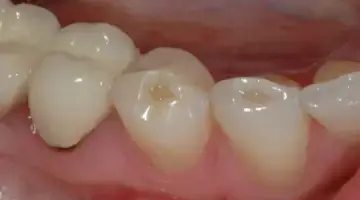
How Teeth Reflect Biological Age
- Enamel Wear – Over time, enamel thins, showing dentin underneath.
- Gum Recession – Gums recede naturally with age, making teeth appear longer.
- Tooth Color – Natural discoloration happens due to diet, lifestyle, and time.
- Dental Pulp Changes – The inner core of teeth shrinks with age.
The best dental clinic in Delhi near me and the best dentist in South Delhi check these markers when evaluating biological age. While patients might be comparing teeth whitening cost in Delhi, the cosmetic dentist near me ensures that these deeper indicators are not ignored.
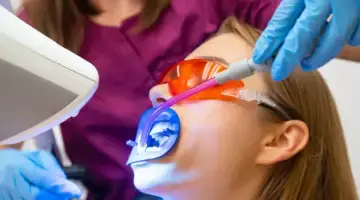
Teeth Whitening and the Dental Clock
Cosmetic treatments like teeth whitening in Delhi or teeth whitening in India can make you look younger instantly. But the best cosmetic dentist in Delhi knows that whitening only addresses surface stains. To truly reset your dental clock, the best dental clinic in India focuses on comprehensive care—checking enamel thickness, gum health, and bone density.
So, when you ask about teeth whitening cost in India or book an appointment at the best dental clinic Delhi, remember that the procedure is just one step in slowing your dental clock.
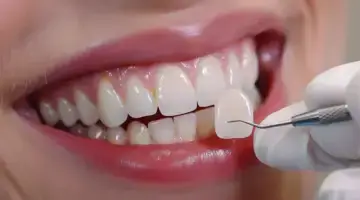
Biological Age vs. Cosmetic Age
Patients often visit a cosmetic dentist in Delhi for veneers, crowns, or whitening. While these treatments at a cosmetic dental clinic can make teeth look youthful, the best dentist in Delhi NCR will always remind patients that biological age matters too. For example, a 45-year-old with excellent oral hygiene might have the dental clock of a 30-year-old, while another with poor habits might have the teeth of someone much older.
That’s why the best dentist India and the best dental clinics in Delhi focus not only on appearances but also on underlying health.

Lifestyle, Habits, and the Dental Clock
Your daily choices speed up or slow down your dental clock:
- Smoking accelerates tooth discoloration and gum disease.
- Sugary diets increase cavities and enamel wear.
- Stress causes grinding, wearing down teeth.
- Poor oral hygiene allows bacteria to damage gums and bone.
The best dentist in Delhi, dentist in South Delhi, and experts at the best dental clinic in South Delhi stress that prevention is the key. So while patients focus on teeth whitening cost in Delhi, the long-term investment is regular dental care.
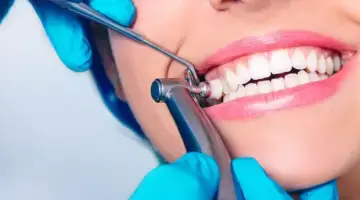
Dental Treatments That Reverse the Clock
- Professional Cleaning – Offered at any dental clinic in Delhi to remove plaque and tartar.
- Teeth Whitening in India – Performed by the best cosmetic dentist in India for instant rejuvenation.
- Restorative Dentistry – Fillings, crowns, and implants at the best dental clinic in Delhi help reset function and appearance.
- Orthodontics – Straightening teeth can make smiles look younger.
Patients comparing teeth whitening cost in Delhi often find that comprehensive care at the best dental clinics in Delhi gives far better long-term results.

The Role of Regular Checkups
To keep your dental clock young, regular visits to a dentist in Delhi, dentist in South Delhi, or dental clinic near me are essential. At each appointment, the best dentists in Delhi evaluate not just cavities but also gum health, enamel wear, and tongue conditions. These small checks ensure you maintain both a youthful smile and total body health.
The best cosmetic dentist in Delhi may recommend lifestyle changes, preventive treatments, and professional whitening, ensuring your dental clock stays balanced.

How the Dental Clock Connects to Systemic Health
The best dental clinic in Delhi, dental clinic South Delhi, and dental clinics in India emphasize that teeth aging reflects systemic health. Gum disease has been linked to heart disease, diabetes, and even premature aging. Patients visiting a dental clinic in Delhi NCR are educated about how their smile tells the story of their biological clock.
So when you search for a dentist near me, remember that you are not just investing in a cosmetic upgrade but in your long-term health.

Why Delhi Patients Care About the Dental Clock
Patients in Delhi are highly conscious of appearance, whether for professional or social reasons. Searching for teeth whitening in Delhi or consulting the best cosmetic dentist in Delhi is often the first step. But with awareness about biological age growing, patients are also turning to the best dental clinics in Delhi for complete care.
The best dentist in New Delhi and dentist South Delhi integrate advanced diagnostics to measure your dental clock and suggest ways to slow it down.

Tips to Keep Your Dental Clock Young
- Brush twice daily and clean your tongue.
- Visit the best dentist in Delhi NCR every six months.
- Avoid smoking and excessive sugar.
- Consider cosmetic treatments like teeth whitening in India for a youthful smile.
- Choose the best dental clinic in Delhi or best dental clinic in India for advanced care.

Conclusion
Your teeth are more than just tools for chewing—they are markers of your biological age. The concept of the dental clock shows that while cosmetic treatments like teeth whitening in Delhi can refresh your smile, true youthfulness comes from comprehensive care at the best dental clinic in South Delhi or dental clinics in Delhi. Whether you are checking teeth whitening costs in India, consulting the best dentist India, or visiting a dental clinic near me, your dental clock deserves attention.
By working with the best cosmetic dentist in Delhi, the best dental clinic Delhi, and top dentists in Delhi, you can turn back the dental clock and achieve not only a younger-looking smile but also a healthier, longer life.
To book an appointment with us at, ‘Smile Delhi – The Dental Clinic’ – call us on +91-9811106871 or WhatsApp Dr. Suprriya B Bhatia on +91-9811106377. You can also mail us on info@dentalclinicdelhi.com.
“We Care to Make You Smile”
Posted by: Dr Twesha Huidrom

Dr. Suprriya B. Bhatia is a highly experienced dental professional with over 25 years of clinical expertise. A leading dentist in South Delhi, she is the founder of Smile Delhi – The Dental Clinic and specialises in cosmetic dentistry, dental implants, and smile makeovers. Dr. Suprriya B. Bhatia is known for her compassionate, patient-centred approach and commitment to creating healthy, confident smiles for patients from India and abroad.


"Extremely good service and care..."
Tim Gound
Location:- U. K.


"The standard of the clinic is like a first country’s clinic..."
PEDRO MORAES
Location:- Brazil


"Me and my family were very reluctant to undergo my dental treatment in India, but..."
RICHARD SALDANHA
Location:- Peru, South America


"The hygiene is good, the care up to European standards if not better. Strong on explaining..."
THOMAS BAINS
Location:- European Commission
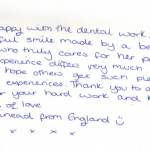
"A new beautiful smile made by a beautiful lady who truly cares for her patients..."
Sinead
Location:- England
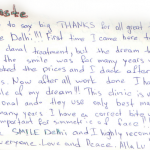

"I have the smile of my dream….This clinic is very professional and they use only best materials..."
Alla Lu
Location:- Russia


"Thank you so much for making my dream come true to have a perfect smile..."
Jacyln Gopinathan
Location:- Mindro Philippines


"I felt very comfortable through my treatment and i had 100% trust in you..."
Arnar Gislason
Location:- Iceland


"Thank you for giving me a smile that i’ve dreamed of for years..."
Yuto Harrison
Location:- Canada
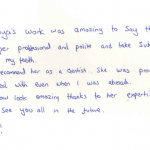

"Dr. Suprriya’s work was amazing…. She is super professional and polite..."
Todd
Location:- Australia


"Dr. Suprriya is such a lovely and warm hearted woman as well as a truly and high qualified professional..."
Victor Vique
Location:- Switzerland


"After travelling all through India and visiting 7 different clinics, this..."
JEFF MC CLEAN
Location:- New Zealand

"From the moment i got here i knew i had made the right decision."


"Thank you so much, Dr. Suprriya! I am so grateful for you and your practice."

"Very attentive and grateful for the results. I will keep in Touch"

"You saved my teeth. Lovely clinic and very professional staff..."


"My teeth are 7-8 shades whiter, thanks to you and your team..."

"Thank you very much dr. suprriya for wonderful treatment for implants and bridge and giving me my smile back."
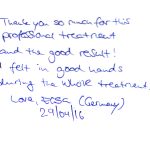

"Felt in good hands during the whole treatment..."

"Visited many dentist around the world and smile delhi definitely gives you a great smile..."
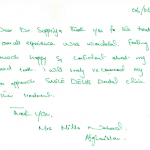

"Over all experience was wonderful…"
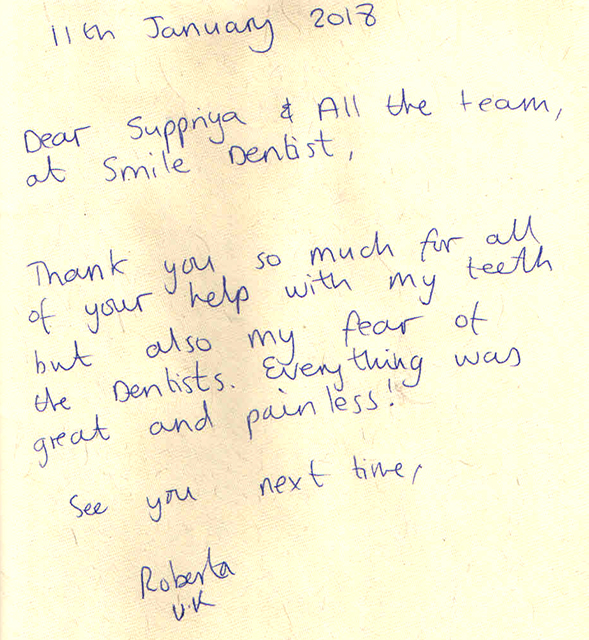
"Every thing was great and pain less !....."
Roberta
Location:- UK

"Dr. Suprriya is such a lovely and warm hearted woman as well as a..."
Victor
Location:- Switzerland
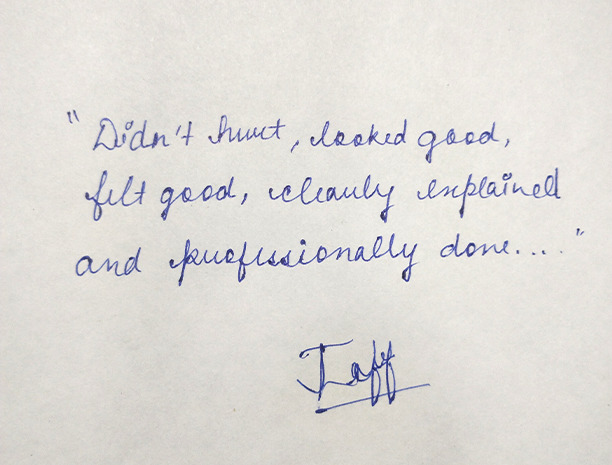

"Didn’t hurt, looked good, felt good, clearly explained and professionally done..."
Jeff
Location:- New zealand

"Dr. Supria is a unic dentice and an exellent person..”, “…honest and direct.."
Yaron Mayer
Location:- Israel Embassy

"Dr. Suprriya is very gentle and excellent human being. A perfect Dentist I...."
Uarely
Location:- Finland


"You treated me gentle as a child!..."
Andreas
Location:- Norway


"You are probably one of the best dentist I have ever been to in the last 50 years..."
Usama
Location:- Saudi Arabia
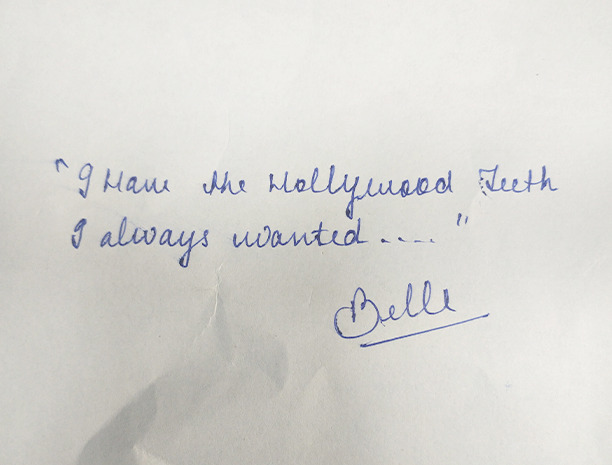

"I have the Hollywood teeth I always wanted…"
Belle
Location:- Canada
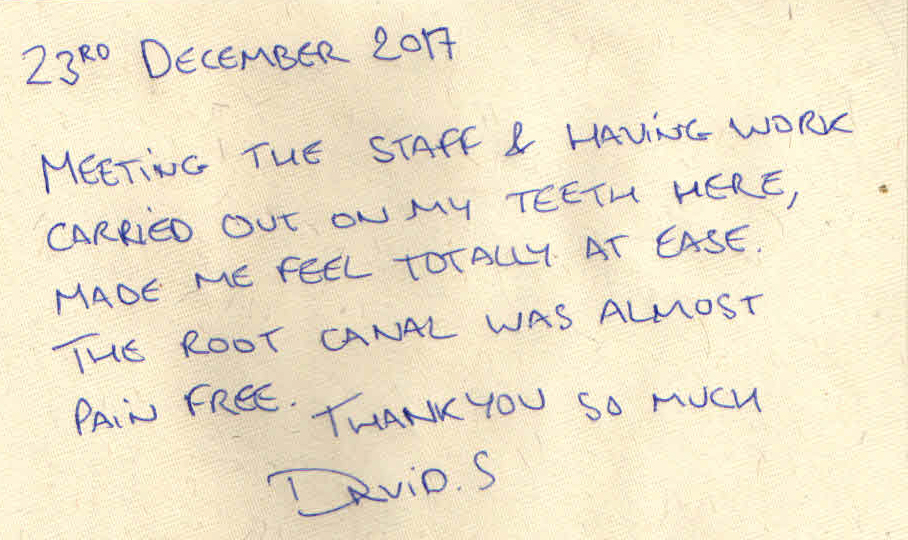
"The root canal was almost pain free....."
David Seeley
Location:- UK
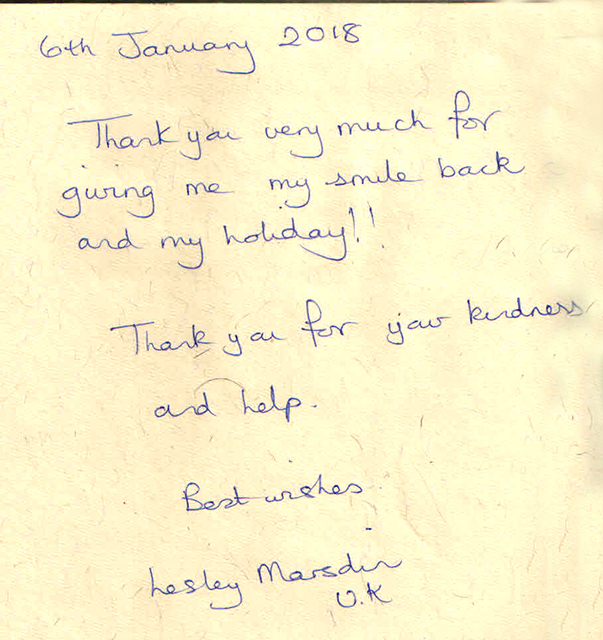
"Thank You very much for giving me my smile back and my holiday!....."
Lesley Marsdin
Location:- UK

"I even laughed when they screwed the posts in ! very professional even enjoyed it a bit"
Laurewce Moon
Location:- UK
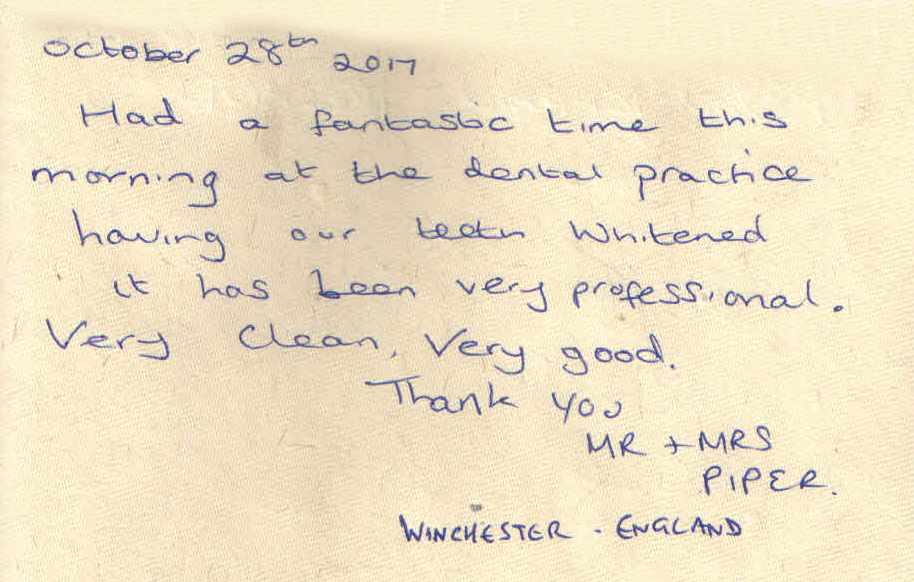
"It has been very professional. Very clean, very good......"
Mr. & Mrs. Piper
Location:-Winchester, England

"My emergency treatment was incredible kind and 1st class....."
Kevin Kahan
Location:- Ireland
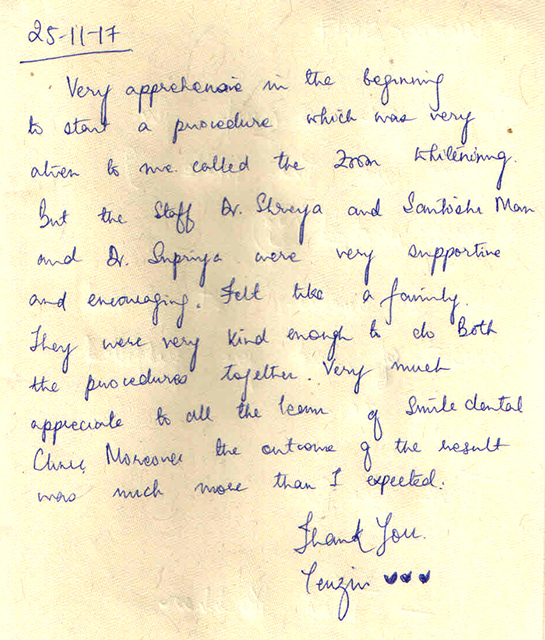

"The result was much more than I expected in zoom whitening....."
Tenzin
Location:- Bhutan
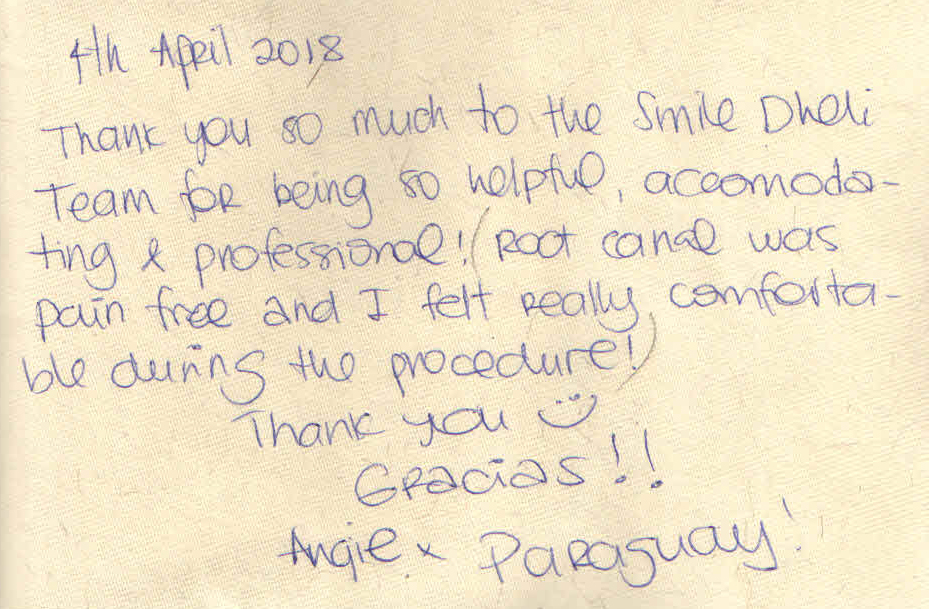

"Root canal was pain free and i felt really comfortable during the procedure....."
Angie
Location:- Paraguay
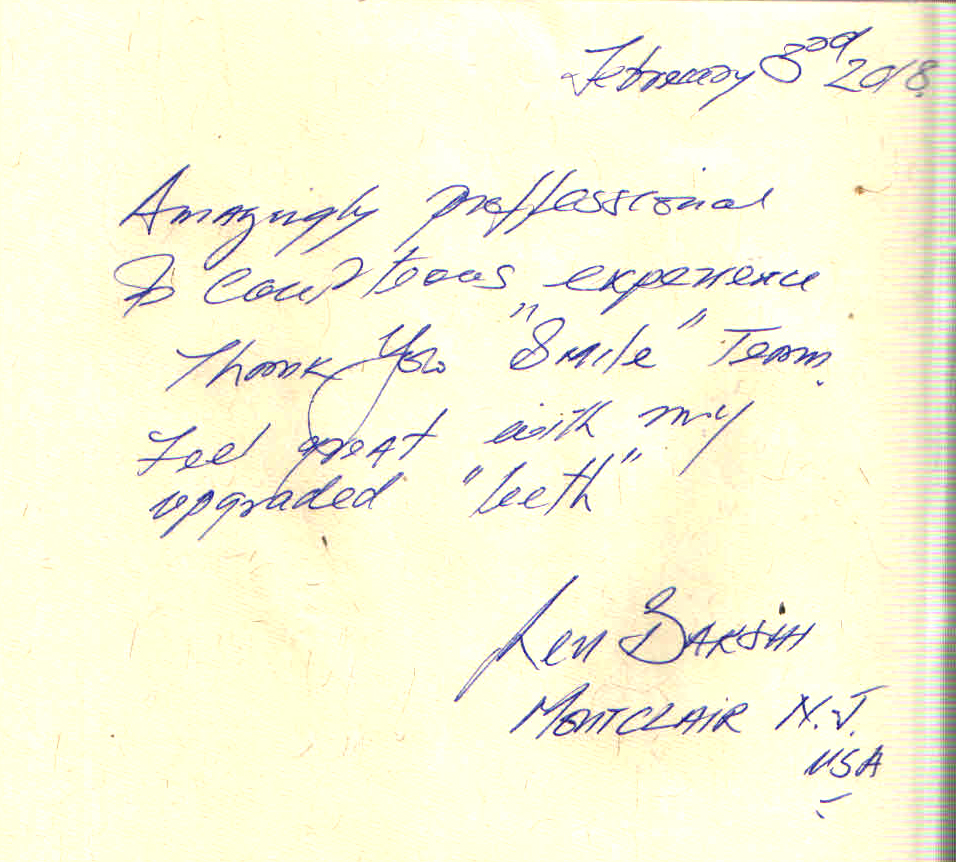
"Amazingly professional and courteous experience......"
Ken Bakshi
Location:- USA


"I had my teeth whitened amazing results!"
Paula Davey
Location:- Australia


"I would like to have sometimes so good dentist in Europe like Dr Suprriya..."
DANNY
Location:- Austria

"I would highly recommend Suprriya to anyone seeking good oral health care..."
ALLISON WEST
Location:- Australia


"Dr Suprriya, I just want to thank you for the very well done..."
MARIO
Location:- Columbia (Diplomat in India)